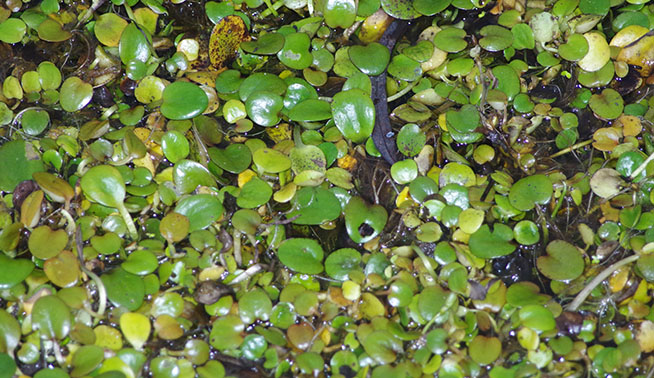
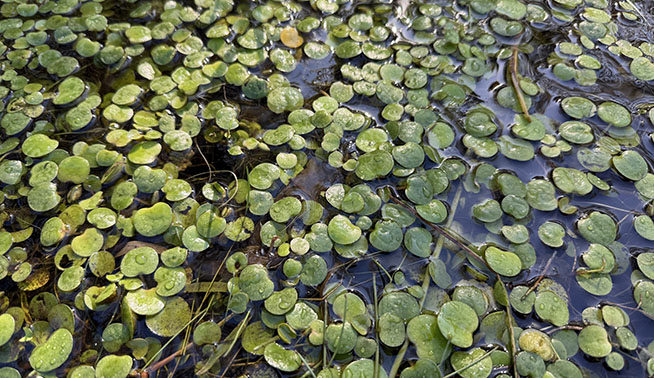
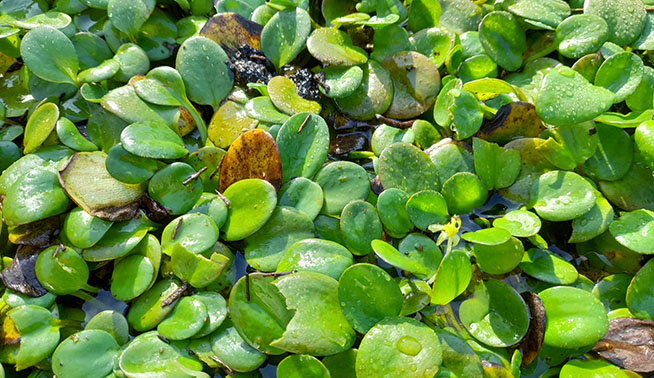
Other Common Names: Smooth frogbit, West Indian spongeplant.
Synonyms: Limnobium laevigatum, Salvinia laevigata.
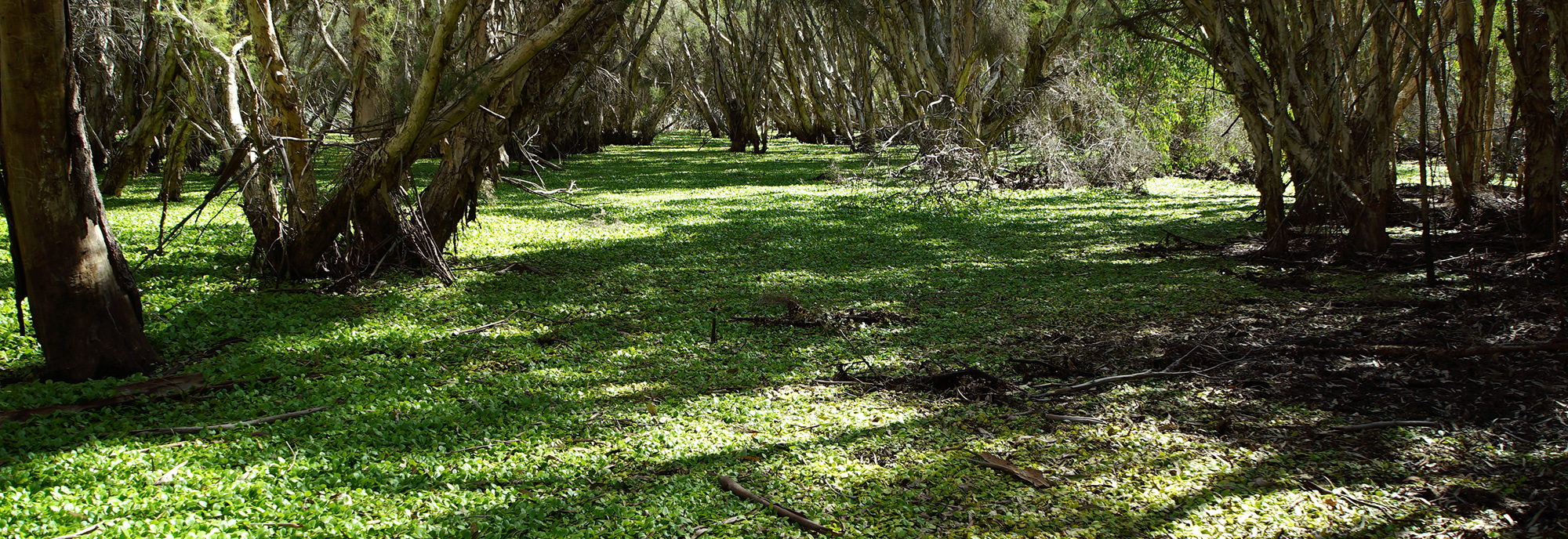

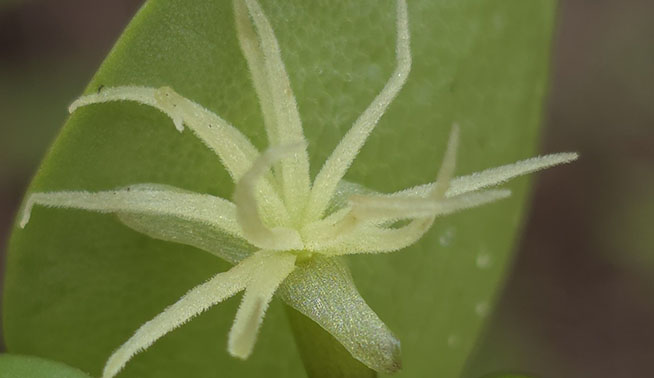
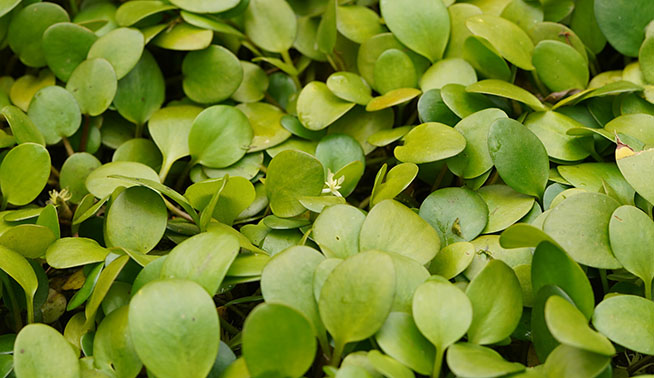
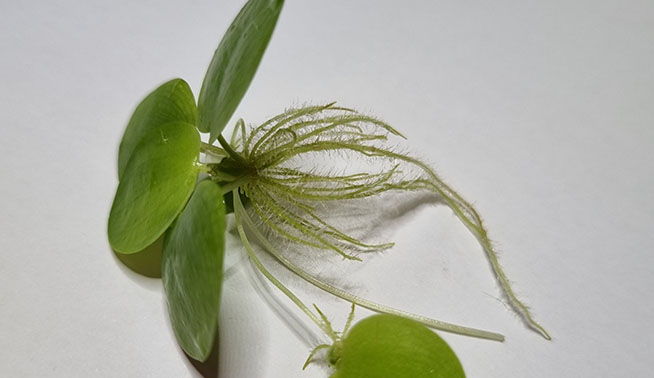
Hydrocharis laevigata


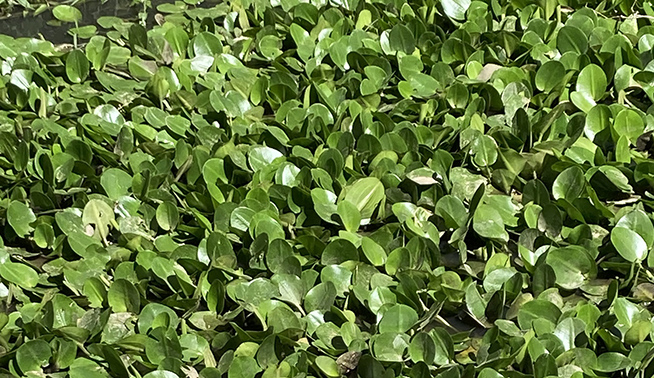
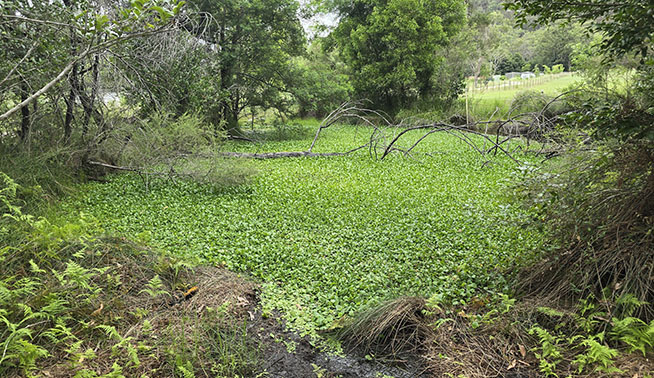
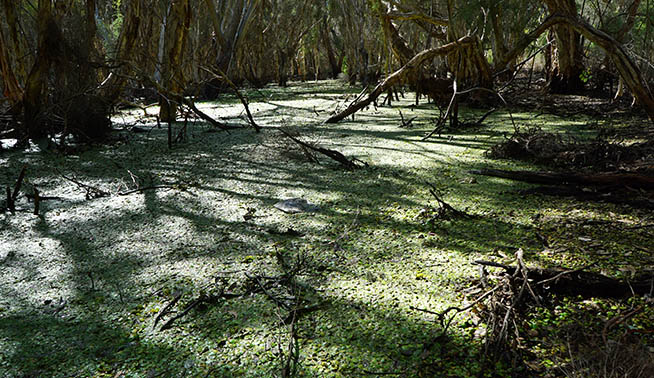
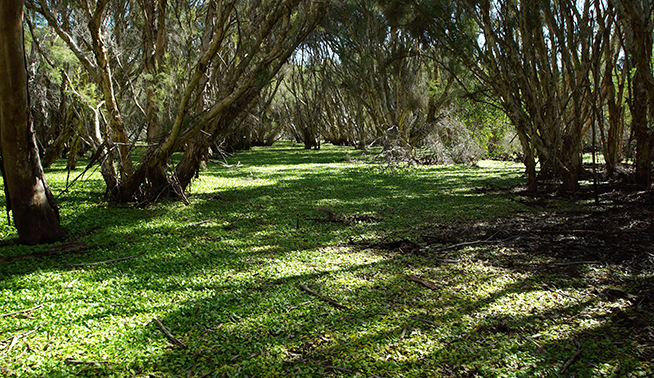
Prior to the control, assessing and mapping the extent and density of infestation is crucial to decide the suitable management method and prevent re-infestation.
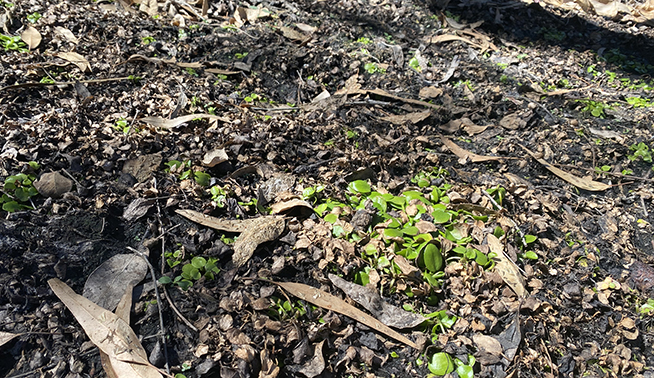
Conducting manual or chemical control in early stage of infestations is more effective to combat the target plant than controlling it once established.
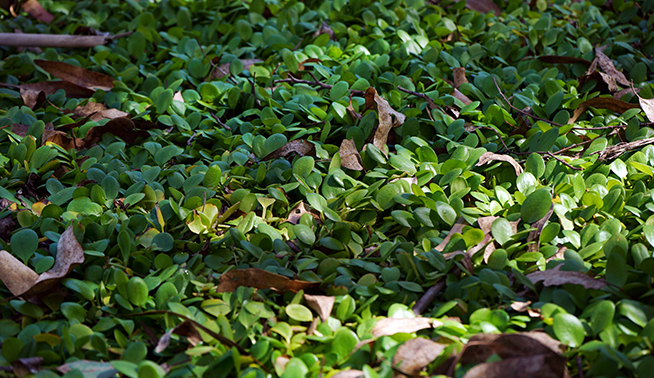
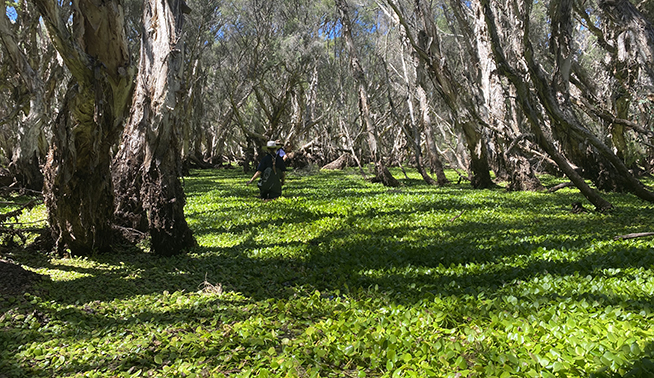
Hand removal of plants can be useful when infestations are only in small areas where number of presences is relatively small or first detected. It is better to conduct during low flows so the amazon frogbit is aggregated and cannot float to ensure no fragments are left behind. Following up by application of herbicide is preferable. Manual removal is not effective for large infestations. Disposal can be in green waste/FOGO or allow to try and desiccate.
Chemical control is recommended to achieve effective management of amazon frogbit and should only be undertaken with consultation with DBCA and NRM regions.
For small infestations:
Glyphosate bioactive (360g/L) 1% solution spot spray only.
For large infestations:
Flumioxazin (15 g/tablet) is effective for controlling Amazon frogbit in Western Australia; however, this herbicide can only be applied by licensed pest control operators and in catchments not associated with drinking water.
LSID number: [51773815] | full LSID: [https://id.biodiversity.org.au/taxon/apni/51773815] | field_lsid: [] | taxon: [Hydrocharis laevigata]
ALA Reference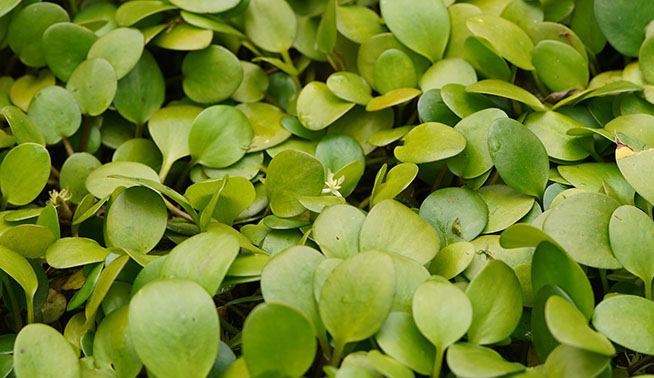
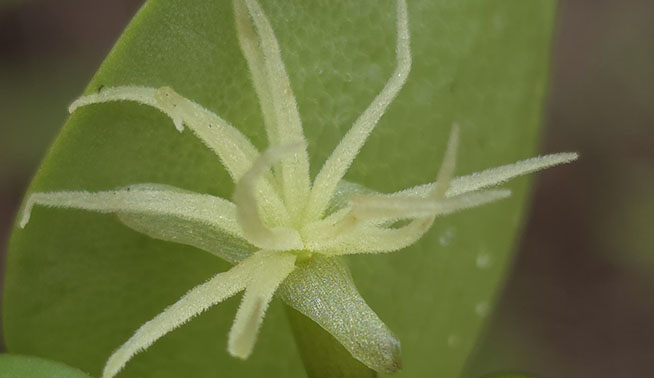
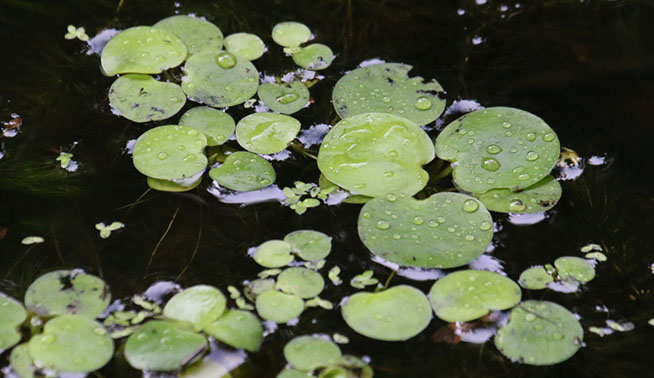
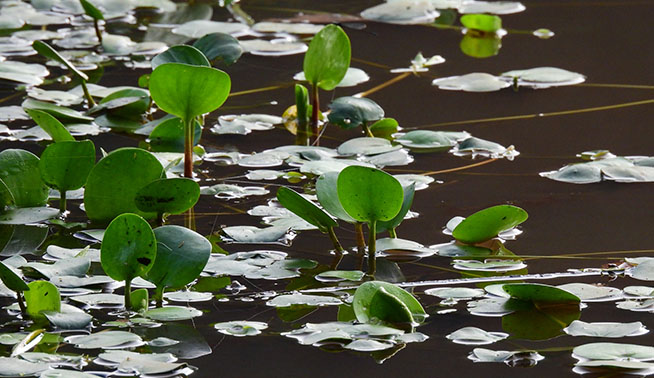
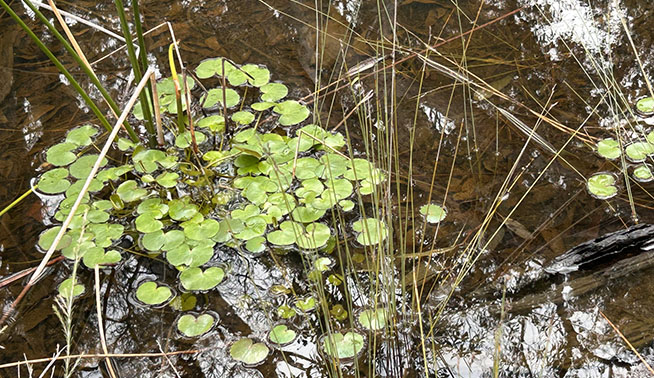
 Bickel, T. O., Farahani, B. S., Perrett, C., Xu, J., & Vitelli, J. (2022).
Control of the emerging aquatic weed Amazon frogbit with flumioxazin. Australasian Weeds Conference
Calvert, G. (2016)
Wetland Plants of the Wet Tropics. pp.77. Terrain NRM
Department of Primary Industries. (2026)
Frogbit (Limnobium laevigatum). NSW WeedWise
Far North Queensland Regional Organisation of Councils. (2023)
Amazon frogbig biosecurity response plan. Wet Tropics Waterways.
Garcia-Murillo, P. (2023)
Hydrocharis laevigata in Europe. Plants (Basel), 12(4), Article 701.
Hyde, M.A., Wursten, B.T., Ballings, P. & Coates Palgrave, M. (2026)
Flora of Zimbabwe: Species information: Limnobium laevigatum.
NSW WeedWise. (n.d.)
Frogbit (Limnobium laevigatum). NSW WeedWise.
Queensland Government. (2026, 4 February)
Amazon frogbit. Business Queensland.
Shire of Gingin. (2026, 6 February)
Declared Pest Species: Amazon Frogbit.
South East Regional Centre for Urban Landcare. (n.d)
Amazon frogbit – Limnobium Laevigatum.
Zhu, X., Bell, K. L., Wu, H., & Gopurenko, D. (2024)
Development of an Environmental DNA Assay for Prohibited Matter Weed Amazon Frogbit (Limnobium laevigatum). Environments, 11(4), 66.
Bickel, T. O., Farahani, B. S., Perrett, C., Xu, J., & Vitelli, J. (2022).
Control of the emerging aquatic weed Amazon frogbit with flumioxazin. Australasian Weeds Conference
Calvert, G. (2016)
Wetland Plants of the Wet Tropics. pp.77. Terrain NRM
Department of Primary Industries. (2026)
Frogbit (Limnobium laevigatum). NSW WeedWise
Far North Queensland Regional Organisation of Councils. (2023)
Amazon frogbig biosecurity response plan. Wet Tropics Waterways.
Garcia-Murillo, P. (2023)
Hydrocharis laevigata in Europe. Plants (Basel), 12(4), Article 701.
Hyde, M.A., Wursten, B.T., Ballings, P. & Coates Palgrave, M. (2026)
Flora of Zimbabwe: Species information: Limnobium laevigatum.
NSW WeedWise. (n.d.)
Frogbit (Limnobium laevigatum). NSW WeedWise.
Queensland Government. (2026, 4 February)
Amazon frogbit. Business Queensland.
Shire of Gingin. (2026, 6 February)
Declared Pest Species: Amazon Frogbit.
South East Regional Centre for Urban Landcare. (n.d)
Amazon frogbit – Limnobium Laevigatum.
Zhu, X., Bell, K. L., Wu, H., & Gopurenko, D. (2024)
Development of an Environmental DNA Assay for Prohibited Matter Weed Amazon Frogbit (Limnobium laevigatum). Environments, 11(4), 66.
| JAN | FEB | MAR | APR | MAY | JUN | JUL | AUG | SEP | OCT | NOV | DEC | Notes | |
|---|---|---|---|---|---|---|---|---|---|---|---|---|---|
| Flowering | |||||||||||||
| Active Growth |
| JAN | FEB | MAR | APR | MAY | JUN | JUL | AUG | SEP | OCT | NOV | DEC | Notes | |
|---|---|---|---|---|---|---|---|---|---|---|---|---|---|
| Treatment |


 Permit PER96570 for glyphosate