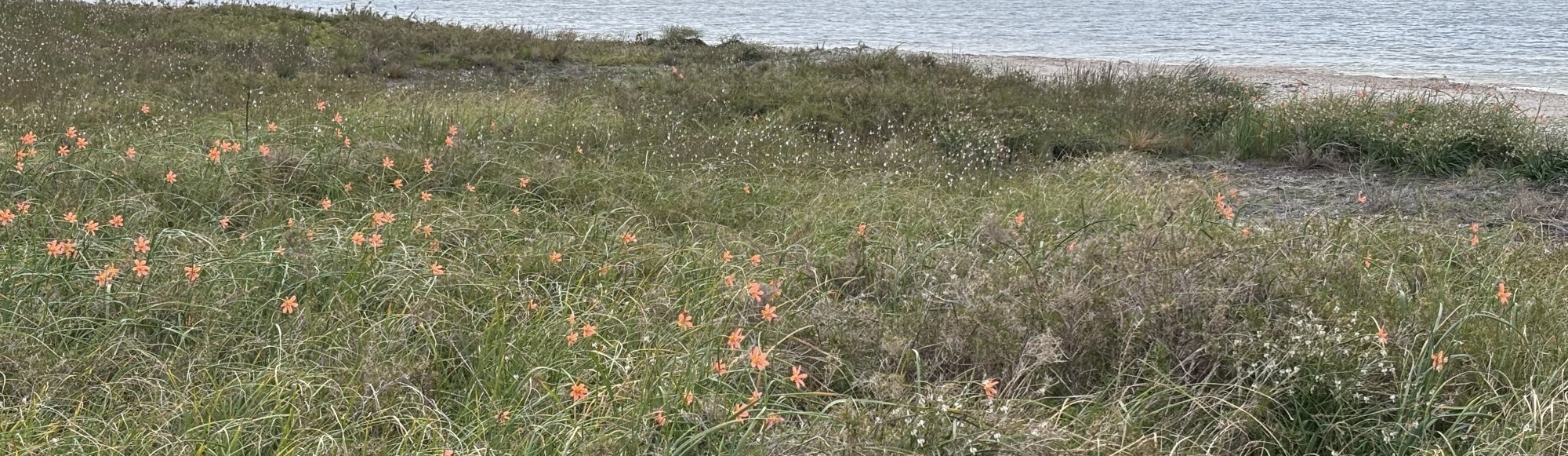

There are nearly 1,500 naturalised plant species in Western Australia, with more than half occurring in conservation areas. DBCA manages weeds across more than 30 million hectares of land under its care, including 122 national parks, 12 regional parks, conservation parks, nature reserves, islands and State forests.
The department may also manage certain declared weeds on Unallocated Crown Land (ULC) and unmanaged reserves. In some circumstances, strategically important weed control may be undertaken outside DBCA-managed land to reduce the risk of weed spread into high-value conservation areas. DBCA also supports weed management in estate jointly managed with Traditional Owners.
The reasons for managing weeds vary between regions and over time, depending on the species present, local priorities and available resources. Broadly, DBCA manages weeds to:
- Support biosecurity outcomes, often in partnership with the Department of Primary Industries and Regional Development (DPIRD).
- Reduce fire risk and maintain strategic firebreaks.
- Protect threatened and vulnerable plant species and ecological communities.
- Protect habitat for native fauna, including important nesting sites for birds and turtles on islands.
- Protect Aboriginal and other cultural heritage values.
- Maintain visitor access and park infrastructure, such as walking trails and recreation areas.
- Support good neighbour outcomes, including weed management and biosecurity objectives in adjoining agricultural landscapes.
Weed management in bushland
Managing weeds in bushland presents unique challenges. Many weed control methods have been developed and refined for agricultural environments, where techniques such as broad-acre spraying, cultivation and grazing can be effective. These approaches are often unsuitable in natural ecosystems because they may damage native vegetation and habitat.
As a result, weed management in bushland requires a more integrated and targeted approach. DBCA staff and contractors undertake specialised training in bushland weed management to ensure weeds are controlled effectively while minimising impacts on native plants, animals and ecological processes. Through careful planning and the application of best-practice techniques, weed management helps protect Western Australia's biodiversity and conservation estate for future generations.
Why is DBCA not controlling 𝒳 weed?
Given the large number of invasive plant species in Western Australia, the vast area of land managed by DBCA, and the resources available, it is not possible to actively manage every weed across the entire landscape. As a result, DBCA prioritises weed management efforts where they will achieve the greatest benefit for biodiversity, cultural values and other land management objectives.
DBCA does a significant amount of weed management in remote forests, reserves and other conservation areas not readily seen by the public. In addition to targeted control programs, prescribed burning can help suppress some weed species that are less tolerant of fire than many native plants. Weed management also includes preventing new incursions, containing existing infestations and protecting high-value conservation assets.
Weed control is not always the best solution to a weed incursion. In some situations, removing a weed without the resources to restore can cause greater environmental harm, such as increasing erosion or allowing more invasive species to establish. Effective management in these cases requires careful planning, long-term investment, and staged rehabilitation to ensure the best environmental outcome. DBCA invests significantly in mapping weed infestations across landscapes to better understand their extent, distribution, and impacts on ecosystems.