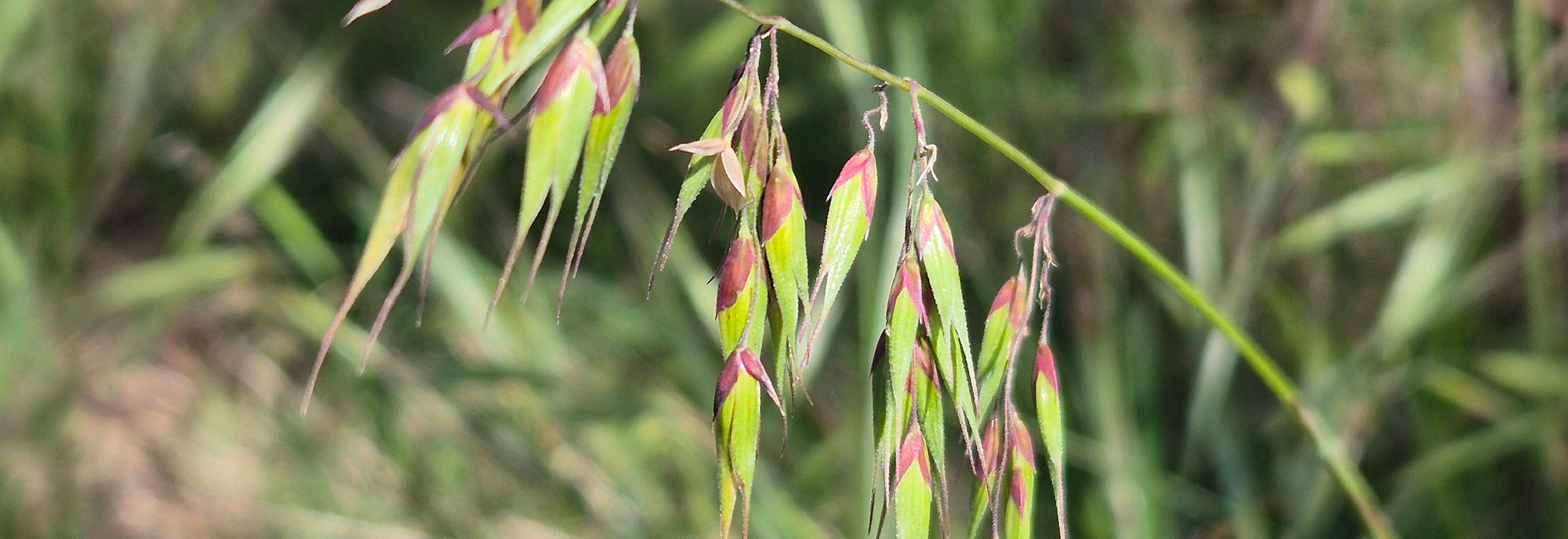

Other Common Names: Annual veld grass, long flowered veldt grass, oat seed grass, tall ehrharta, veldt grass
Annual Veldt Grass
Ehrharta longiflora
Quick facts

Status
Permitted s11

Life Cycle
Annual

Growth Form
Grass

Origin
Namibia and South Africa

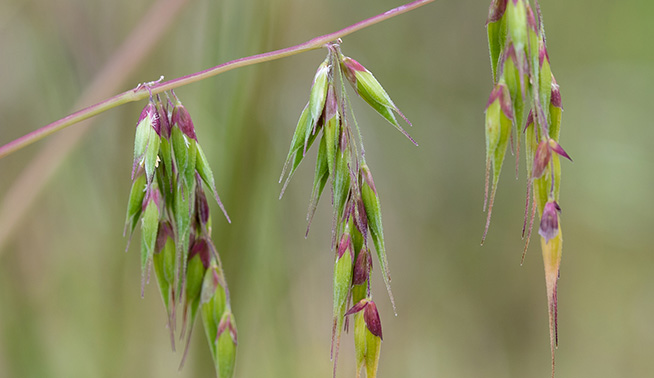
Flowers
Reddish/purple/green

Dispersal
Water and wind
Names

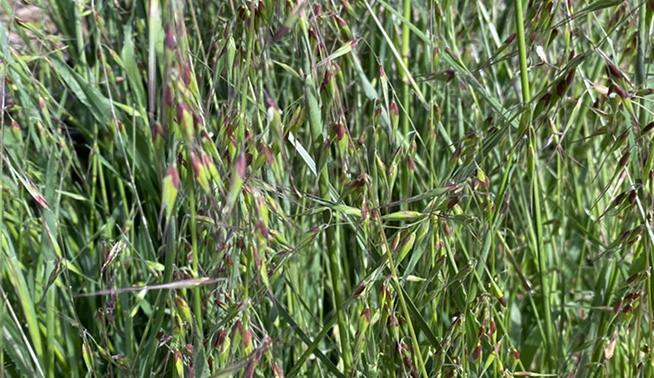
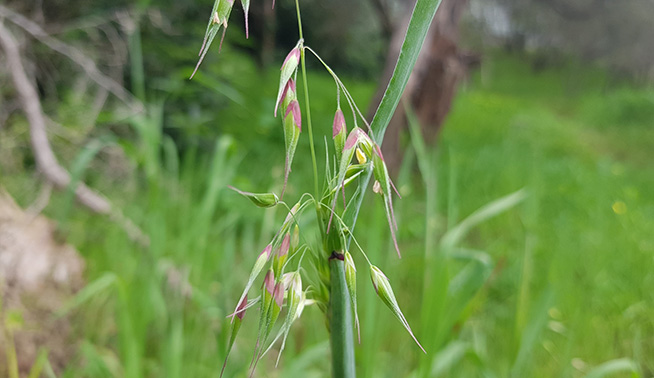
Form and function
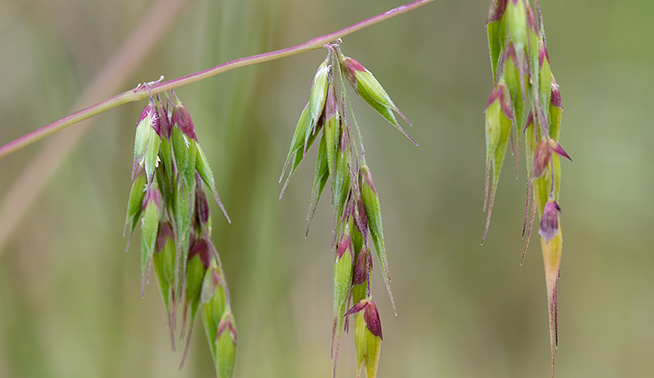
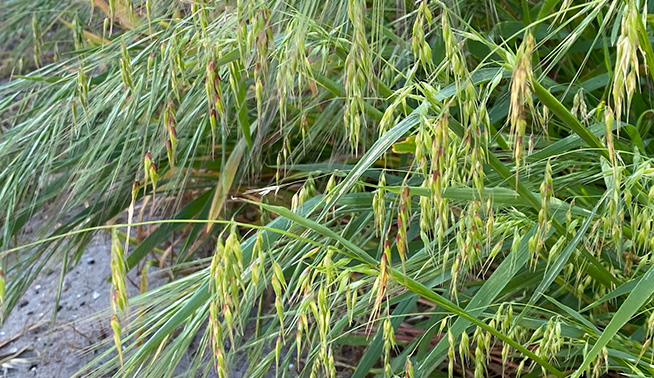
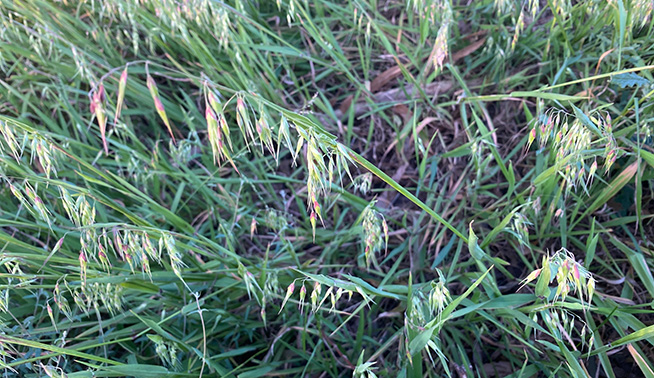
Flowers
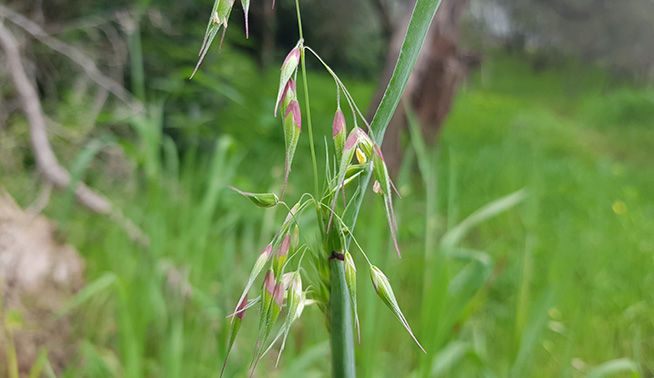
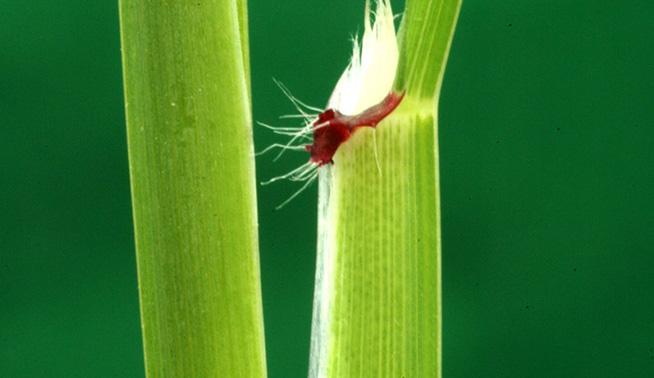
Leaves
Seed
Roots
Habitat
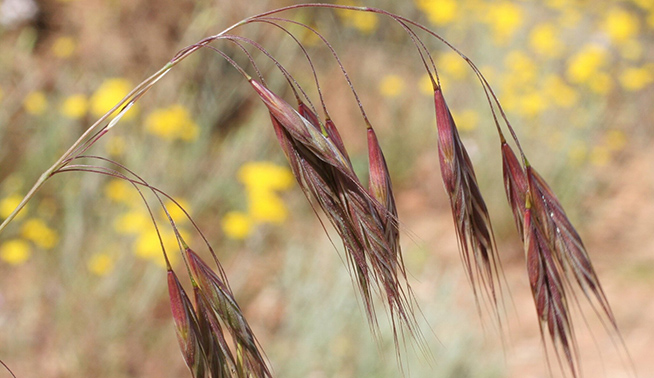
May be confused with...
How does it spread?
Why is it a weed?
History
How to control


Physical
For small infestations or individual plants, hand pulling (i.e. using handheld tools such as weed poppers, knives and spades) to remove the entire plant including all the root material. Bag all the removed plants if seeds are present to prevent spread. Note this species is often easier to pull out than native grasses, which tend to be more securely anchored.
Regular mowing and slashing can be used to prevent seed set and provide some control.
Chemical
For infestations or individual plants that are actively growing, apply 40mL of glyphosate (450g/L) in 10L of water using a foliar application method (i.e. spraying foliage with a backpack sprayer, knapsack sprayer or tank and pump spray) in winter or spring up to flowering provides good control.
Secondary seeding often occurs. Repeat this treatment if necessary.
Alternatively, for infestations or individual plants that are actively growing, apply a mix of 18mL fluazifop* (212g/L) with 20mL of wetting agent in 10L of water using a foliar application method (i.e. spraying foliage with a backpack sprayer, knapsack sprayer or tank and pump spray) before flowering stem emerges or at 3-5 leaf stage. Alternatively, apply fluazifop at (128g/L) 30 ml/10 L or 1.6 L/ha (500 L water/ha), using a foliar application method.
Further
reading
 Permit PER96570 for glyphosate
Weed Distribution Map
LSID number: [2899357] | full LSID: [https:/id.biodiversity.org.au/node/apni/2899357] | field_lsid: [] | taxon: [Ehrharta longiflora]
ALA Reference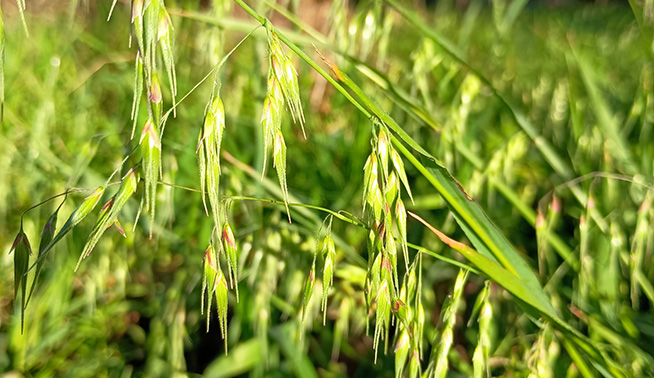
References
-
 Weed Scan (2026)
Annual Veldt-Grass
Weed Scan (2026)
Annual Veldt-Grass
-
Bell, U. (2008).
Common Native Grasses of South-West WA. Department of Environment and Conservation
-
Weeds of Australia (2016)
Ehrharta longiflora
-
Atlas of Living Australia. (n.d.)
Ehrharta longiflora Sm - Annual Veldt Grass.
-
NSW Government. (n.d.).
Ehrharta longiflora Sm. PlantNET - FloraOnline.
-
Weeds of Sweetwater Creek (2018)
Recognition and Management Annual Veldt Grass (Ehrharta longiflora) Factsheet
-
Walters, A. (2016, October 5).
Controlling Annual and Perenial Veldt grasses. Recreating the Country.
-
Vic.gov.au (2026)
Weed Herbs, Grasses and Bulbs of Whitehorse | Whitehorse City Council.
-
Western Australian Herbarium (1998–)
Florabase—the Western Australian flora. Department of Biodiversity, Conservation and Attractions.
Life Cycle
| JAN | FEB | MAR | APR | MAY | JUN | JUL | AUG | SEP | OCT | NOV | DEC | Notes | |
|---|---|---|---|---|---|---|---|---|---|---|---|---|---|
| Germination | |||||||||||||
| Active growth | |||||||||||||
| Flowering | |||||||||||||
| Fruiting |
Regularly or most commonly
Occasionally, given suitable conditions
Management
| JAN | FEB | MAR | APR | MAY | JUN | JUL | AUG | SEP | OCT | NOV | DEC | Notes | |
|---|---|---|---|---|---|---|---|---|---|---|---|---|---|
| Physical | |||||||||||||
| Fluazifop | |||||||||||||
| Glyphosate |
Optimal
Potentially, but conditionally dependent