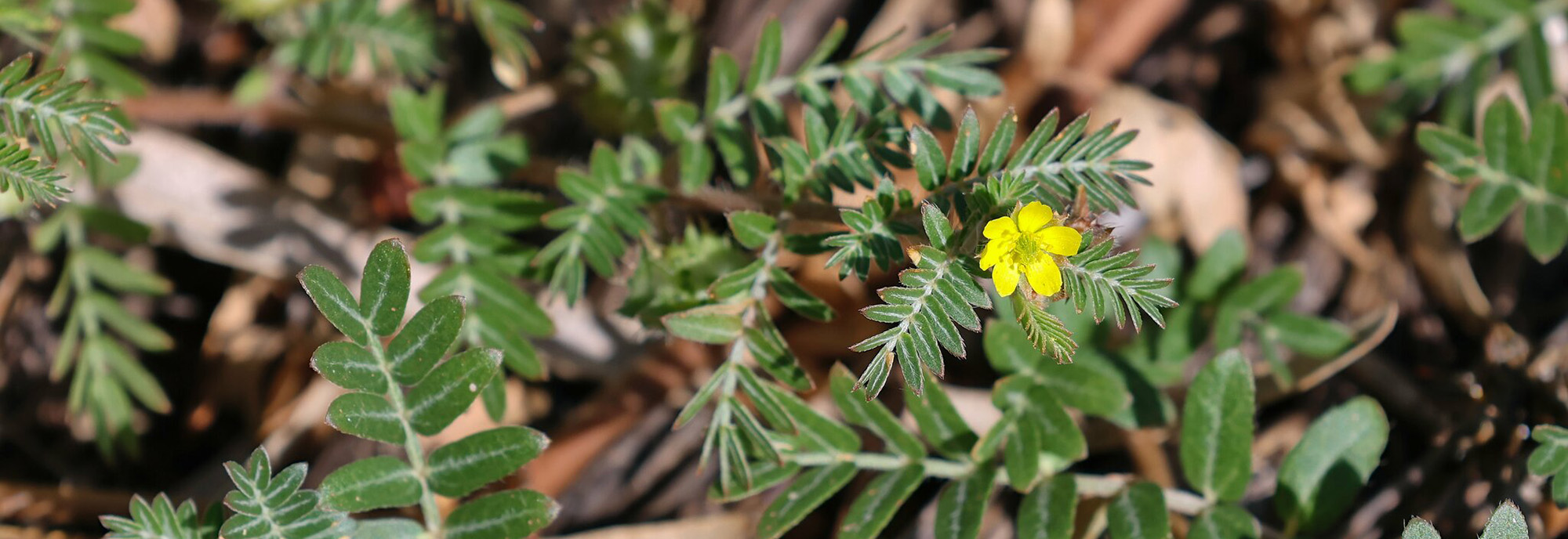

Other Common Names: Catshead, Bindii, Doublegee, Puncture Vine, Maltese Cross, Mexican Sandbur, Burnut, Ground Bur Nut, Tack-weed, Yellow Vine.
Caltrop
Tribulus terrestris
Quick facts

Status
Permitted s11

Life Cycle
Annual

Toxicity
Toxic leaves

Growth Form
Herb

Origin
Mediterranean, Africa, Asia

Flowers
Yellow

Dispersal
Burrs attatching
Names

Form and function
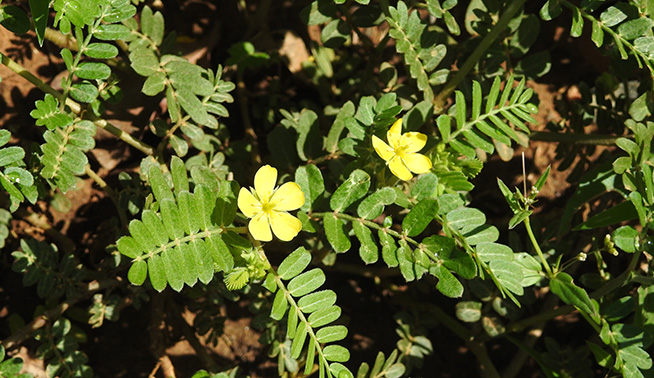
Flowers
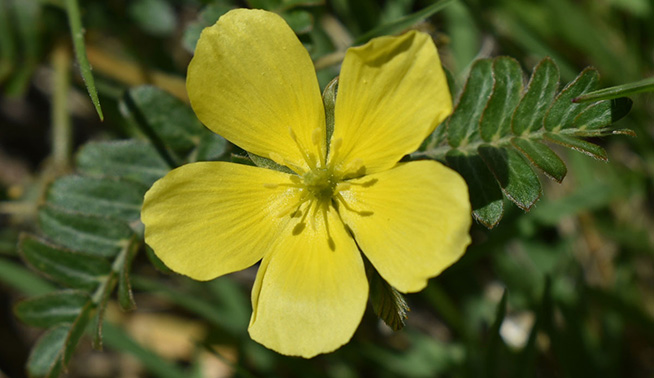
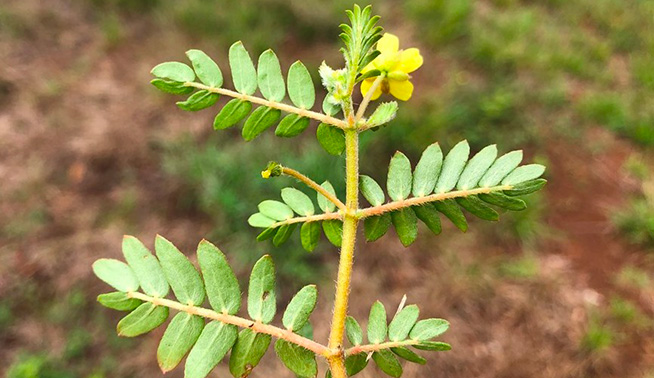
Leaves
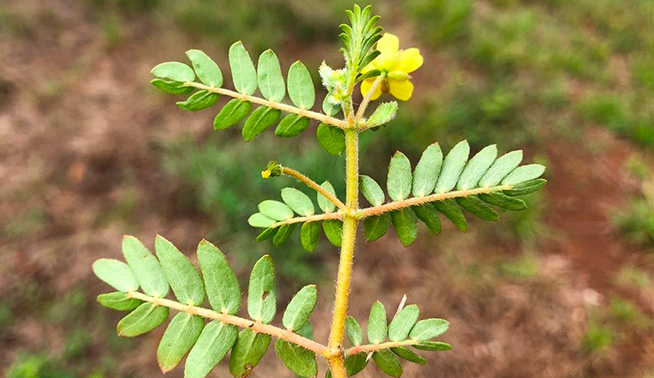
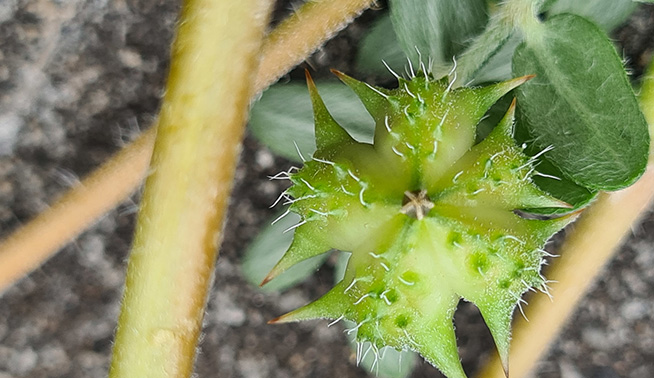
Fruits
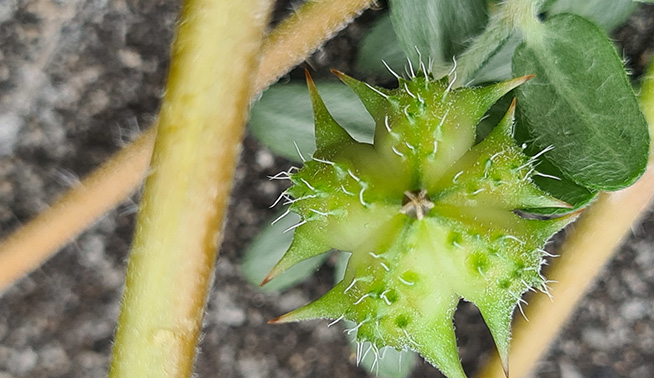
Roots
Habitat
May be confused with...
How does it spread?
Why is it a weed?
History
How to control


Physical
Hand removal can be effective for small infestations, care must be given to removing the deep tap root and the seeds should be burnt. It is important to pull from the root crown, where the weed spreads from, to remove the deep tap roots.
Mechanical control using a prickle roller to pick up mature fruits and then dispose of them in a bin or dry them out and burn them, is an effective method.
Chemical
Herbicide use can also be effective, spraying needs to be done before seeds set and repeated for each germination of seedlings.
For seedlings, apply a mix of 1mL glyphosate (450g/L) with 100L of water using a foliar application method.
On bare tracks diesel can be used to kill plants and penetrate and destroy seed in surface soil.
Managerial
Preventing the spread of Caltrop is the best control measure. Prevent spread through cleaning of equipment, clothing, vehicles that have been used in infested areas. Exclude people and close tracks to stop spread.
Re-establish ground cover once control has been achieved. Mulching or maintaining a dense turf are the best options to prevent establishment. Competition is a very effective control method as it is a poor competitor, and it only achieves dominance when other vegetation is removed and the ground is bare.
Biological
Native mite (Eriophyes tribuli), which causes hair-like growth on stems and leaves, can prevent flowering and therefore seed production if present on the plant early enough.
Other biological agents include; weevils (Microlarinus lareynii and Microlarinus lypriformis) have been shown to significantly reduce seed production and the growth of T.terrestris but are not currently established in Australia. Moth species, ephysteris subdiminutella, feeds on the developing burrs, while the level of infestation can be high, the overall impact of this species on the T.terrestris is considered low.
Further
reading
 Permit PER96570 for glyphosate
Weed Distribution Map
LSID number: [2909503] | full LSID: [https://id.biodiversity.org.au/node/apni/2909503] | field_lsid: [] | taxon: ["Tribulus terrestris"]
ALA Reference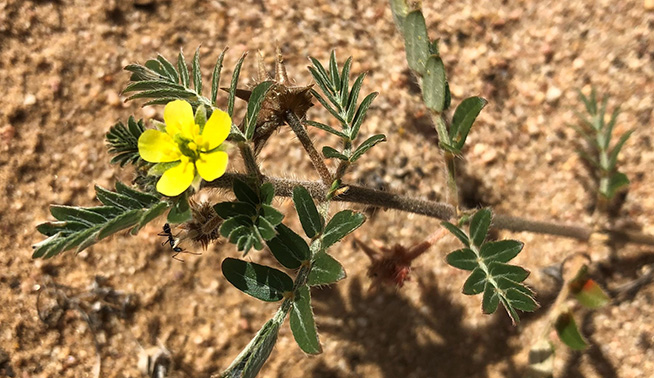
References
-
 Kate Brown and Kris Brooks (2002)
Bushland Weeds A practical guide to their management With case studies from the Swan Coastal Plain and beyond
Kate Brown and Kris Brooks (2002)
Bushland Weeds A practical guide to their management With case studies from the Swan Coastal Plain and beyond
-
Atlas of Living Australia. (n.d.).
Tribulus terrestris L.
-
Western Australian Herbarium (1998–).
Tribulus terrestris L. Caltrop Florabase—the Western Australian flora. Department of Biodiversity, Conservation and Attractions.
-
WeedsAustralia (2024)
Caltrop, Cat-head, Catshead, Bindi, Bindii, Doublegee, Bindy Eye, Bull’s Head, Cat’s Head, Goat’s Head, Puncture Vine, Puncture Weed, Devil’s Thorn, Malta Cross, Maltese Cross, Mexican Sandbur, Burnut, Ground Bur Nut, Ground Burnut, Tack-weed
-
Agriculture Victoria (2020)
Caltrop
-
NSW Government. (2009)
Tribulus: Caltrop and yellow vine
-
Government of South Australia (2017)
Pest plant - Caltrop (Tribulus terrestris)
-
The University of Arizona (2022)
Puncturevine
-
Government of South Australia (2012)
Weed identification Caltrop (Tribulus terrestris)
-
Urban Bushland Council WA
Caltrop
Life Cycle
| JAN | FEB | MAR | APR | MAY | JUN | JUL | AUG | SEP | OCT | NOV | DEC | Notes | |
|---|---|---|---|---|---|---|---|---|---|---|---|---|---|
| Germination | |||||||||||||
| Active growth | |||||||||||||
| Flowering |
Regularly or most commonly
Occasionally, given suitable conditions
Management
| JAN | FEB | MAR | APR | MAY | JUN | JUL | AUG | SEP | OCT | NOV | DEC | Notes | |
|---|---|---|---|---|---|---|---|---|---|---|---|---|---|
| Physical | |||||||||||||
| Chemical | |||||||||||||
| Cultural |
Optimal
Potentially, but conditionally dependent