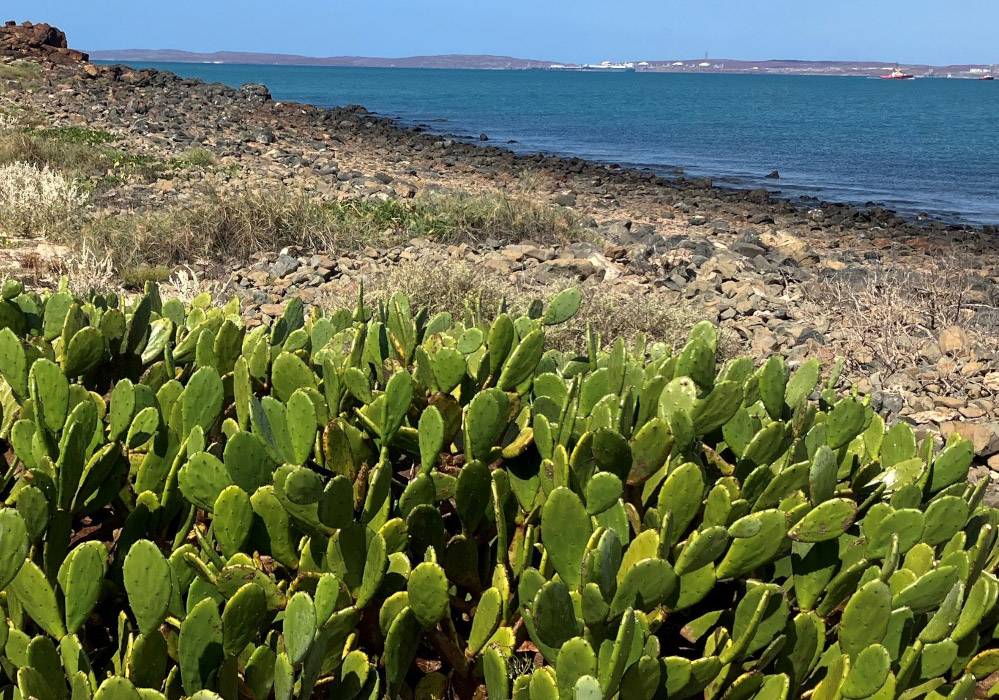



Boiler Rocks, located on East Lewis Island within the Dampier Archipelago was the focus for a prickly pear (Opuntia spp.) eradication effort. This multi-agency project, led by DBCA in collaboration with Murujuga Aboriginal Corporation (MAC) Rangers, required a combination of physical removal, chemical treatment, and follow-up monitoring to manage a significant and persistent infestation.
The Problem
The first major control operation was undertaken jointly by DBCA and MAC Rangers in early November 2024.
Physical/Mechanical Removal
A substantial portion of the infestation was removed manually using tools such as mattocks, tongs, spikes, and axes. Extracted material was loaded into large plastic bins and heavy-duty polyplex bags and transported by vessel to the mainland for disposal at a deep burial waste facility. As this is a declared species, a permit was required from DPIRD to move it.
Chemical Control
The remaining cactus was treated with triclopyr 600 g/L (APVMA PER92452) at a rate of 3 L per 100 L of water.
What was tried
First Follow-Up Inspection – 28 November 2024
DBCA inspected the site to assess chemical efficacy. The inspection indicated that the initial treatment had not fully controlled regrowth, and follow-up treatment would be required, particularly after summer rains.
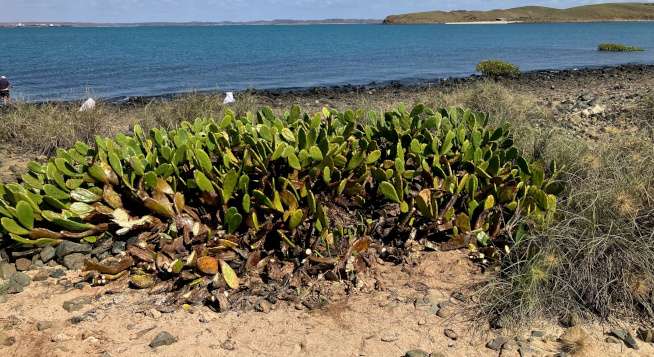
Follow-Up Chemical Control – 11 February 2025
Regrowth was evident where plants had been physically removed. New growth also appeared around the piles of extracted cactus material.
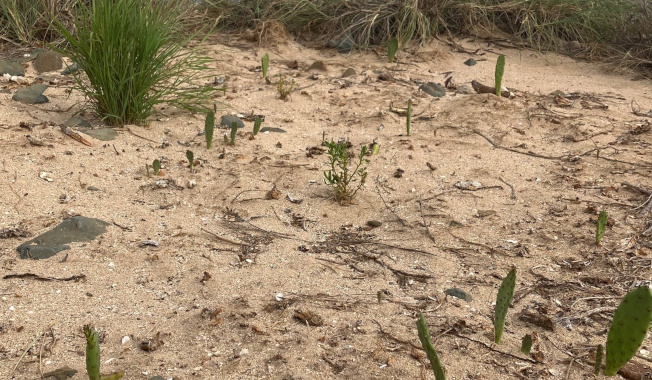
These areas were re-treated to with triclopyr 600 g/L mixed at 0.8 L per 60 L diesel. Diesel enhances herbicide delivery by breaks down the waxy, outer layers of the cactus pad and helps move the herbicide into the vascular tissues.
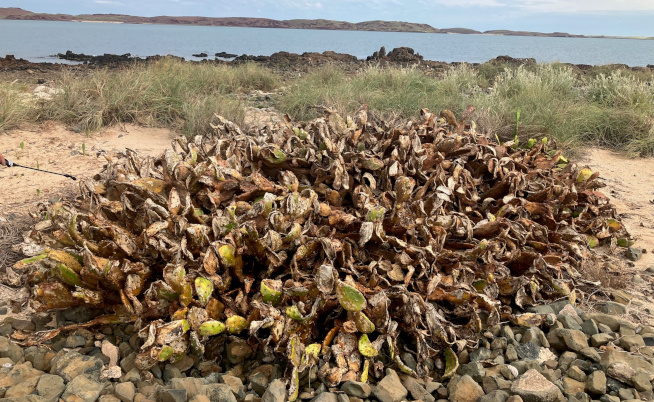
Pile Burning – 12 September 2025
Six months after the February chemical treatment, DBCA and MAC Rangers conducted a pile burn. The treated cactus had dried almost completely and burned effectively, reducing the biomass to ash and eliminating the risk of surviving cladodes re-rooting.
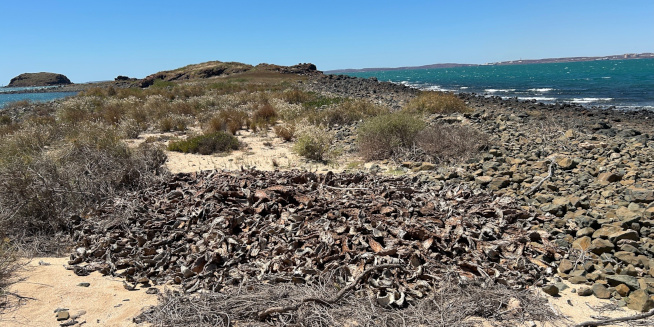
Follow up surveillance and education
Follow-up inspections will occur in early 2026 after summer rains to detect any regeneration. Signage will also be installed at boat ramps encouraging recreational boaters to report prickly pear sightings on island nature reserves to DBCA.
What Was the Outcome
The Boiler Rocks eradication effort demonstrates the complexity of managing prickly pear on offshore islands, where logistics, access constraints, and environmental conditions influence success. A combination of mechanical removal, staged chemical treatments, and strategic pile burning has significantly reduced the infestation, with ongoing monitoring planned to ensure long-term eradication.
References
Sheehan, M.R. and Potter, S. (2017). Managing Opuntioid Cacti in Australia: Best practice control manual for Austrocylindropuntia, Cylindropuntia and Opuntia species. Department of Primary Industries and Regional Development (WA), Perth. https://library.dpird.wa.gov.au/bs_publishedrpts/78/