
Image
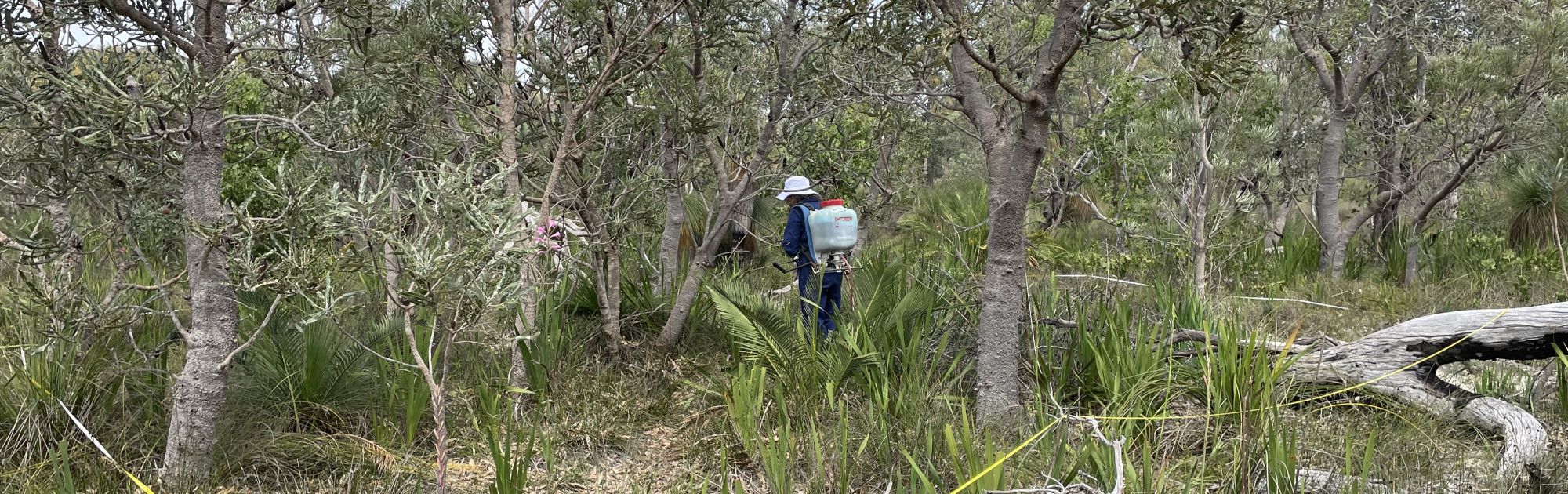
Herbicide application at reserve in Mundijong. DBCA Swan Region

Chemical Control

Chemical control employs the use of specially formulated herbicides to treat weeds. There are numerous herbicides and several methods of application, each developed to target a weed or group of weeds.

This page details various application methods for herbicide. Read the Weed CRC's guideline Herbicides: knowing when and how to use them for more information about herbicides.

Herbicide is an effective tool for controlling weed infestations and is economically viable compared to other techniques. It can also be targeted to specific weeds by the choice of herbicide or application method. In some situations, herbicide may be more beneficial than hand removal as it allows weeds to remain in situ as habitat and minimises soil disturbance—both of which are risks associated with weed removal. Although introducing chemicals into bushland may seem hazardous, herbicide treatment remains one of the most successful means of control for many weed species.

As with any form of weed control, herbicide is best used when part of an integrated weed management plan. Treatment effectiveness will vary across target species and sites; here are some guiding principles to follow when using herbicide. All land managers are advised to follow these steps for effective herbicide application.

10 Steps for Effective Herbicide Application

  1. Know your target—identify the weed
  2. Select the most appropriate application method
  3. Select the most appropriate herbicide to use
  4. Develop a Chemical Application Plan (including a Job Safety Analysis)
  5. Use appropriate personal protective equipment (PPE)
  6. Prepare and calibrate your equipment
  7. Check weather conditions
  8. Mix chemicals safely
  9. Complete your pre-start check
  10. Implement control and record details

What about if a herbicide treatment didn't work? Read the herbicide failure section further down where we discuss tolerance and resistance.

IMPORTANT NOTE—Herbicides and their use are regulated by the Australian Pesticides and Veterinary Medicines Authority (APVMA). 
Always read the chemical label prior to use!
Application Methods

Foliar Spray

Herbicide is applied by spraying the leaves (foliage) of target weeds, where it is absorbed into the plant's vascular system (where water and nutrients are transported). Foliar spray can be applied at large scale by boom sprayer, or at a small scale by using a pump, backpack, or knapsack sprayer (spot spraying). Small scale application methods present an opportunity for targeted control with reduced risk for off-target impacts. Whereas boom spray applications are less targeted and thus less suitable for sensitive conservation areas and waterways.

Types of foliar application:

  • Handgun Spraying – Uses a spray gun and hose that is connected to a pump and tank on a vehicle. Allows for targeted spot-spraying in semi-accessible locations (dependent on vehicle access and hose length).
  • Backpack/Knapsack Spraying – Uses a small spray gun connected to a backpack or knapsack (handheld) fluid container. Used for targeted spot-spraying of small populations and areas accessible by foot only. Limited volume capacity.
  • Boom Spraying – Uses a boom spray mounted to a vehicle. Used for large, dense infestations, or for spraying along roadsides or burn boundaries.

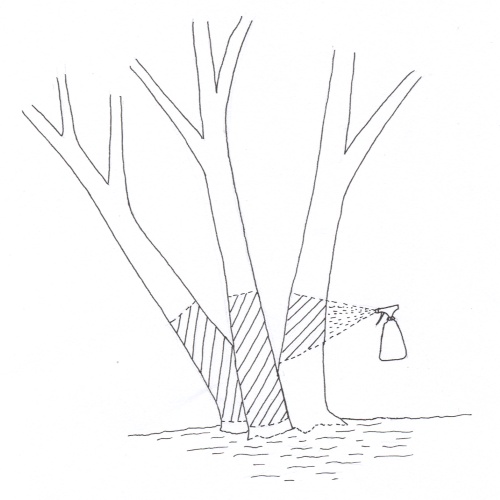
Basal barking illustration by Libby Sandiford
Basal barking illustration. Libby Sandiford

Basal Barking

Herbicide is sprayed (or painted) directly onto the bark of woody weeds from the ground up to 40 cm. Basal barking uses oil-soluble herbicide mixed with a solvent (usually diesel) to effectively penetrate the bark to access the vascular tissue.

Basal barking is typically effective for woody weeds.

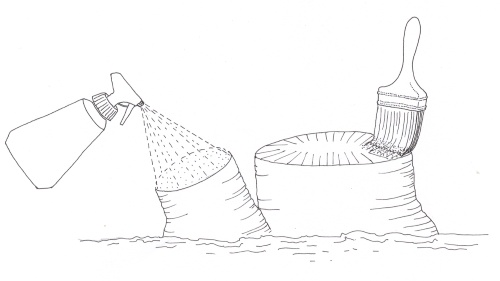
Cut and paint illustration by Libby Sandiford
Cut and paint illustration. Libby Sandiford

Cut and Paint

Also known as cut stump. Larger woody weeds are felled close to ground level, then herbicide is immediately sprayed or painted onto the cut surface. Cut and paint has a low level of disturbance as the root system is left undisturbed.

Stem Injection

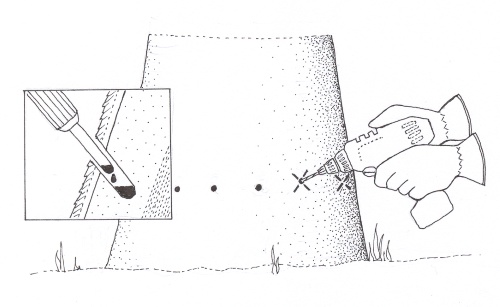
Setm injection illustration by Libby Sandiford
Stem injection illustration. Libby Sandiford

Also known as frilling, and drill & fill. The bark is cut or a hole drilled through to the vascular tissue at intervals around the stem/trunk, where herbicide is immediately applied. Frilling (or 'chipping') involves using an axe or large knife to cut notches into the bark then applying herbicide. Drill & fill involves drilling holes into the bark then immediately injecting herbicide into the holes.

Stem injection is time and labour intensive but allows the weed to remain in place.

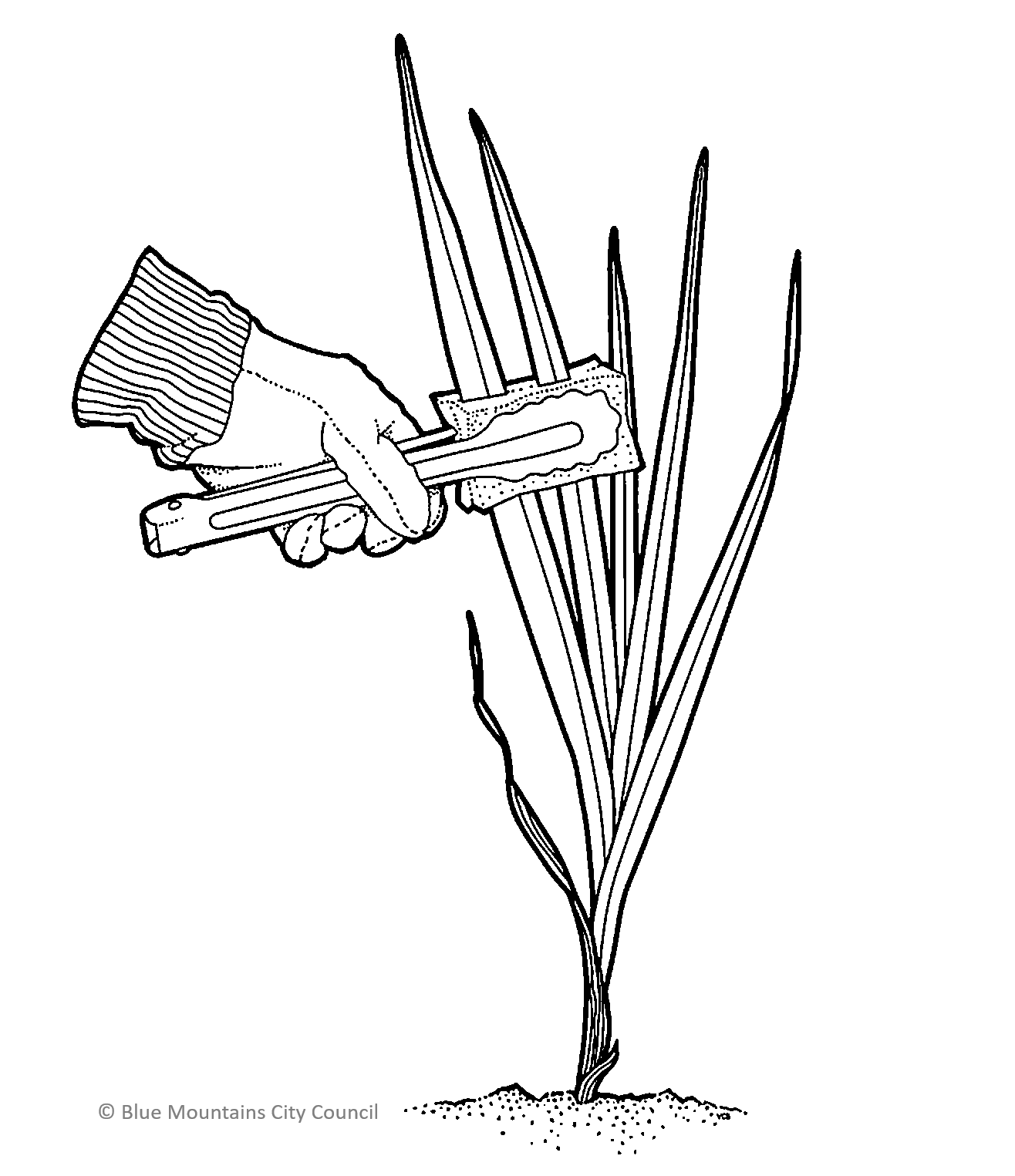
Wick wiping illustration from Blue Mountains City Council weed website
Wick wiping illustration. Blue Mountain City Council

Wick Wiping

A wick, rope, or sponge soaked in herbicide is wiped over the leaf area of a weed from its base to tip. This method is most suited for treating herbaceous weeds with bulbs, tubers, or corms.

Wick wiping is more time and labour intensive than foliar spraying but presents a lower risk of off-target damage (no risk of spray drift). Use caution when using a herbicide-soaked applicator to minimise dripping herbicide.

Soil Application

Herbicide is applied in a dry, granular form directly to the soil to target woody weeds or germinating seeds. When targeting woody weeds, the herbicide is scattered from the base of the weed up to a 30cm radius. Soil application that targets seeds as they germinate are called pre-emergent.

Soil applicable herbicides bond to soil particles and have a residual (long-acting) effect—so should be used with caution. These slow-release herbicides are dissolved by rain and are not suitable for use near waterways. Undissolved granules are an off-target threat as they are easily mobilised by wind during application or surface water during heavy rain or flooding events.


Adjuvants

Many herbicide formulations contain more than just the active ingredient responsible for killing plants. In some cases, additional products—known as adjuvants—are recommended to enhance the performance of the herbicide.

Understanding what these additional chemicals do, and when and how to use them, is key to achieving effective weed control.

Surfactants

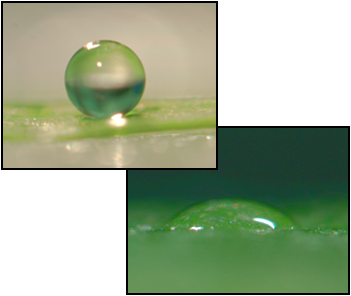
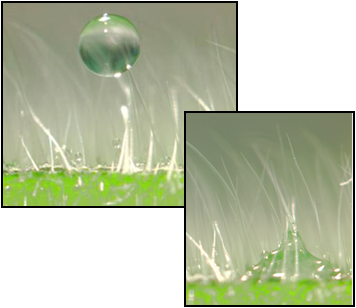
Also known as wetting agents, surfactants are commonly used adjuvants that reduce the surface tension of herbicide spray droplets. This allows droplets to spread more evenly across the leaf surface, improving coverage. They may also assist in mixing or dissolving certain powder or granular herbicide formulations.

Surfactants are particularly useful when leaves are:

  • Glossy or waxy, causing droplets to bead and roll off, or
  • Hairy, preventing droplets from reaching the surface.

In these cases, surfactants help droplets:

  • Spread across smooth, waxy leaves instead of beading, and
  • Sink below leaf hairs and make better contact with the surface.

Water droplet bead vs. spread on leaf surfaceWater droplet on leaf hair vs. incorporated

Images: water droplets on leaf surface. Beaded droplet (top left), droplet spread across (bottom left), droplet in leaf hair (top right), and droplet sunk through hairs to leaf surface (bottom right).

Penetrants

Penetrants are specially formulated adjuvants designed to improve how herbicides enter the plant and move within it. They work by:

  • Softening or disrupting the waxy leaf cuticle, or
  • Improving the solubility of the herbicide on the leaf surface and speeding up absorption.

This allows more herbicide to pass through the leaf surface and be absorbed and translocated within the plant, increasing effectiveness.

Spray Oils

Spray oils are a type of penetrant that:

  • Help herbicides break down waxy leaf surfaces, and
  • Slow evaporation of spray droplets, giving more time for herbicide uptake.

They are often used where improved penetration is critical, particularly with tougher or more mature plants.

Compatibility and Label Directions

Not all adjuvants and herbicides are compatible. Some combinations can reduce effectiveness or cause application issues. Always:

  • Check the product label for recommended adjuvants, and
  • Follow guidance on rates and mixing instructions.

Using the wrong adjuvant can reduce herbicide performance or, in some cases, render it ineffective.

Adjuvants and toxicity in waterways

Several adjuvants are strong detergents, oils or solvents that should not be applied near waterways. Herbicides that have formulations recommended safe for waterways may recommend adjuvants, but in all circumstances these recommendations are for use in an in an agricultural context and caution is needed for a bushland setting.

Do you need to use an adjuvant?

Herbicides are developed and tested across a wide range of plant species to ensure effective performance. During this process, manufacturers often include certain adjuvants in the product’s formulation. However, additional adjuvants may be recommended depending on specific conditions at the time of application.

Many adjuvants are most effective when added separately after the herbicide has been mixed with water. For example, ammonium sulphate is a fertiliser-based adjuvant that is typically only required when the spray water contains high levels of mineral salts. Similarly, some penetrant adjuvants are designed to improve the rate of herbicide absorption and may be particularly useful when rainfall is expected shortly after application.

Further reading

What's the difference between surfactants and penetrants? Rod Randall explains in this handy Western Wildlife entry—Wetting agents, penetrants, aren't they the same thing?

Selecting the right adjuvant depends on factors such as water quality, weather conditions, and the target weed species. For more detailed information, refer to the GRDC's guide to Adjuvants.


Herbicide Failure

Managing weeds in bushland is challenging. Bushland ecosystems are complex, weed species vary widely in their biology and behaviour, and the resources and expertise available for weed management are often limited. As a result, herbicide treatments do not always deliver the expected results.

Successful herbicide application depends on four key factors working together:
  1. Susceptible target weeds,
  2. Suitable weather conditions,
  3. Application at the correct growth stage, and
  4. Effective application technique.

When a weed control program that has previously delivered good results begins to fail, it is important to understand what has changed. Before assuming there is a problem with the herbicide, the key factors influencing treatment success should be carefully assessed, including the herbicide choice, weather conditions, timing, and application technique. Once these factors have been ruled out, the poor performance may be due to herbicide tolerance or herbicide resistance. While these terms are often used interchangeably, they describe different biological mechanisms, and understanding the distinction is critical for selecting the most effective management response. 

Herbicide tolerance

When a weed species that was previously controlled by a herbicide at the recommended application rate begins to survive treatment, herbicide tolerance may be the cause. If a modest increase in the application rate restores effective control, the plants are likely expressing tolerance rather than resistance. Herbicide tolerance is not the result of a genetic change within the population; instead, it reflects the species' inherent ability to withstand the herbicide under certain conditions. 

Herbicide resistance

Herbicide resistance is a more serious issue than herbicide tolerance. It develops through natural selection when the same herbicide, or herbicides with the same mode of action, are used repeatedly over many years and select for the rare individuals within a population that already possess genetic traits allowing them to survive treatment.

For example, in a population of 1,000 individuals, there may one individual that naturally carries a genetic trait that makes them less susceptible to a particular herbicide. When the herbicide is applied, only that one individual survives to produce seed. Over successive generations, the proportion of resistant plants increases until a significant part of the population can no longer be controlled by the herbicide at the recommended rate.

Unlike herbicide tolerance, increasing the herbicide application rate will generally not achieve control of a resistant population. Once resistance becomes established, alternative herbicides, different control methods, or an integrated weed management approach are usually required.

Are any bushland weeds herbicide resistant?

While it's not clear if any of these weeds within bushlands are displaying herbicide resistance, there are known populations of African love grass, capeweed, veldt grass, annual rye grass and wild radish on agricultural properties in Western Australia that are resistant to at least one group of herbicides.

What do I do if I suspect herbicide resistance?

If you suspect genuine herbicide resistance, contact DPIRD for more information and guidance.

Information source: DPIRD (WA) Herbicide resistance