Other Common Names: Recurved Thornapple.
Synonyms: Datura inoxia, Datura meteloides, Datura fastuosa, Datura metel.
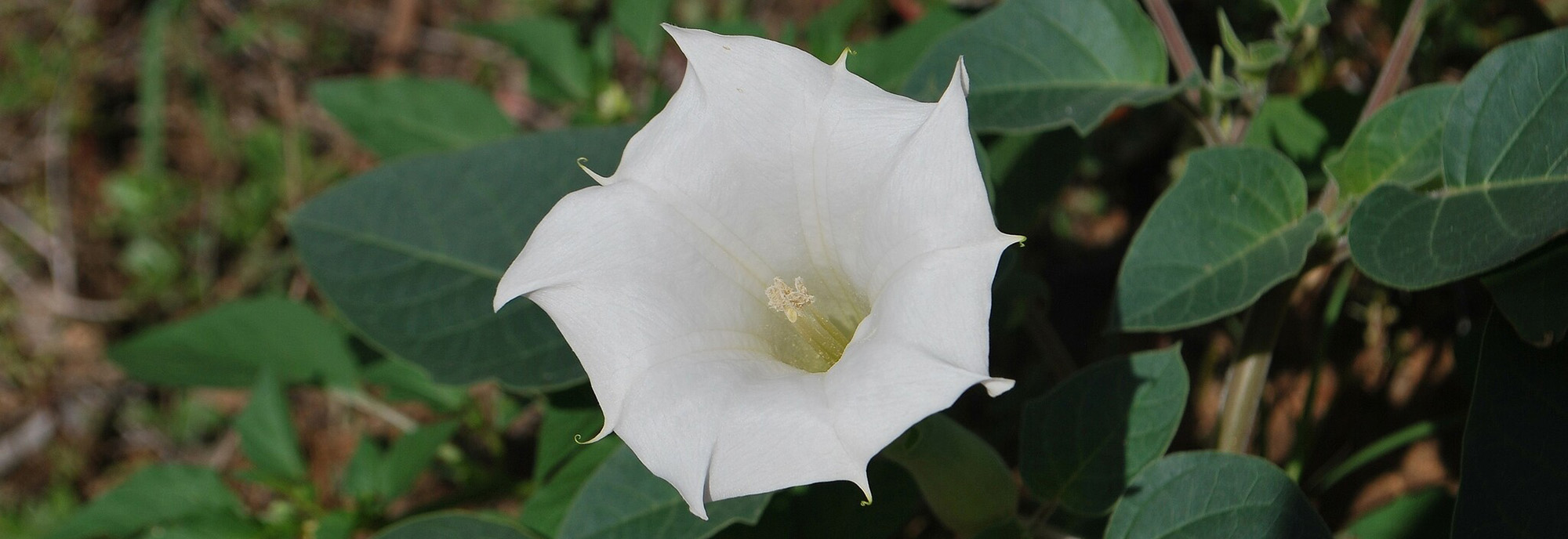

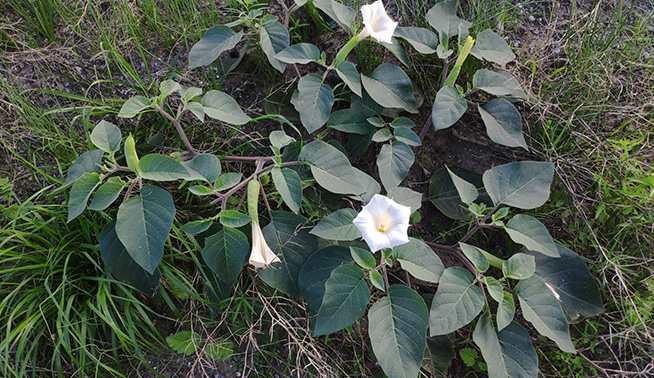
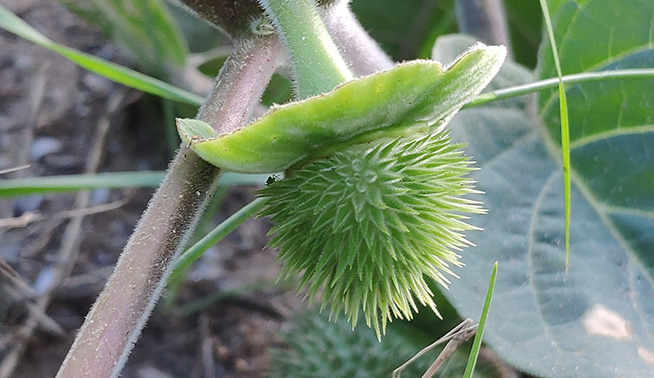
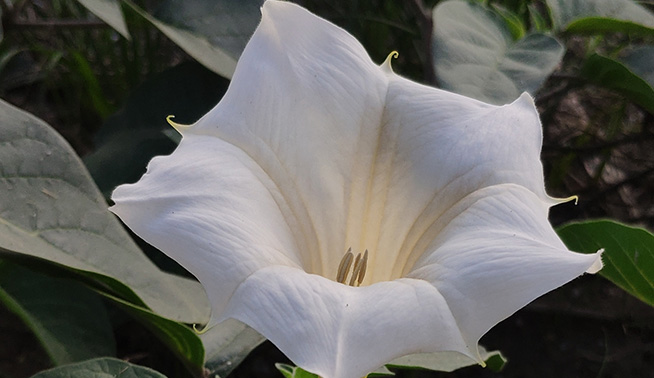
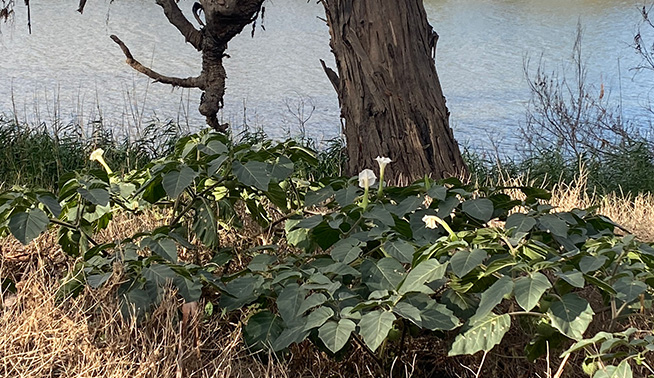
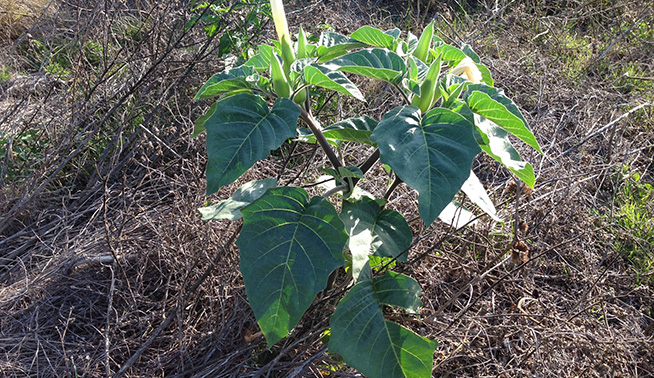
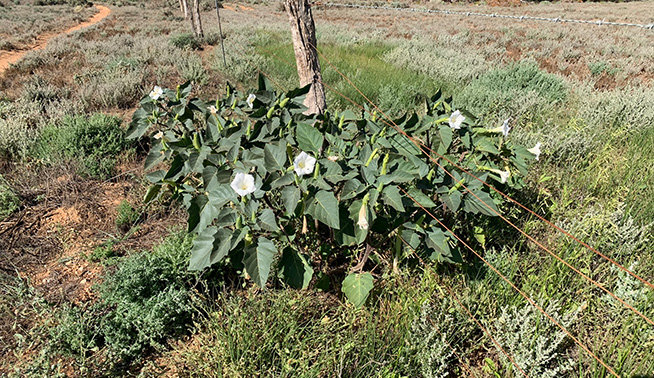
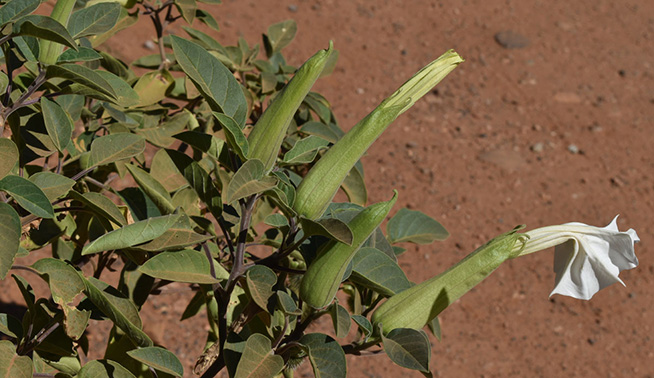
Datura innoxia


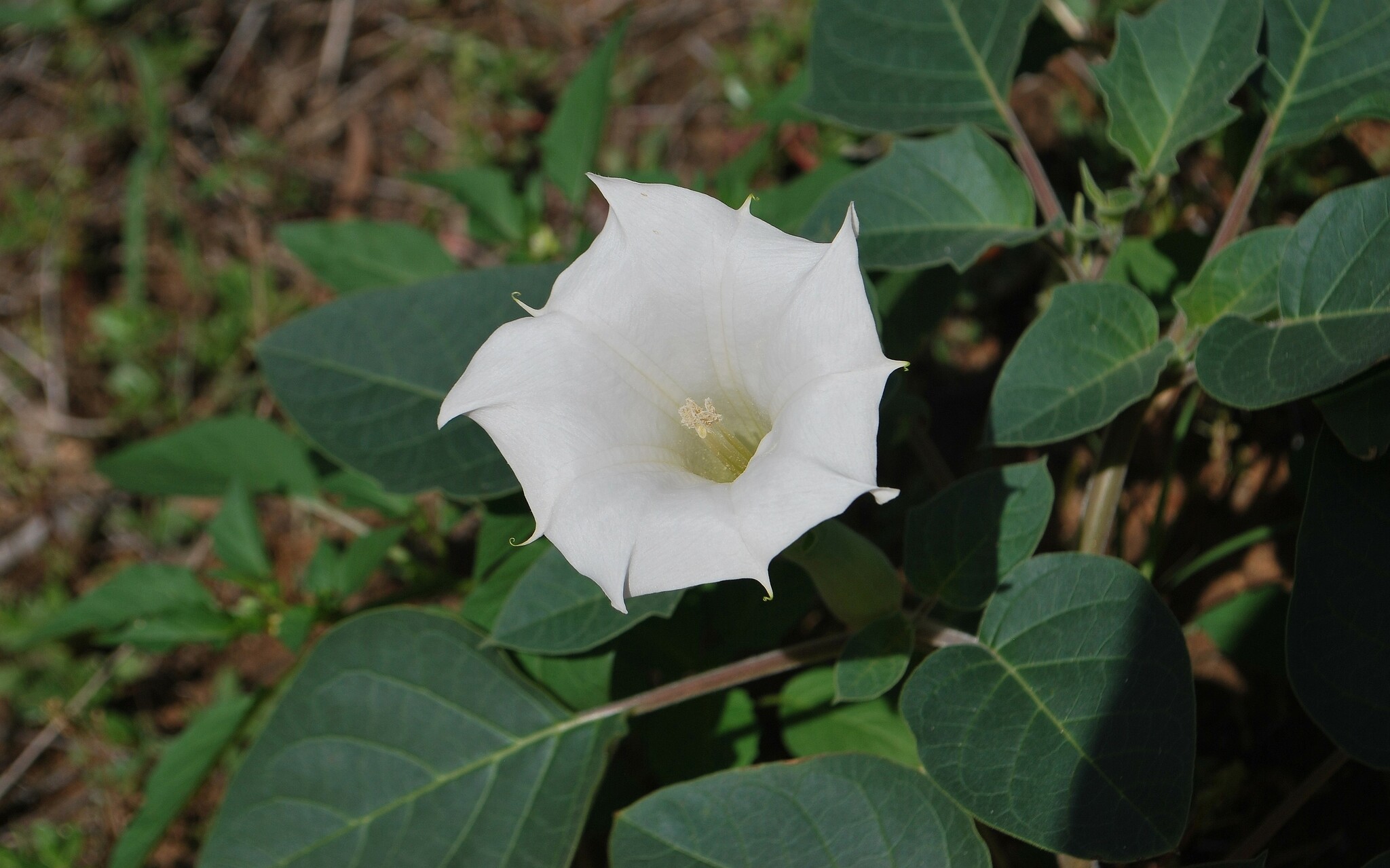
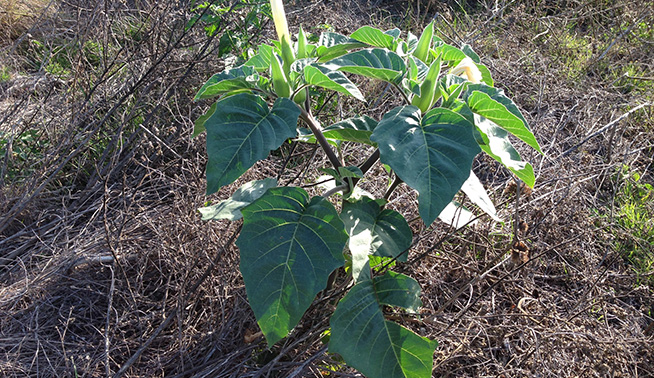
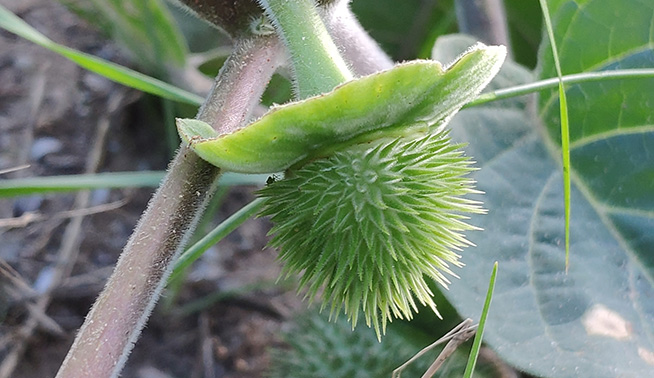
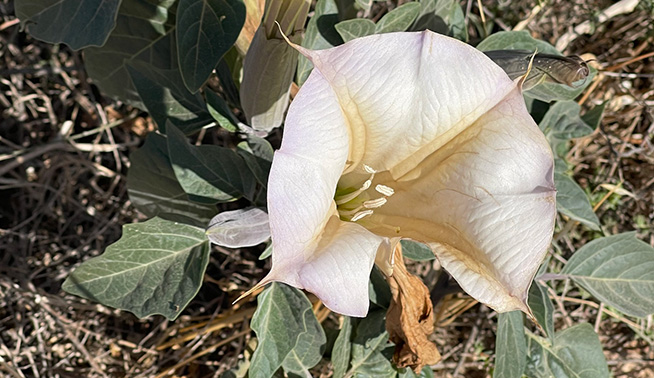 Similar native species: Similar to Hairy Thornapple (Datura wrightii) but can be distinguisehd in having mostly backwards-facing non-glandular hairs on the stems and leaves and its tinged greyish lavender or greyish pink flowers.
Seedlings and small plants can be hand pulled or dug out but making sure to remove all the roots to prevent resprouting. However, since its very long seed bank persistence, manual removal should be conducted repeatedly and need to monitor regularly for early detection.
Cultivation of large infestation can be effective for seedlings. However, due to its tough roots, cultivation need to be repeated several times over many months. Avoid cultivation with fruiting plants and monitor regularly for early detection of resprout.
Chemical treatment is effective for small plants but maybe ineffective for mature established plants.
Selective:
For young, actively growing plants, apply a mix of 285 mL 2, 4-D (700 g/L) in 100 L of water, using a foliar application method (e.g. backpack sprayer or boom sprayer), ensuring full leaf coverage.
Non-selective:
Alternatively for actively growing plants, apply a mix of glyphosate (450 g/L) using; using a handgun, spraying with a rate of 400 to 560 mL per 100 L of water or knapsack spraying with a rate of 60 to 80 mL per 15 L of water. Use higher rate on plants over 15 cm high.
LSID number: [2906005] | full LSID: [https:/id.biodiversity.org.au/node/apni/2906005] | field_lsid: [] | taxon: [Datura innoxia]
ALA Reference
 Atlas of Living Australia. (n.d.)
Datura innoxia Mill.
Department of Energy, Environment and Climate Action. (2025)
Thorn apple (recurved). Agriculture Victoria.
Department of Primary Industries & Regional Development. (2024)
Common thornapple (Datura stramonium). NSW WeedWise.
WeedsAustralia. (2024).
Downy Thornapple
Atlas of Living Australia. (n.d.)
Datura innoxia Mill.
Department of Energy, Environment and Climate Action. (2025)
Thorn apple (recurved). Agriculture Victoria.
Department of Primary Industries & Regional Development. (2024)
Common thornapple (Datura stramonium). NSW WeedWise.
WeedsAustralia. (2024).
Downy Thornapple
| JAN | FEB | MAR | APR | MAY | JUN | JUL | AUG | SEP | OCT | NOV | DEC | Notes | |
|---|---|---|---|---|---|---|---|---|---|---|---|---|---|
| Germination | |||||||||||||
| Active growth | |||||||||||||
| Flowering | |||||||||||||
| Fruiting |
| JAN | FEB | MAR | APR | MAY | JUN | JUL | AUG | SEP | OCT | NOV | DEC | Notes | |
|---|---|---|---|---|---|---|---|---|---|---|---|---|---|
| Physical | |||||||||||||
| Chemical |


 Permit PER96645 for 2,4-D