
Image
Hudson pear

Hudson pear

Cylindropuntia tunicata and C. pallida

Quick facts

Status
Declared Pest - s22(2)
Life cycle
Perennial
Growth form
Succulent
Origin
Mexico, southern USA
Flowers
Yellow or Pink/Purple
Dispersal
Animals, vehicles
Toxicity
Spines = injury

Form and function

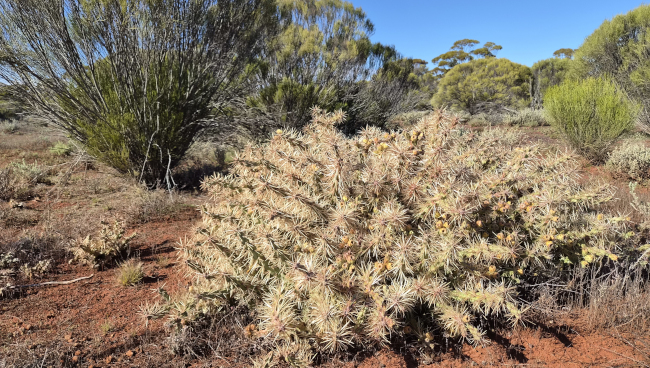
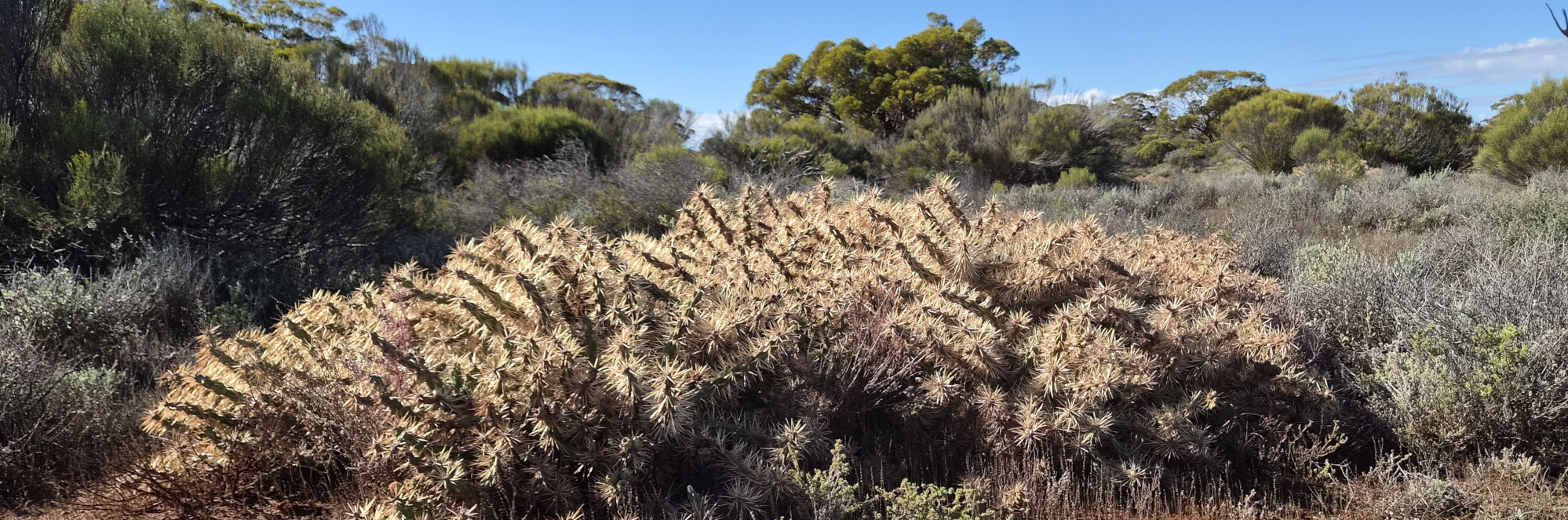
Hudson pear (Cylindropuntia pallida) and brown-spined Hudson pear (Cylindropuntia tunicata) are invasive cactus species that are becoming increasingly widespread throughout the Goldfields region. The two species are similar in appearance but can be distinguished by their spine colour and flowers: Hudson pear has pale white spines and pinkish-purple flowers, while brown-spined Hudson pear has brownish spines and yellow-pink flowers.

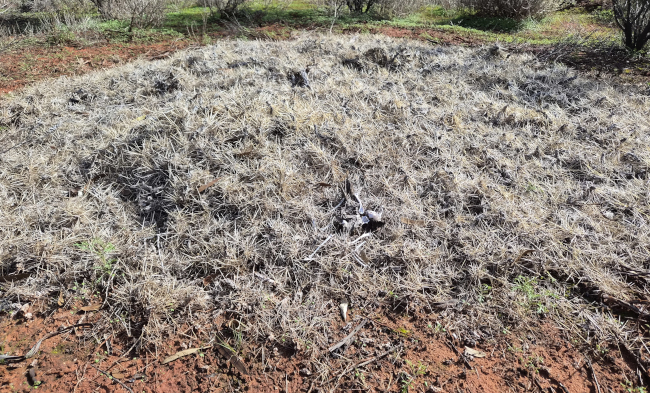
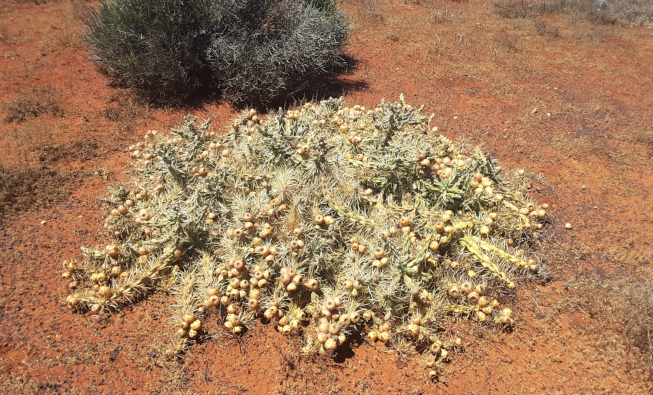
Both species are spreading rapidly in the arid landscapes around Coolgardie, where they form large stands that impact native wildlife and vegetation, restrict access for bushwalkers and pose a significant land management challenge.

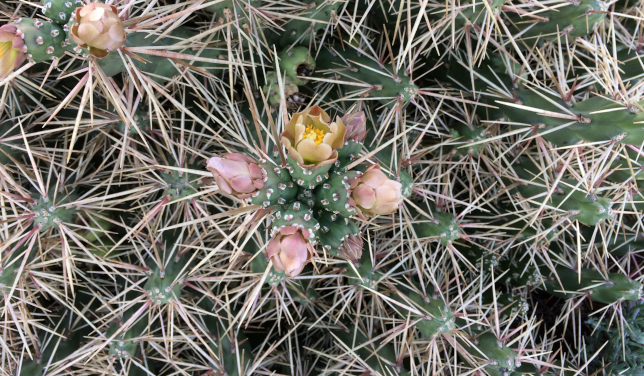
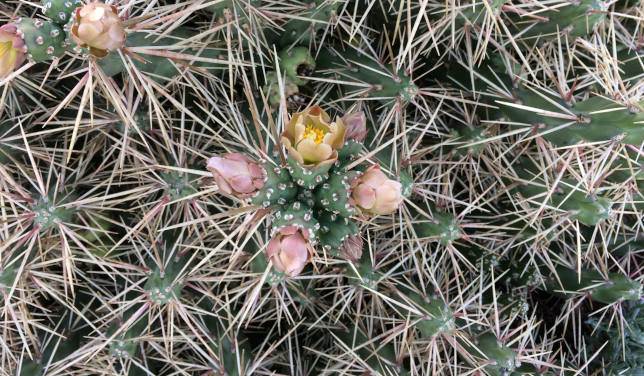
Flowers

  • Brown-spined Hudson pear has pink-yellow flowers.
  • White spined Hudson pear has pink-purple flowers. 
  • Both have similar flowering times in late spring into summer.

Brown spined hudson pear flowers

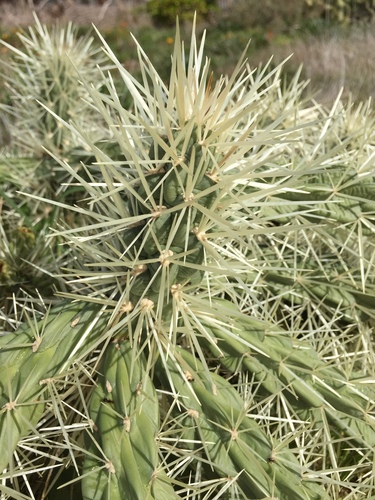
Pads

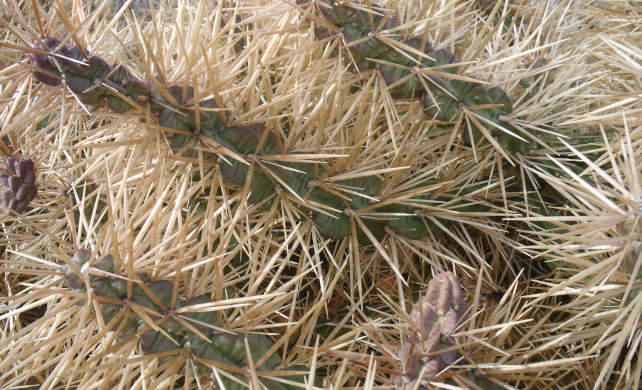
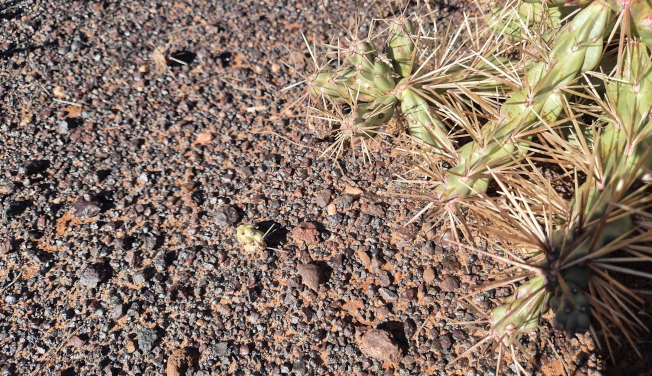
  • Pads are covered in tiny bristles and hard spines 3-5cm long, all obviously sharp.
  • The spines additionally have many tiny barbs along their length.  

Pads below long spines

Fruits

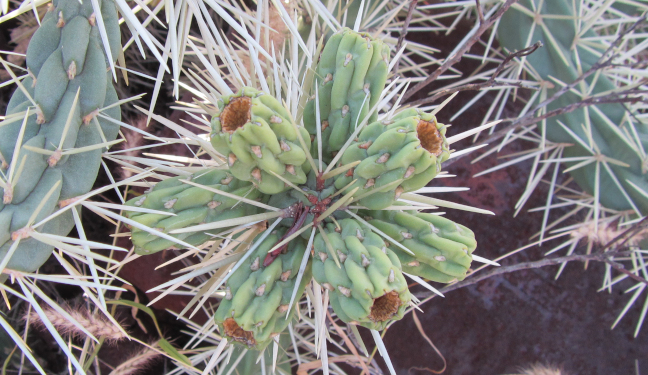
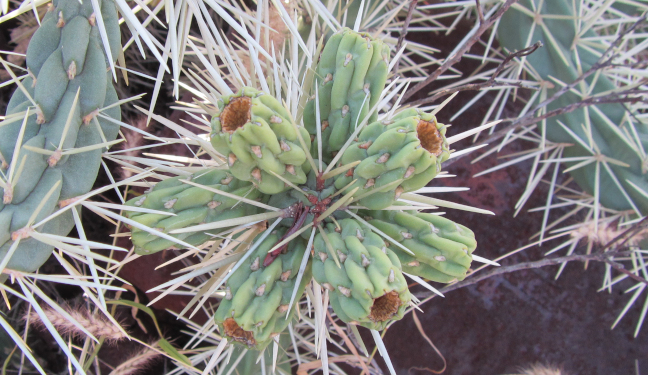
  • Fruit is produced in late spring which also have spines and bristles.
  • The fruit has many small seeds but hudson pear generally doesnt germinate from seed.
  • Fruits start off green and mature to red/orange.

Green fruit

Roots

  • Generally shallow rooted and therefore easy to collect small propagules with tongs.

Why is it a weed?

Cacti are highly adapted to environments with low rainfall and nutrient-poor soils. In their introduced range, few native species utilise cacti for food or shelter, resulting in a lack of natural controls. Even within their native range, relatively few species have evolved to feed on or depend upon cacti. The arid regions of Western Australia provide ideal conditions for cactus establishment and spread, making them a significant weed threat

How does it spread?

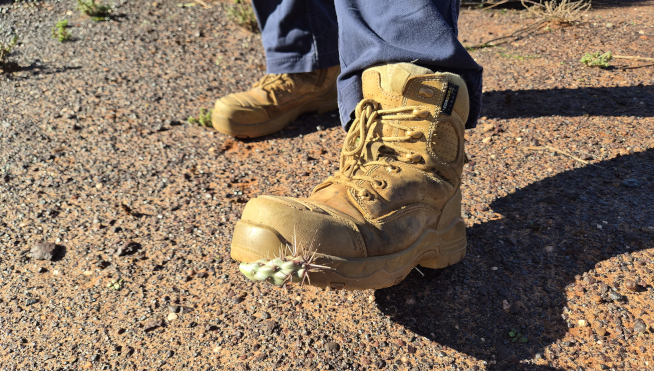
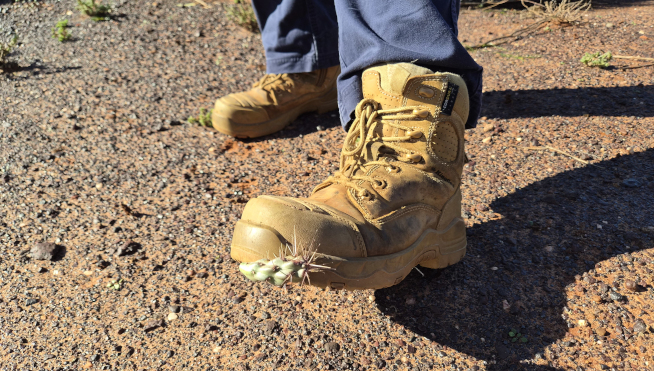
The spine and bristles enable the pads to easily latch on to animals, shoes and tyres which encourages its spread. 

pad stuck to boot

What is its history in Australia

Hudson pear and brown-spined hudson pear were first detected in Australian in the 1960s and believed to be escaped from cultivation in the nursery industry.  They are one of the more horrifying invasive cacti in Australia.

How to control

Physical control

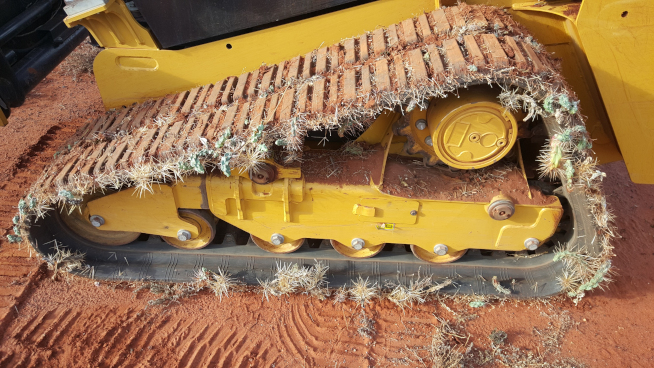
Hudson pear is difficult to kill by weeding alone.  The spines make it hard to hand weed or dig, and just the tiniest segment left behind can grow to a new plant.   Segments get caught on clothing and in vehicle tyres/tracks, so hygiene in weed control is essential.  The tiny segments are difficult to see on the ground and can easily be stepped on and moved with footwear. Machinery can be used to pile up large stands of hudson pear in preparation for burning.  Tongs should be used to collect small propagules around larger plants.  The small propagules can be deep buried or burnt.


Chemical control

Normal glyphosate is ineffective on hudson pear, and success is best achieved using a formulation of 300g/L Triclopyr and 100gL Picloram at a rate of 500 mL per 100 L of water.  A plant-based spraying oil allow the herbicide to run down the spines onto the pads. Adding a spray dye allows any missed pads to be easily seen.

Managerial control

Hudson pear doesn’t burn while its actively growing or still alive unless it's doused in an accelerant which still has mixed success.  After its been killed with herbicide, the dried pads will burn along with all the spines will burn.  Without burning, the spines persist for years and continue to be a hazard to wildlife.  Therefore a 2 staged approach, treating with herbicide followed up with burning is the most effective method of control

Biological control

There is a species of cochineal insect (Dactylopius tomentosus) that will attack hudson pear but it has very little impact.  Therefore the best control is still chemical control.


Weed Distribution Map

LSID number: [2901453] | full LSID: [https://id.biodiversity.org.au/node/apni/2901453] | field_lsid: [] | taxon: [Cylindropuntia tunicata]

ALA Reference

References

  • Chinnock, R.J. (2015) Feral opuntioid cacti in Australia (Part 1. Cylindrical-stemmed genera: Austrocylindropuntia, Cylindropuntia and Corynopuntia). State Herbarium of South Australia, Adelaide
  • Landscape board of South Australia (n.d.) Hudson pear (white-spined) fact sheet.
  • Sheehan, M.R., Potter, S. and Rutherford, H. (2017) Field Identification Guide: Austrocylindropuntia, Cylindropuntia and Opuntia species, second Edition. Department of Primary Industries and Regional Development (WA), Perth
  • Sheehan, M.R. and Potter, S. (2017) Opuntioid Cacti Management Guide Best practice information for Austrocylindropuntia, Cylindropuntia and Opuntia species in Australia. Department of Primary Industries and Regional Development (WA), Perth.

Weed lifecycle calendar

JAN FEB MAR APR MAY JUN JUL AUG SEP OCT NOV DEC Notes
Flowering
Fruiting
Fruits may persist on plants after ripening
Active growth
Regularly or most commonly
Occasionally, given suitable conditions
Not likely but conditionally dependant

Management action calendar

JAN FEB MAR APR MAY JUN JUL AUG SEP OCT NOV DEC Notes
Hand removal
Machinery - take note of wheels and tracks. Wear protection
Foliar spray
Spraying best during active growth
Burning
Burn spines in safe fire period
Optimal
Potentially, but conditionally dependent
Not likely but conditionally dependant
Last updated: September 2026