Other Common Names: Swan Plant, Swanplant, Milk Weed, Milkweed, Cape Cotton, Duck Bush, Swan Bush, Wild Cotton.
Synonyms: Asclepias fruticosa.
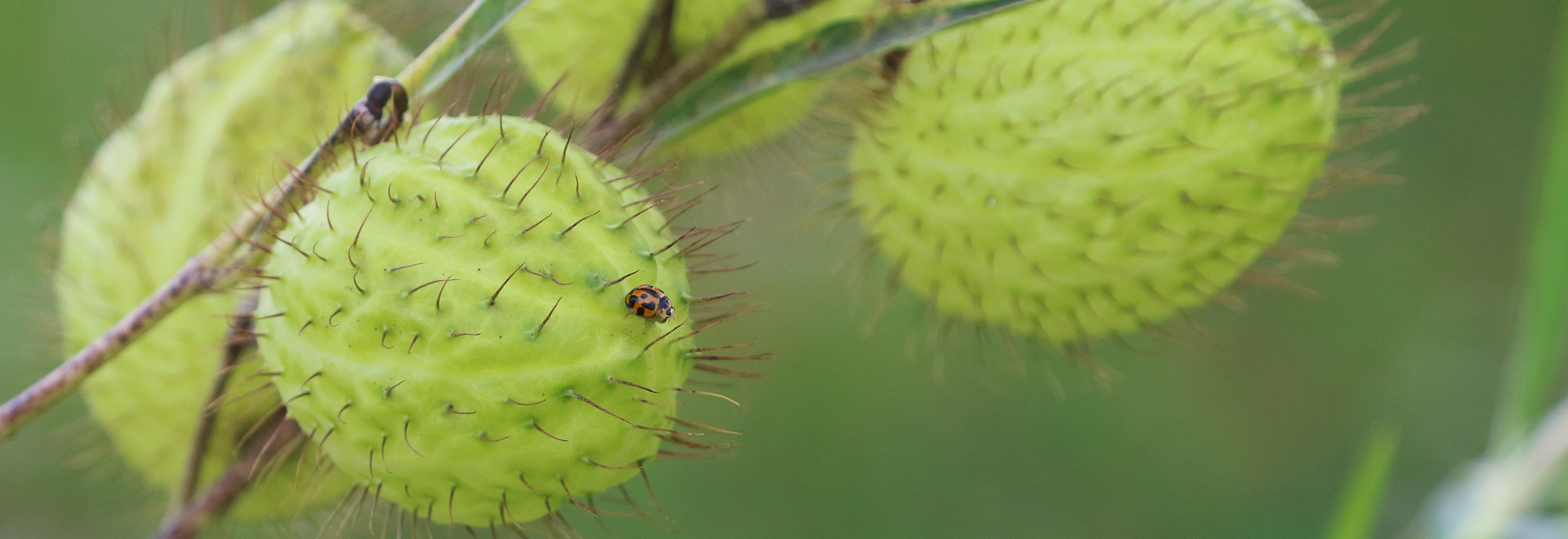

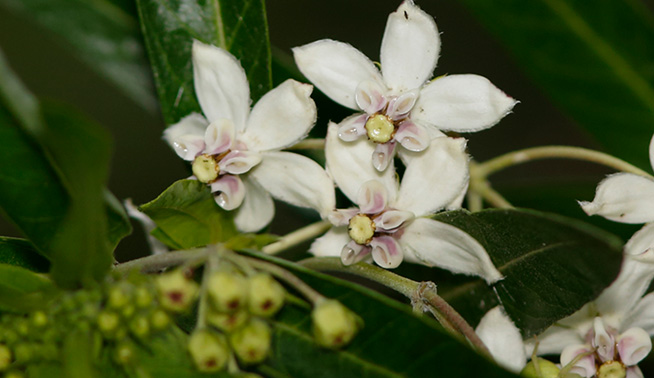
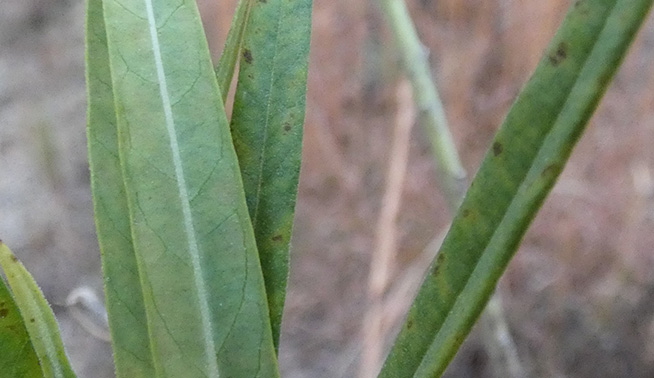
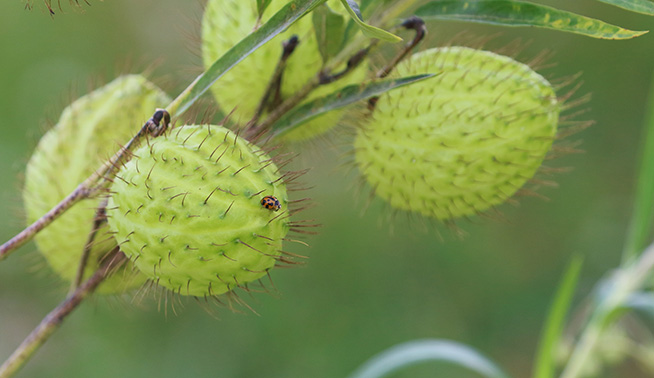
Gomphocarpus fruticosus


Hand pulling: Manual removal is effective for small infestations but must be conducted before flowering to prevent dispersal of seeds. Make sure to remove all the crown and roots as possible to minimise root suckering. To avoid the contact with poisonous sup, wear rubber gloves and overalls and wash hands after hand pulling. Plants that have been removed will dry out quickly and should be burnt, deep buried or discard of carefully.
Slashing: During winter, slashing can be effective to suppress further infestation, as long as conducting repeatedly for seedlings and regrowths or apply herbicides before flowering.
For large infestations, apply 1.5% w/v glyphosate (450g/L) in water using a foliar application method (i.e. spraying foliage with a backpack sprayer, knapsack sprayer or tank and pump spray), ensuring full foliage coverage. Alternatively for larger plants, cut stump close to the ground and paint immediately using a 50% glyphosate solution while the plant is actively growing. Due to its long seedbank persistence, herbicides need to be repeatedly applied for several years with periodical monitoring and slashing if needed.
Revegetation where canopy cover is added will reduce habitat for cottonbush which prefers and open canopy.
Cottonbush has a range of natural enemies in Western Australia that occasionally have a significant impact on growth. It is fed on by the larvae of the wanderer butterfly Danaus plexippus, and its flowers are also visited by the native lesser wanderer butterfly Danaus petilia. A hemipteran bug Arocatus rusticus also feeds on cottonbush seeds and also a sap sucking aphid Aphis nerii. None of these natural enemies were deliberate biocontrol agent release, but native and non-native insects that have found cottonbush a suitable host.
LSID number: [4092442] | full LSID: [https:/id.biodiversity.org.au/node/apni/4092442] | field_lsid: [] | taxon: [Gomphocarpus fruticosus]
ALA Reference
 Department of Primary Industries and Regional Development. (n.d.).
Narrow leaf cotton bush: declared pest.
WeedsAustralia. (2024).
Narrow Leaf Cotton Bush, Narrow-Leaved Cotton Bush, Narrowleaf Cottonbush, Swan Plant, Swanplant, Milk Weed, Milkweed, Cape Cotton, Duck Bush, Swan Bush, Wild Cotton
Western Australian Herbarium (2019)
Gomphocarpus fruticosus (L.) W.T.Aiton. Florabase—the Western Australian flora. Department of Biodiversity, Conservation and Attractions
Campos, M., Batchelor, K.L., Bell, K.L., Davy, M., Christensen, M., Didham, R.K. & Webber, B.L. (2023)
Cottonbush invasion in Western Australia: ecology and social perspectives. In: Proceedings of the 22nd Australasian Weeds Conference, Adelaide, South Australia. Council of Australasian Weed Societies, Adelaide, Australia
Atlas of Living Australia. (n.d.)
Gomphocarpus fruticosus (L.) W.T.Aiton.
Department of Primary Industries and Regional Development. (n.d.).
Narrow leaf cotton bush: declared pest.
WeedsAustralia. (2024).
Narrow Leaf Cotton Bush, Narrow-Leaved Cotton Bush, Narrowleaf Cottonbush, Swan Plant, Swanplant, Milk Weed, Milkweed, Cape Cotton, Duck Bush, Swan Bush, Wild Cotton
Western Australian Herbarium (2019)
Gomphocarpus fruticosus (L.) W.T.Aiton. Florabase—the Western Australian flora. Department of Biodiversity, Conservation and Attractions
Campos, M., Batchelor, K.L., Bell, K.L., Davy, M., Christensen, M., Didham, R.K. & Webber, B.L. (2023)
Cottonbush invasion in Western Australia: ecology and social perspectives. In: Proceedings of the 22nd Australasian Weeds Conference, Adelaide, South Australia. Council of Australasian Weed Societies, Adelaide, Australia
Atlas of Living Australia. (n.d.)
Gomphocarpus fruticosus (L.) W.T.Aiton.
| JAN | FEB | MAR | APR | MAY | JUN | JUL | AUG | SEP | OCT | NOV | DEC | Notes | |
|---|---|---|---|---|---|---|---|---|---|---|---|---|---|
| Germination | |||||||||||||
| Active growth | |||||||||||||
| Flowering | |||||||||||||
| Fruiting |
| JAN | FEB | MAR | APR | MAY | JUN | JUL | AUG | SEP | OCT | NOV | DEC | Notes | |
|---|---|---|---|---|---|---|---|---|---|---|---|---|---|
| Physical | |||||||||||||
| Glyphosate |


 Permit PER96570 for glyphosate