
Physical control involves physically removing or destroying weeds or parts of weeds by hand or machinery, and does not involve chemical use. Methods may be targeted or broad area, depending on the form of application.
Targeted Methods
Targeted physical control generally present less off-target risk than other methods, and can be useful to help break up large thickets or allow access for other control methods. If choosing these methods, you should also factor in that they can be costly, time-consuming and labour intensive. Methods such as hand-pulling, grubbing, and ring-barking are effective options with very low off-target impact, but are typically much more labour intensive.
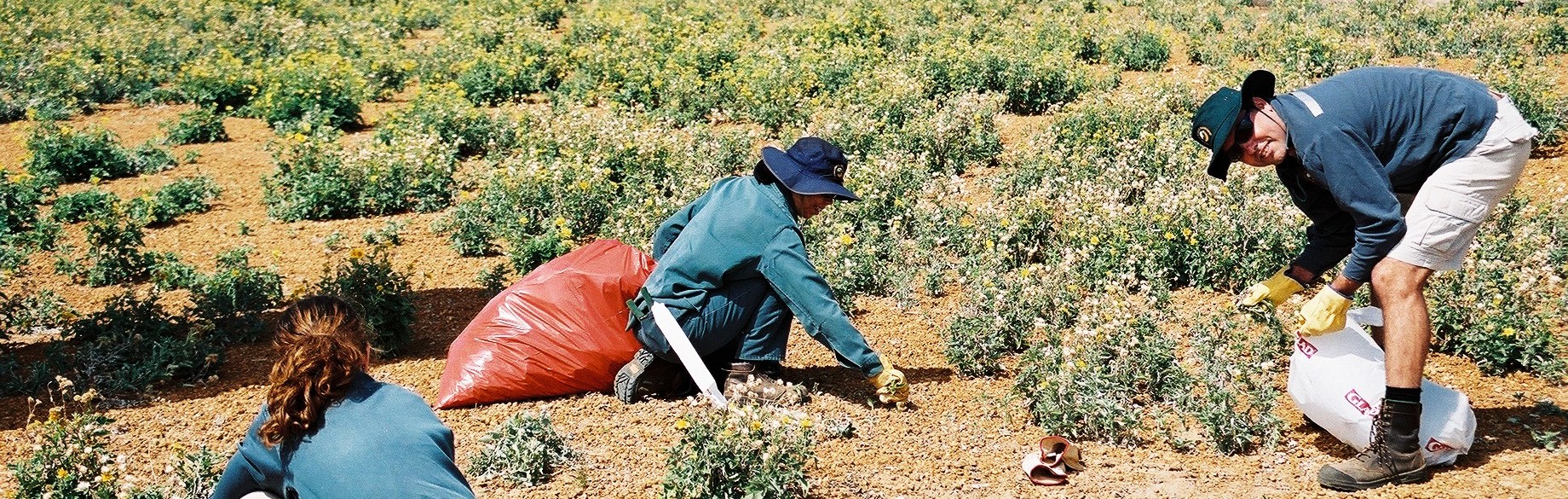
Hand Pulling
- Removal of entire plant from the ground by hand, with or without small handheld tools.
- Suitable for young or small weeds that remove easily, such as herbaceous taproot species.
- Weeds should be removed from site or destroyed.
- Effective for individual plants, small infestations, and controlling recent outbreaks prior to seed set.
- Used commonly in sensitive areas when labour is available, e.g. with the help of volunteers.
PROS: Targeted control with low off-target impact, except minor erosion risk and hygiene risk from high foot traffic. No specialist training or equipment required.
CONS: Not suitable for control of larger weed species, large weed infestations or when seed has set. Time and labour intensive compared to some other methods.
Grubbing
- Similar to hand-pulling, involves digging up a weed by the roots.
- Employs the use of tools such as mattocks, spades, and tree-poppers.
- Suitable for weeds easily removed by its roots.
PROS: Targeted control with low off-target impact, except minor erosion risk and hygiene risk from foot traffic.
CONS: Not suitable for large, dense infestations. Time and labour intensive.
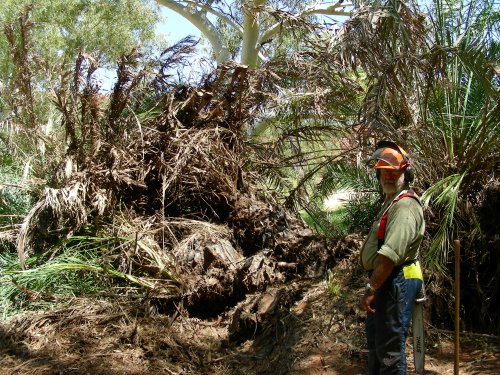
Felling
- Felling is the cutting down and removal of woody weeds (e.g. trees or large shrubs).
- Requires trained personnel and use of an axe, handsaw, or chainsaw.
- May be used as part of a cut-stump herbicide treatment, particularly for species prone to resprouting.
PROS: Targeted removal. Woody weed is removed from environment.
CONS: High risk of injury to personnel or damage to nearby native vegetation. Labour intensive.
Ring Barking
- Removal of a section of bark around the entire circumference of the tree stem/trunk, interrupting water and nutrient flow.
- Requires large blade or knife, or machete.
- Preferable to felling where it is advantageous for the tree to remain in situ – to provide habitat, prevent erosion, allow native regeneration.
PROS: Targeted control with low off-target impact. Tree remains to provide habitat and reduce erosion.
CONS: Not suitable for resprouting or suckering species. Skill and care must be taken to avoid injury while handling the bladed tool.
Chipping
- Similar to grubbing, except that the plant stem is cut off just below the ground using a chip-hoe or mattock.
- Useful for removing non-sprouting weeds in difficult ground such as wetland clay soils.
PROS: Targeted removal. Low-level soil disturbance. Alternative option for hard soils.
CONS: Time consuming and labour intensive.
Broad Area Methods
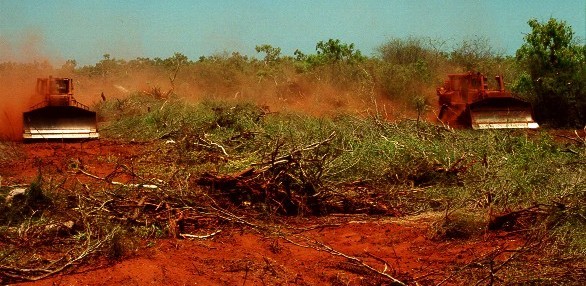
Large machinery is often used to assist in broad area physical control, including methods such as blade ploughing, bulldozing, and chaining. Operators should be trained in their use and hold the appropriate licences. Always clean machinery in accordance with dieback hygiene standards when used within the vulnerable zone. They also bring an increased risk of erosion, so should be used with caution around waterways.
Blade Ploughing
- Involves using a blade plough to push over woody shrubs, severing and exposing the roots. The plants are then buried deep enough to prevent regeneration.
- Requires blade plough and tractor/truck.
- Suitable for dense monocultures on already disturbed soils.
- Not suitable for use on fine-textured south-coast sands or soils with lots of large rocks, cemented gravel, or sensitive areas.
PROS: Ensures weeds are killed and they do not have to be removed from site.
CONS: Non-selective. High level of disturbance, not suitable for native vegetation. May trigger germination.
Bulldozing
- Includes use of a bulldozer, chopper roller, or grader.
- Bulldozing is used to scrape up and remove weeds.
- A chopper roller extracts and mulches weeds in situ.
- A grader turns over the weeds in the topsoil to disturb growth.
PROS: Weeds can be mulched on site.
CONS: Non-selective. High level disturbance, not suitable for native vegetation.
Chaining
- Involves dragging a large heavy chain across the ground by heavy machinery to push over and pull out woody weeds with their roots.
- Most effective when soil is soft and moist (i.e. after rains or during wet season).
PROS: Weeds may be left on site.
CONS: Non-selective. High level disturbance, not suitable for native vegetation. May trigger germination.