Other Common Names: Gooseberry cucumber, Gooseberry gourd, Paddy melon
Synonyms: Cucumis africanus, Cucumis dissectifolius, Cucumis dissectifolius, Cucumis grossularoides, Cucumis merxmuelleri.
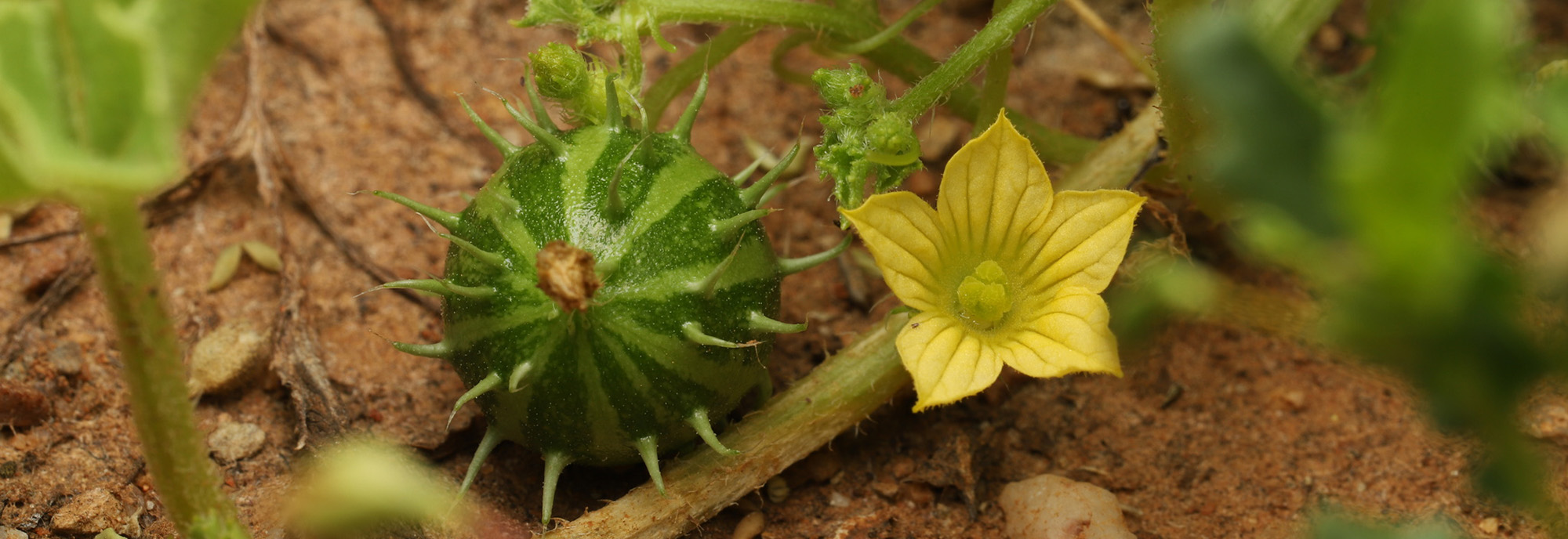

Cucumis myriocarpus


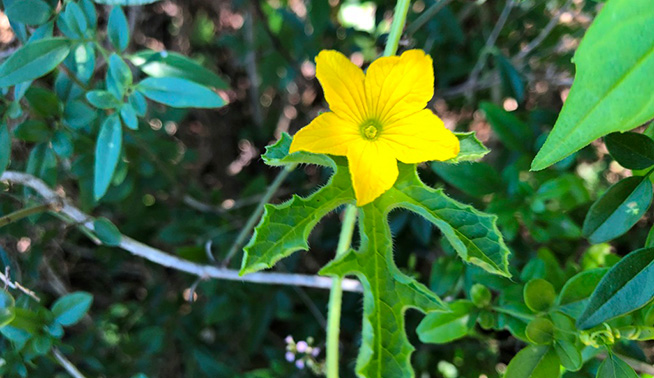
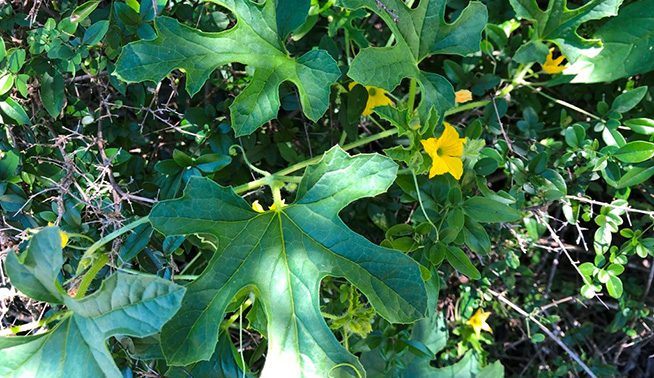
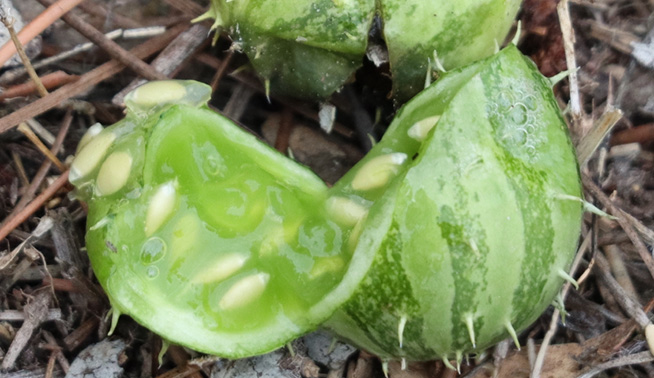
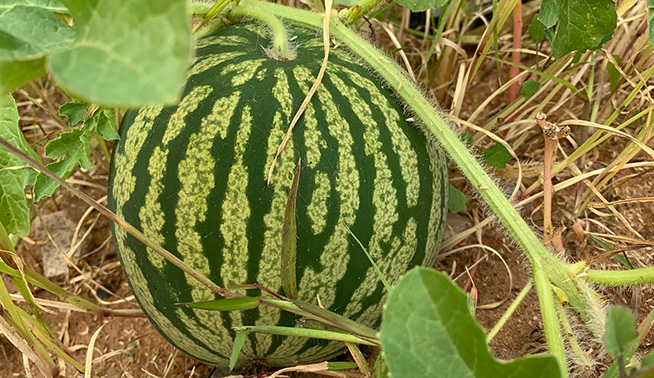
Similar non-native plants: Similar to pie melon (Citrullus lanatus, also called Citrullus amarus) however can be distinguished by its larger fruit (up to 15 cm diameter) without spines, and also larger brown seeds.
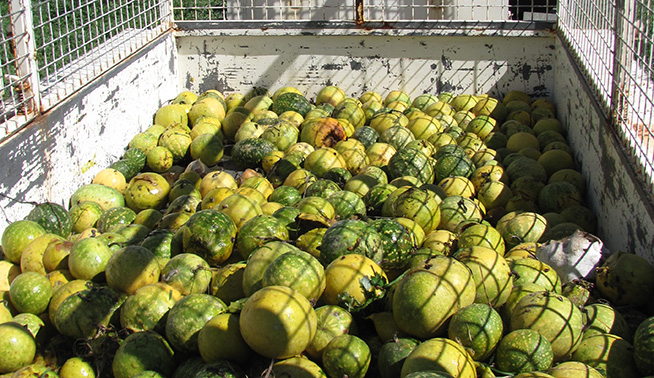
For isolated and small infestation, manual removal may be effective for immature plants before flowering. Make sure to remove any remaining mature fruits from sites to prevent resprouting.
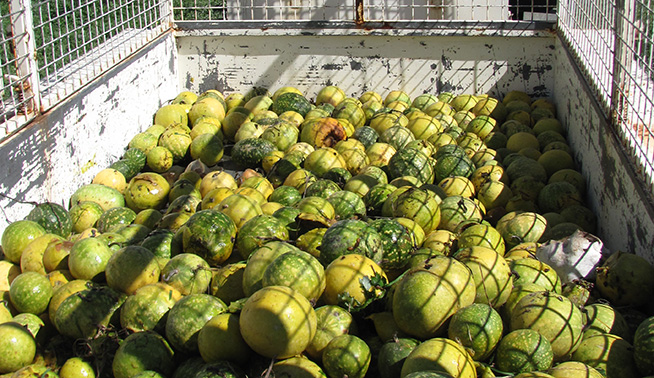
Image (right): Prickly paddy melon being removed off site in a ute on the Turquoise Coast.
Chemical control is most effective on young seedlings and generally provides poorer results on mature plants. Apply metsulfuron (600g/L) at 4.2 g/ha with a wetting agent using a foliar application method (e.g. backpack or knapsack spraying).
Alternatively, spot spray using a foliar application method, with 2 mL of triclopyr in 10 L of water plus 25mL of a wetting agent, ensuring full leaf coverage.
LSID number: [51270837#tab_recordsView] | full LSID: [https://id.biodiversity.org.au/taxon/apni/51270837#tab_recordsView] | field_lsid: [] | taxon: [Cucumis myriocarpus]
ALA Reference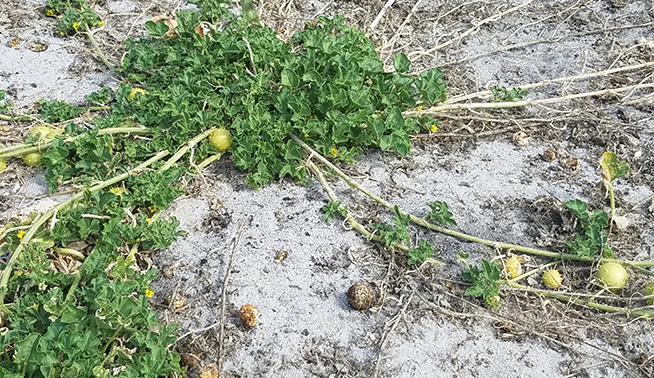
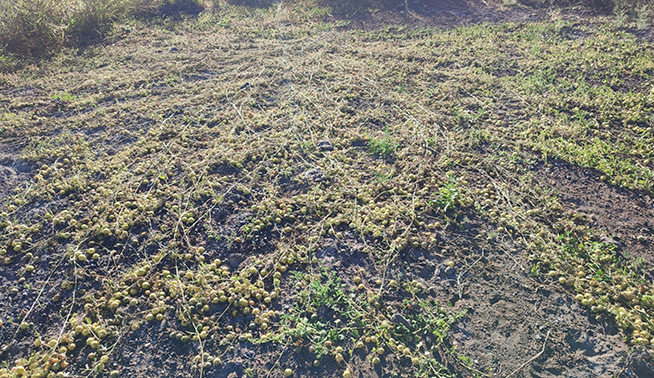
 Bioscurity Queensland (2016)
Cucumis myriocarpus Naudin - Fact Sheet
Board of Botanic Gardens and State Herbarium: Adelaide. (n.d.)
Cucumis myriocarpus Naudin. Flora SA
Meadly, G. R. W. (1959)
Weeds of Western Australia - Paddy melon (Cucumis myriocarpus Naud.)," Journal of the Department of Agriculture, Western Australia, Series 3: Vol. 8: No. 3, Article 10.
Pasture.io. (2024, March 25)
Australia Leads The Way In Turning Invasive Weeds into Viable Economic Crops. Pasture.io.
Shaik, R. S., Burrows, G. E., Urwin, N. A. R., Gopurenko, D., Lepschi, B. J., & Weston, L. A. (2017)
The biology and management of prickly paddy melon (Cucumis myriocarpus L.), an important summer annual weed in Australia. Crop Protection, 92, 29–40.
Western Australian Herbarium (2019)
Florabase—the Western Australian flora. Department of Biodiversity, Conservation and Attractions.
WeedScan (2026)
Prickly paddy melon
Bioscurity Queensland (2016)
Cucumis myriocarpus Naudin - Fact Sheet
Board of Botanic Gardens and State Herbarium: Adelaide. (n.d.)
Cucumis myriocarpus Naudin. Flora SA
Meadly, G. R. W. (1959)
Weeds of Western Australia - Paddy melon (Cucumis myriocarpus Naud.)," Journal of the Department of Agriculture, Western Australia, Series 3: Vol. 8: No. 3, Article 10.
Pasture.io. (2024, March 25)
Australia Leads The Way In Turning Invasive Weeds into Viable Economic Crops. Pasture.io.
Shaik, R. S., Burrows, G. E., Urwin, N. A. R., Gopurenko, D., Lepschi, B. J., & Weston, L. A. (2017)
The biology and management of prickly paddy melon (Cucumis myriocarpus L.), an important summer annual weed in Australia. Crop Protection, 92, 29–40.
Western Australian Herbarium (2019)
Florabase—the Western Australian flora. Department of Biodiversity, Conservation and Attractions.
WeedScan (2026)
Prickly paddy melon
| JAN | FEB | MAR | APR | MAY | JUN | JUL | AUG | SEP | OCT | NOV | DEC | Notes | |
|---|---|---|---|---|---|---|---|---|---|---|---|---|---|
| Germination | |||||||||||||
| Active growth | |||||||||||||
| Flowering | |||||||||||||
| Fruiting |
| JAN | FEB | MAR | APR | MAY | JUN | JUL | AUG | SEP | OCT | NOV | DEC | Notes | |
|---|---|---|---|---|---|---|---|---|---|---|---|---|---|
| Physical | |||||||||||||
| Chemical |


 Permit PER96598 for metsulfuron