
Image
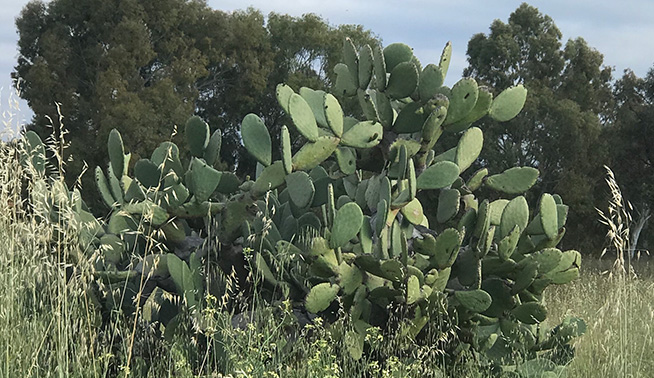
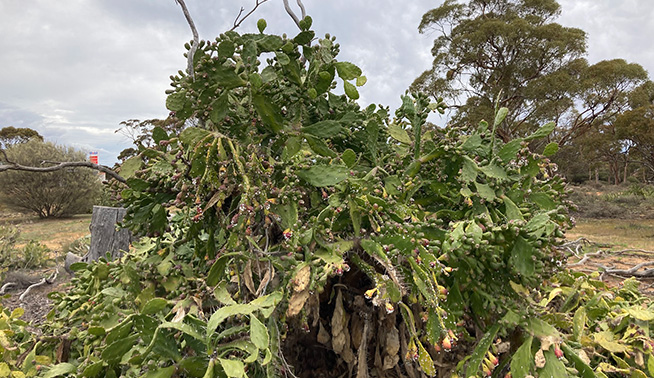
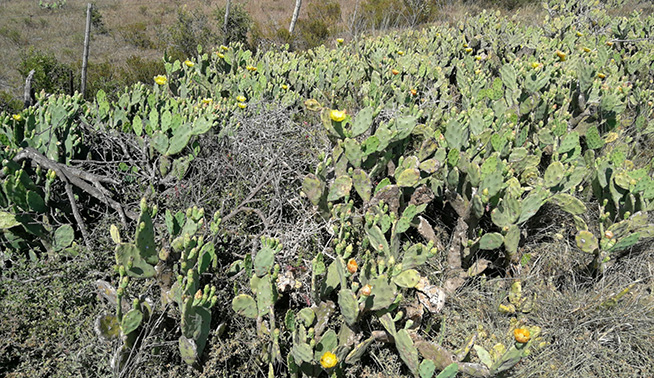
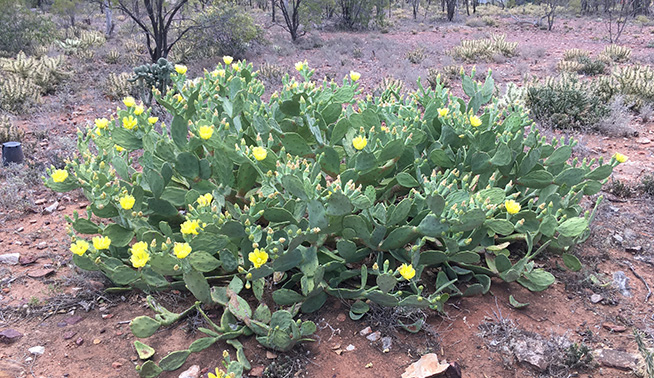
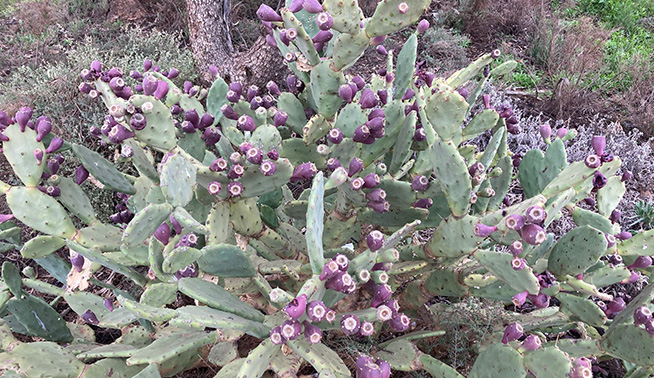
Common Prickly Pear infestation © Nick Lambert

​​Common Prickly Pear​

​​Opuntia stricta​

Quick facts

Status
Declared Pest (s22) / WoNS
Life Cycle
Perennial
Growth Form
Succulent
Origin
USA
Flowers
Yellow
Dispersal
Birds/animals

Names

Other Common Names: Erect Prickly Pear, Common Pest Pear, Spiny Pest Pear, Smooth Pest Pear, Sour Prickly Pear, Australian Pest Pear, Gayndah Prickly Pear, Dillen Prickly Pear, Pipestem Prickly Pear

Synonyms: Cactus opuntia var. inermis, Cactus strictus, Opuntia dillenii, Opuntia inermis.

Form and function

Reproduces by both seed and vegetative growth, spreading through seeds and stem fragments. Each fruit can produce up to 110 seeds, which are dispersed when fruits fall to the ground or are consumed by animals. Plants can also regenerate from stem fragments, flowers and immature fruits. It typically reaches maturity in 3 to 5 years and has a long-lived seedbank that can persist for 10 to 20 years. Most mature plants survive fire and easily regrow after bushfires. Plants grow 0.5 to 1 m tall.

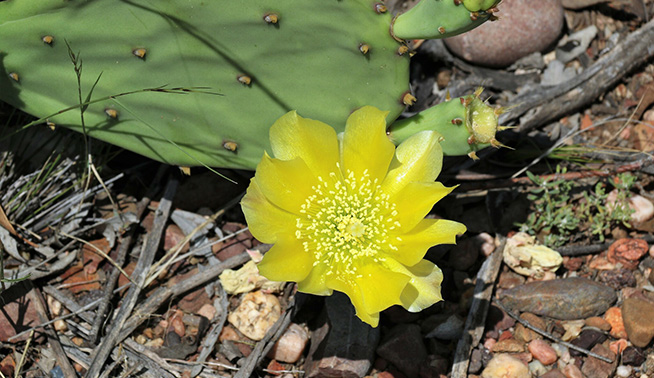
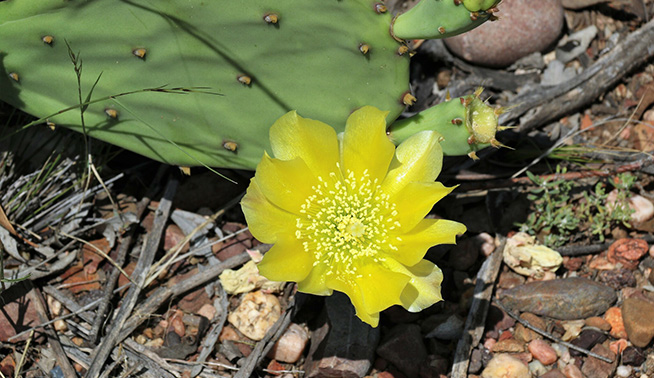
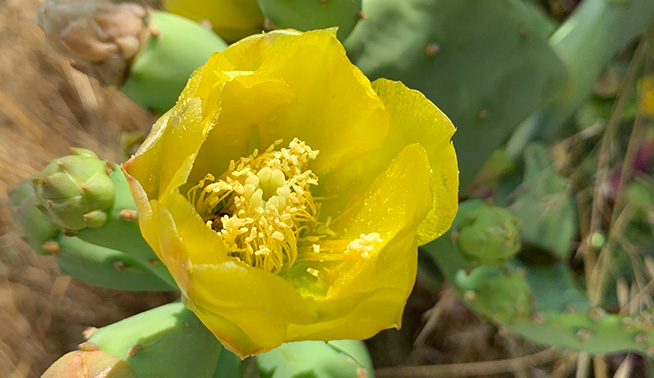
Flowers

  • Large and showy (up to 10cm in diametre).
  • Petal‑like segments primarily yellow.
  • Outer segments can be greenish or pinkish. 

Common Prickly Pear flower © thaliabroughton

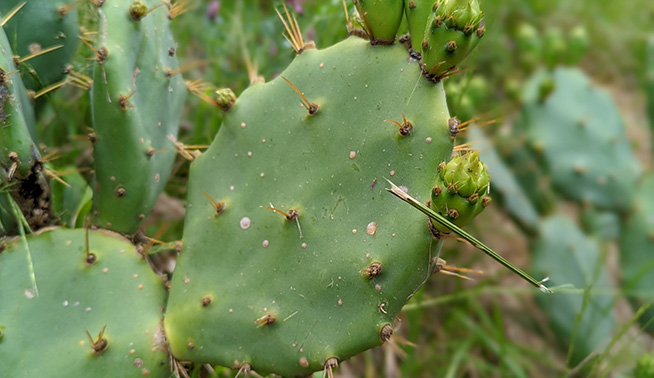
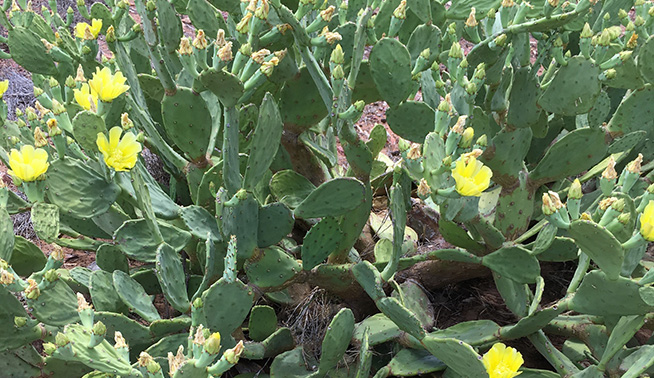
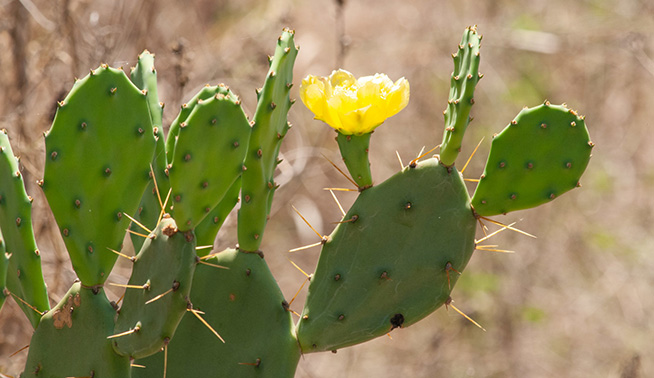
Pads

  •  Also called stems or cladodes.
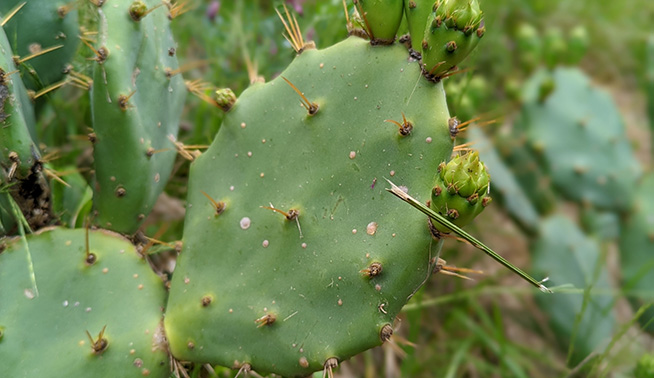
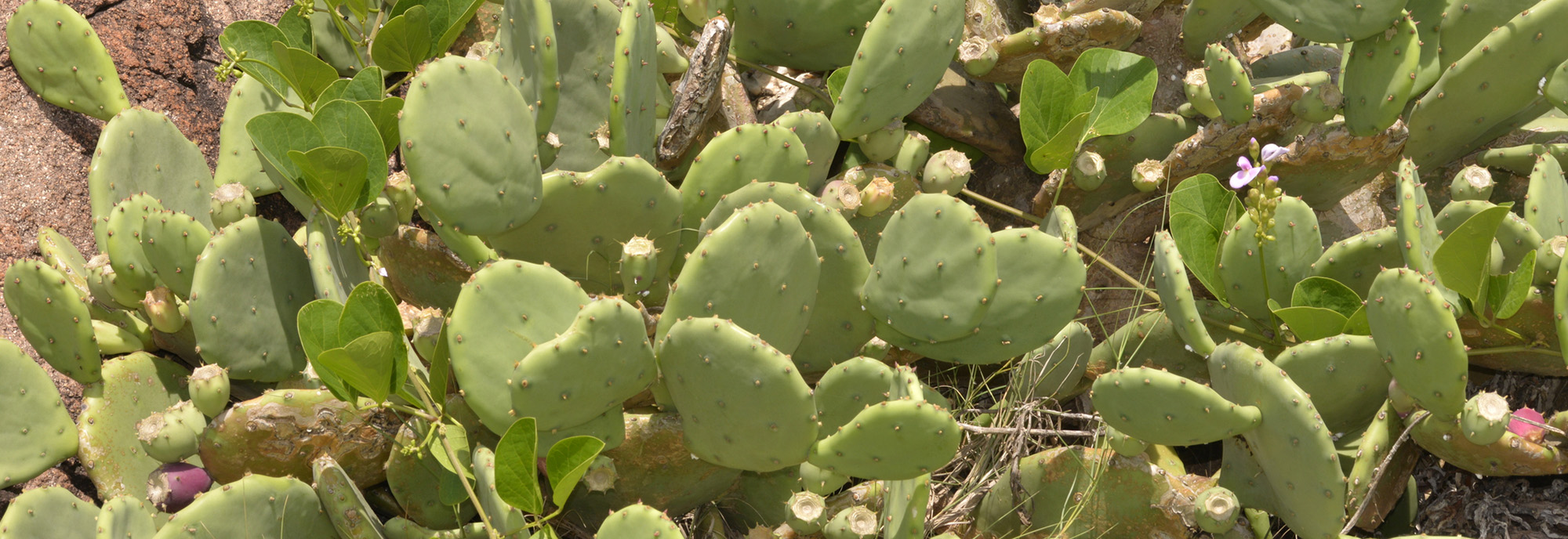
  • Flattened, fleshy pads.
  • Pads elliptic to egg‑shaped (10 to 30 cm long, 7 to 20 cm wide and up to 2 cm thick).
  • Dull green to grey/green in colour.
  • Can be spineless or carry up to 11 spines.
  • Spines are 1 to 6cm long.

Common Prickly Pear pads © natealator

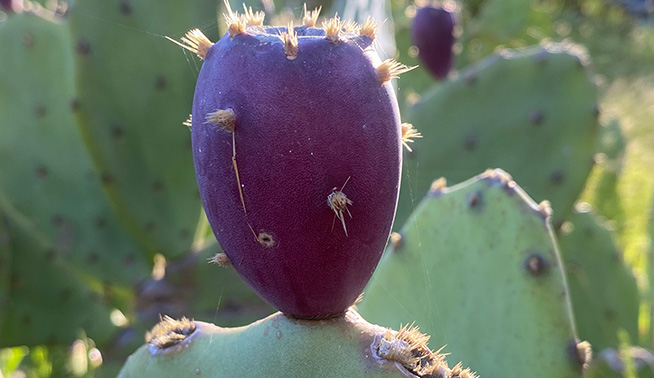
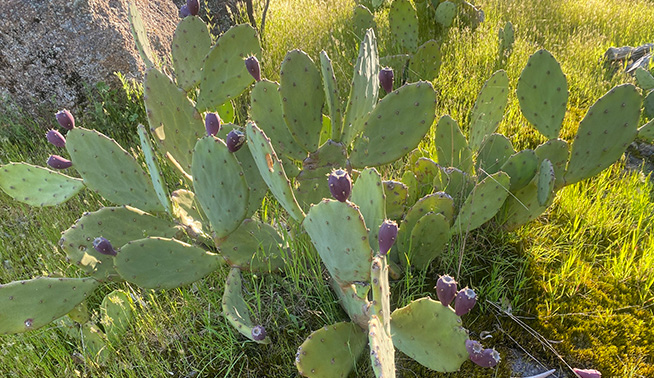
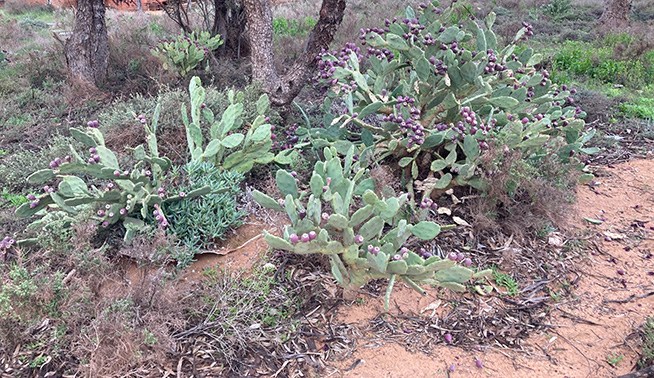
Fruits

  • Fleshy and succulent in texture.
  • Shape almost round to pear‑shaped (up to 9cm long and 4cm wide).
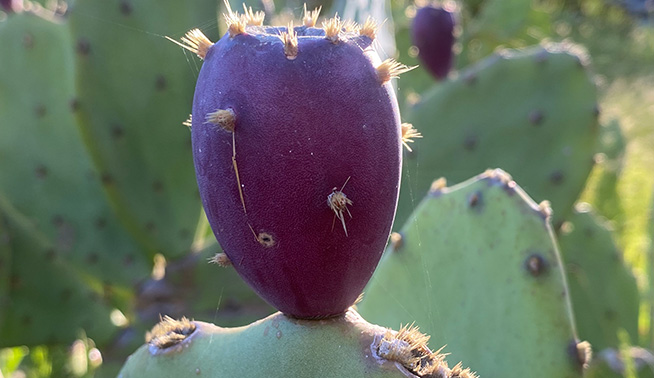
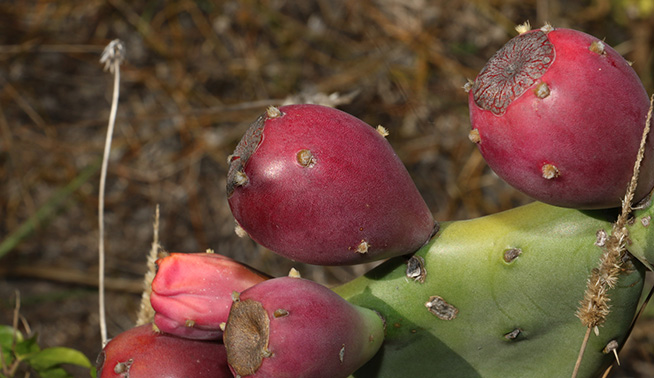
  • Green when immature and reddish/purple with a white waxy coating at maturity.
  • Surface with scattered tufts of barbed bristles.
  • Each fruit contains many seeds.
  • Seeds are rounded in shape.
  • Seeds are yellow to pale brown (about 4 to 5 mm across).

Common Prickly Pear fruit © tmacvean

Roots

  • Shallow, fibrous roots.

Habitat

Usually grows on plains, ranges, rocky steep slopes, beaches and offshore islands. It can grow on many different soil types including heavy clays, loams, saline soils and sands.

May be confused with...

Similar non-native species: Similar to Indian Fig (Opuntia ficus-indica), Velvet Tree Pear (Opuntia tomentosa) and Drooping Tree Pear (Opuntia monacantha), but these three species are usually taller (2 to 5m tall) with larger stems than common prickly pear. There a several hybrid Opuntia stricta species with varying growth forms and flowering displays

Indian Fig infestation © Ann Bentley
Drooping Tree Pear infestation © Thomas Mesagli
Drooping Tree Pear infestation © Thomas Mesaglio


How does it spread?

​Dispersed by seed and fragments. It can produce 110 seeds per fruits, which spread by dropping on the ground or animals eating them and can also regrow from stem fragment, flowers and immature fruits.

Why is it a weed?

  • Forms dense infestations that exclude other vegetation.
  • Outcompetes native plant species, particularly on rocky outcrops.
  • Injures wildlife, pets and people through spines and bristles.
  • Can trap and kill wildlife in dense spiny growth.
  • Reduces recreational access such as bushwalking.
  • Provides shelter for pest animals including foxes and rabbits.

History

Initially introduced to Australia as hosts for the cochineal insects to develop a cochineal dye industry in 1788. Following that, common prickly pears were cultivated and spread as ornamental hedge or food plants across Australia.​

How to control

Physical

Physical removal can be effective for small infestations using a mattock or other appropriate tools. When handling spiny plants, wear protective clothing and gloves to reduce the risk of injury. Dispose of removed plants by deep burial. Burning is difficult for disposal as the pads don’t burn until very dry.

Chemical

​​Following herbicides are available as options for chemical controls to treat sparse, scattered infestations in conservation areas. However, they are not always effective as infestations usually observed on rocky slopes, where sometimes dangerous to access.  

Spot spray plants using a 500mL mix of triclopyr (300 g/L) and picloram (100 g/L) in 100 L of water.  Add a spraying oil at 500 mL per 100 L of water.  The oil allows the herbicide to spread over the pads and not dry out quickly.
Alternatively, spot spray plants with a 1L mix of triclopyr (240 g/L) and picloram (120 g/L) in 60 L of diesel.

Biological

Biological control using Cactoblastis moths (Cactoblastis cactorum) and Cochineal scale insects (Dactylopius opuntiae) can be effective treatment for controlling the common prickly pear. However, Cactoblastis moths have its limitation as they only attack the plants under warm and sunny conditions and not suitable under colder weather. 

Contact DPIRD for more information.

Weed Distribution Map

LSID number: [51751895] | full LSID: [https:/id.biodiversity.org.au/taxon/apni/51751895] | field_lsid: [] | taxon: [​​Opuntia stricta​]

ALA Reference

References

  • Queensland Government. (2024). Common pest pear or prickly pear.
  • Weeds Australia. (2024) Common Prickly Pear
  • Florabase (n.d.). Opuntia stricta (Haw.) Haw
  • Department of Primary Industries. (2024) Common pear (Opuntia stricta)

Life Cycle

JAN FEB MAR APR MAY JUN JUL AUG SEP OCT NOV DEC Notes
Germination
Can geminate in any month under suitable condition.
Flowering
Fruiting
Regularly or most commonly
Occasionally, given suitable conditions

Management

JAN FEB MAR APR MAY JUN JUL AUG SEP OCT NOV DEC Notes
Physical
Chemical
Optimal
Potentially, but conditionally dependent
Last updated: September 2026