


2,2-DPA (Dalapon) has became available for use in Australia again and this forgotten 2007 article from the Australian Association of Bush Regenerators (WA) Newsletter was rediscovered when DBCA started looking into herbicide trials for weedy bulbs. Republished here, it showcases important early work by Kings Park and Botanic Garden staff investigating the use of 2,2-DPA to control invasive geophytes in native bushland. The trials demonstrated high levels of control of Babiana, Ixia and Allium, while also providing valuable insights into the herbicide's effects on native vegetation, lessons that remain relevant today.
The Problem
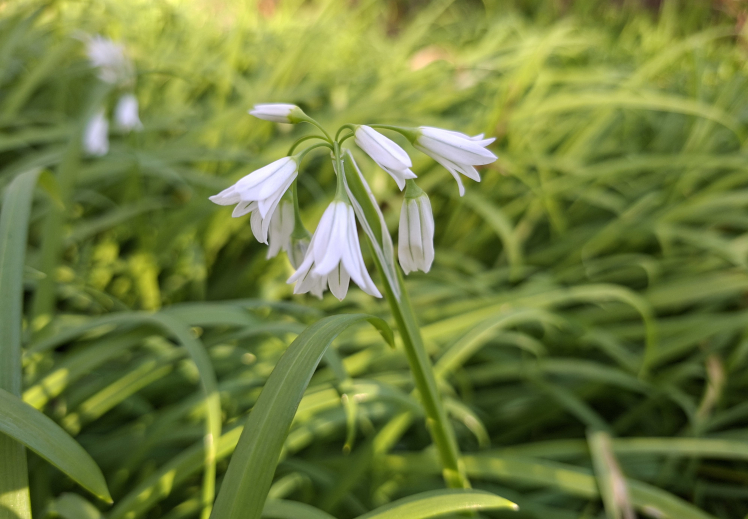
The introduced geophytes Babiana angustifolia, Ixia maculata (now Ixia hybrida or Ixia sp.) and Allium triquetrum can invade native bushland and displace native vegetation. Previous use of 2,2-DPA (Dalapon) on Watsonia species had shown promising results, prompting investigation of its effectiveness on other invasive bulb-forming weeds.
What was tried
Field trials were established in Kings Park to evaluate the effectiveness of 2,2-DPA (740 g/kg) to control these species. Treatments were applied at two rates, 5 kg/ha and 10 kg/ha, together with a non-ionic surfactant (Agral) at 3.5 mL/L. Untreated control plots were included for comparison.
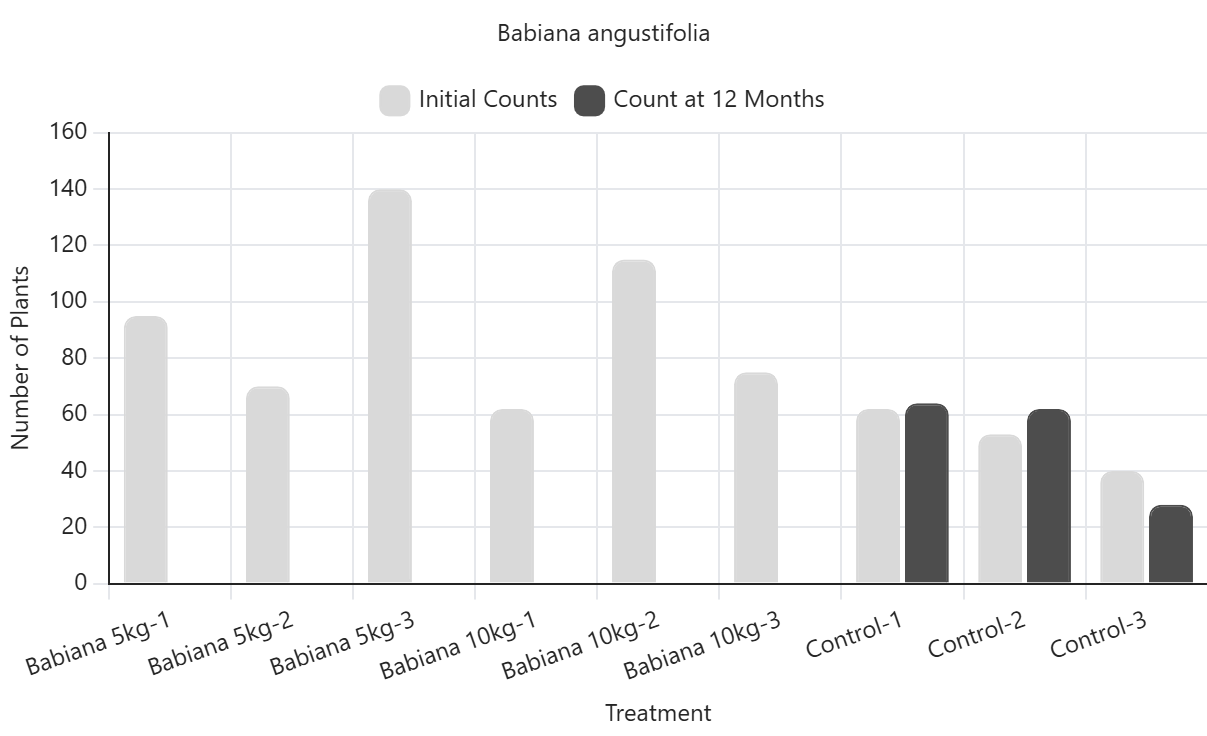
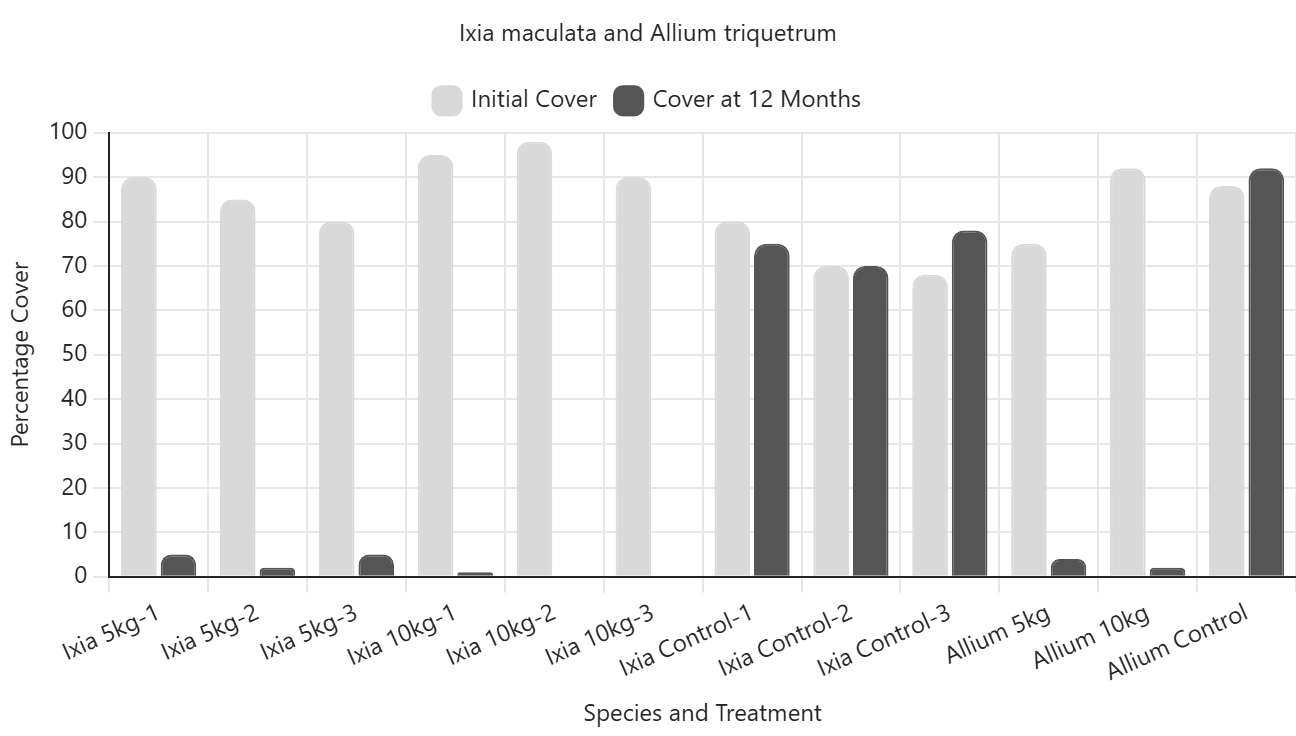
Weed abundance was measured before treatment and again 12 months after application. For Babiana, the number of plants was recorded, while percentage cover was used for Ixia and Allium.
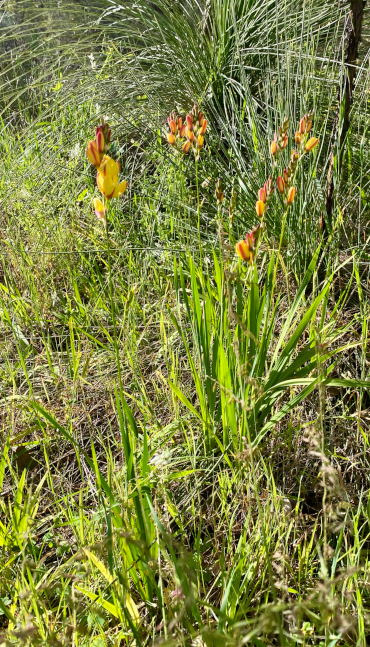
Several challenges were noted during application. Dense growth and variable spray coverage meant some Ixia plants may not have received complete herbicide coverage. Similarly, elongated and densely matted Allium plants reduced spray penetration within infestations.
What was the outcome
Excellent control was achieved for all three weed species. No Babiana angustifolia plants emerged in any treated plots 12 months after application at either herbicide rate, indicating complete control of existing populations.
Ixia maculata cover was reduced by approximately 96% at the 5 kg/ha rate and 99% at the 10 kg/ha rate. The small amount of surviving Ixia was thought to result from incomplete spray coverage rather than inadequate herbicide efficacy.
Although Allium triquetrum showed little visible stress immediately after treatment, long-term control was also highly effective. Cover was reduced by approximately 94% at 5 kg/ha and 97% at 10 kg/ha 12 months after treatment.
The trial demonstrated that 2,2-DPA can provide highly effective control of invasive geophytes in native bushland, particularly where complete spray coverage can be achieved.
Impact on native species
A separate tolerance trial assessed the response of 20 native plant species to 2,2-DPA. Most species experienced foliage damage and leaf drop following treatment. At 5 kg/ha, nearly all species recovered, while at 10 kg/ha several species, including Calothamnus quadrifidus, Melaleuca huegelii and Grevillea crithmifolia, were killed. Established native vegetation in the field generally showed an ability to recover after the initial herbicide damage.
References
Easton, S.D., Dixon, I.R. & Broomfield, S.J. (2007). Effectiveness of 2,2-DPA in Controlling Babiana, Ixia and Allium in Native Bushland. Australian Association of Bush Regenerators (WA) Newsletter, 15(5), November 2007, pp. 1, 4-5
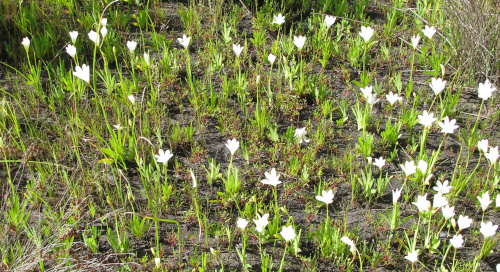
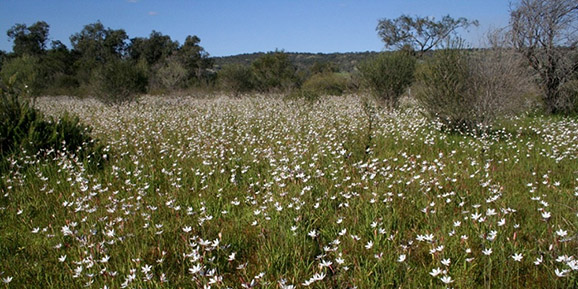
Ixia sp in Kings Park: iNaturalist ©silverydragon, Published on iNaturalist, Photographed and image ownership; silverydragon (2025) CC-BY