
Image
weeds-bushland-arum_lily-benner

Arum Lily

Zantedeschia aethiopica

Quick facts

Status
Declared Pest (s22), NEWP
Life cycle
Perennial (annually renewed)
Toxicity
Toxic (entire plant)
Growth form
Geophyte
Origin
South Africa
Flowers
White

Form and function

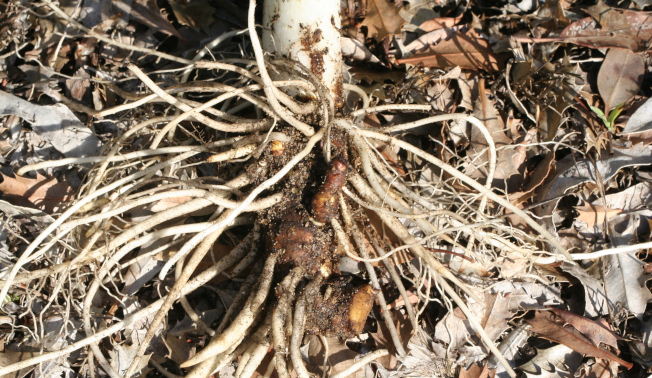
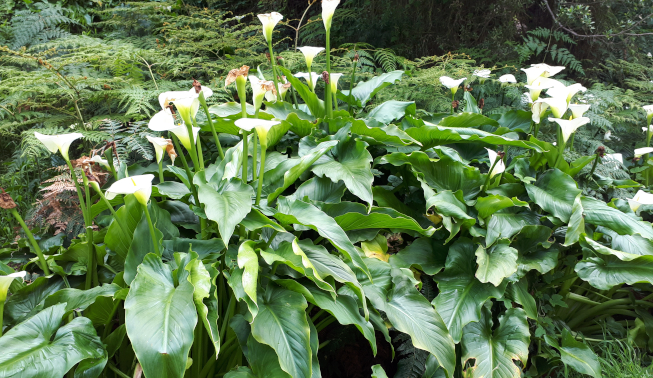
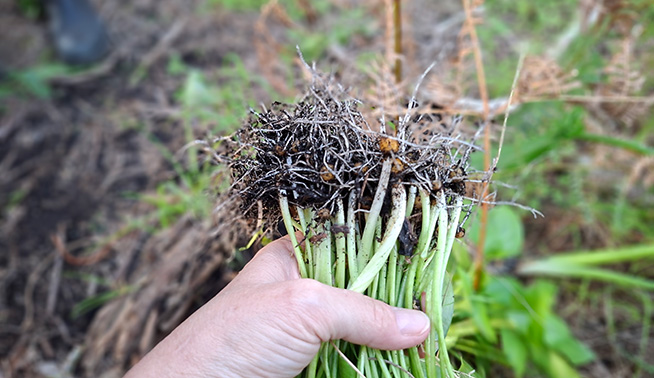
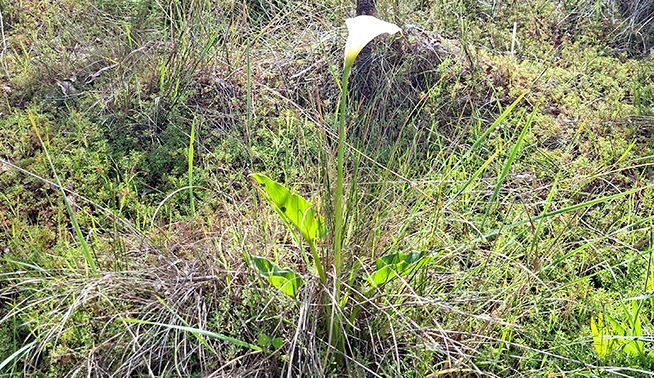
Arum lily is a robust, clump-forming, fleshy soft perennial herb growing to 1.5 m high. It has a stout rootstock or short, thick underground stem (rhizome) with white, somewhat fleshy, finely branched roots. There is often a dense cluster of several large, knobby tuber-like rhizomes and many smaller tuber–like nodules. 

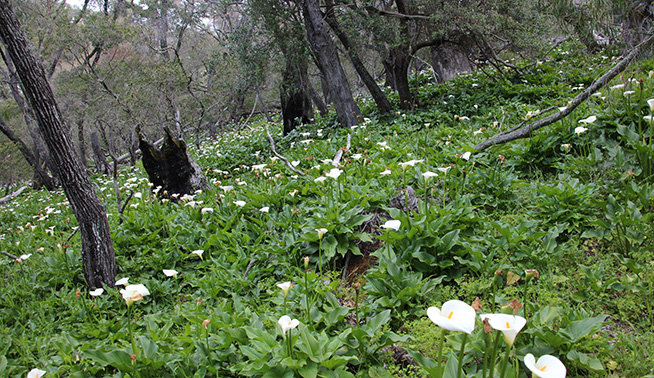
A common weed of winter wet areas of southern Western Australia and can be found in pasture as well as understory of forests, around wetlands and in coastal vegetation. Arum Lily is not a true lily nor an Arum species, although both Zantedeschia (the ‘calla lilies’) and Arum belong to the Araceae family.

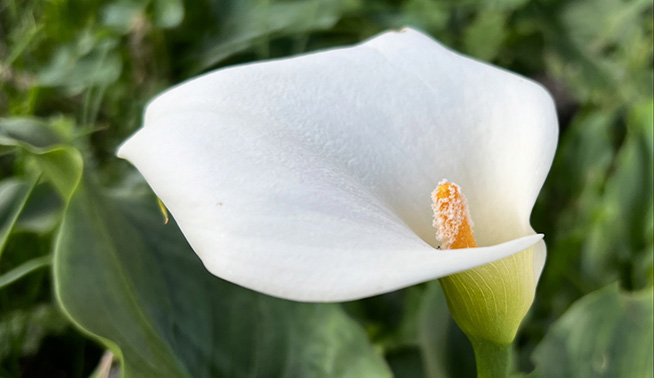
Flowers

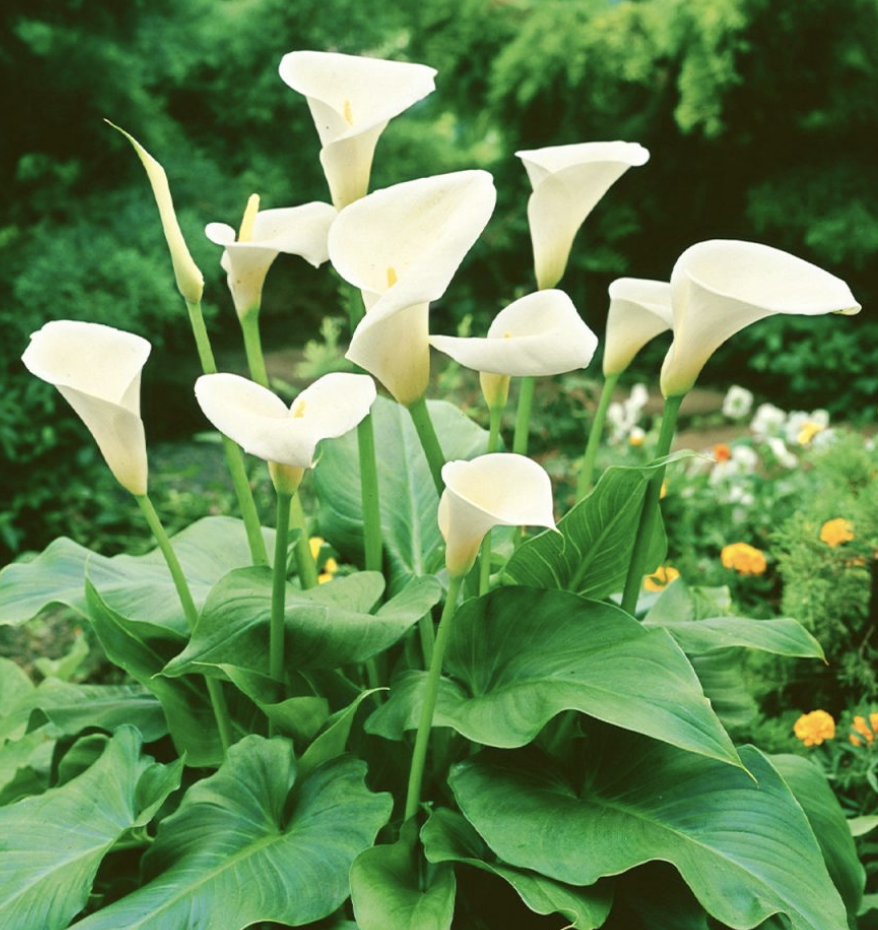
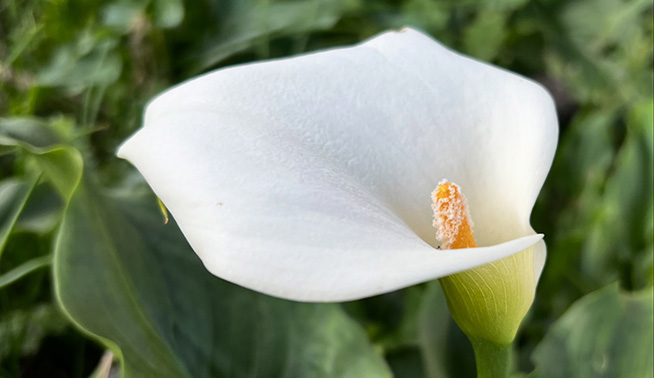
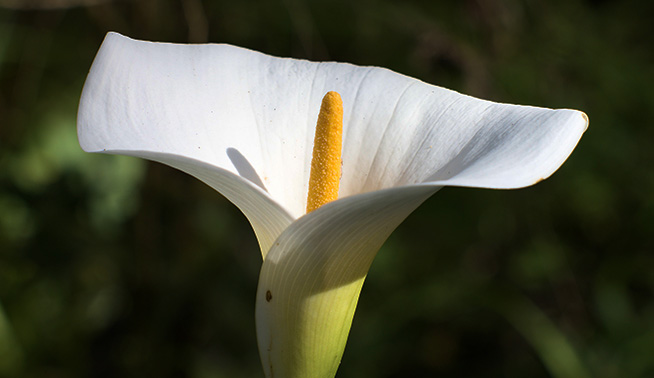
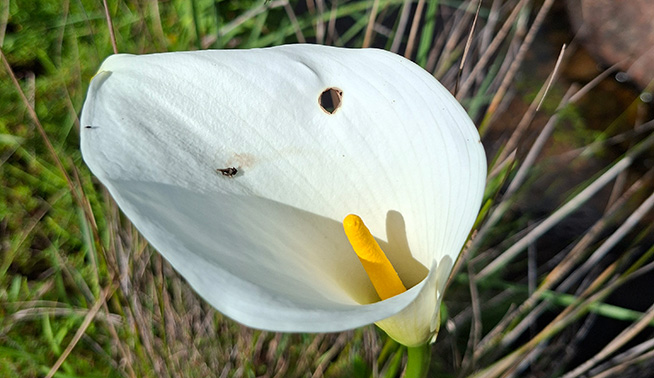
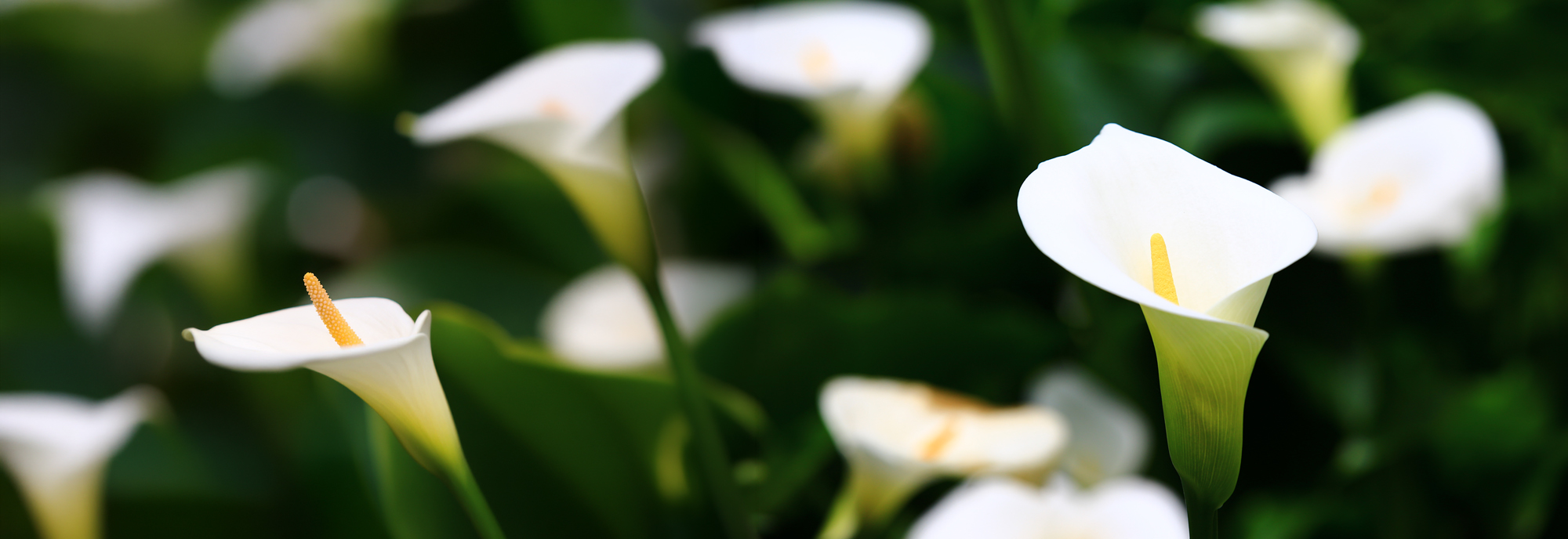
The arum-like flower structure has a central yellow spike (inflorescence) to 90 mm bearing tiny, tightly packed pale-yellow flowers, surrounded by a white to ivory funnel-like bract to 25 cm long terminating with a pointed, recurved tip.

Arum lily flower close up © Ruby Fizz

Leaves

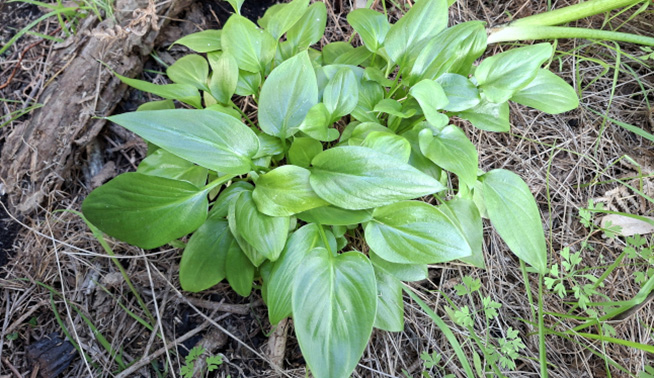
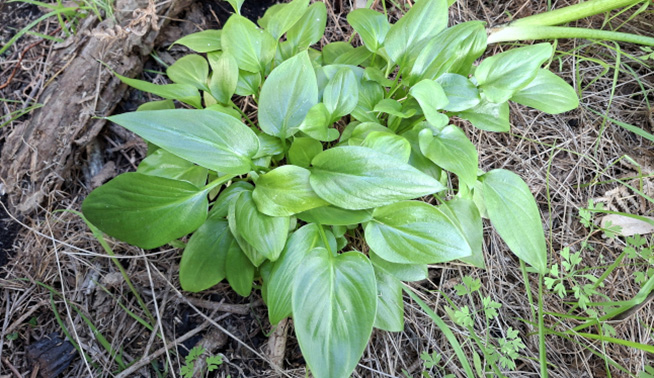
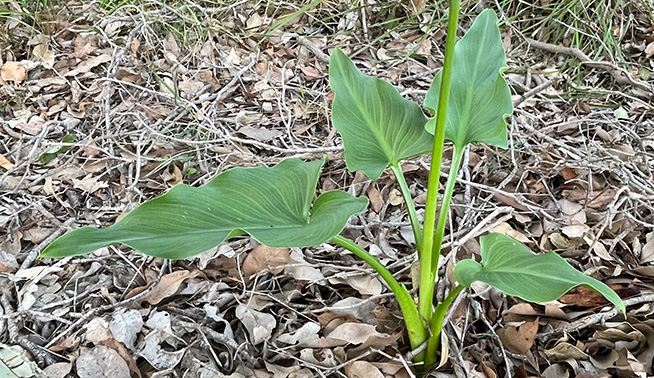
Large arrowhead-shaped leaf blades are glossy dark green to somewhat dull, leathery in texture, to 600mm long and 300 mm wide, with a prominent midrib and a tip that is bent downwards or curls towards the underside of the leaf. Fleshy leaf stalks are narrowly winged at their base, and may exude a sticky sap when cut. Young first-year leaves (pictured) are lighter in colour and much smaller than those of mature plants.

Arum lily seedling infestation leaves © DBCA

Fruits

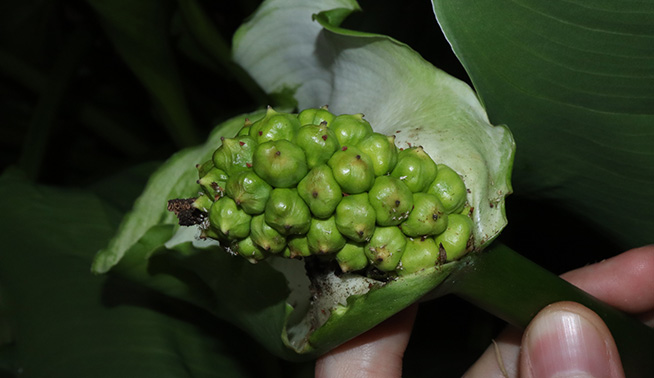
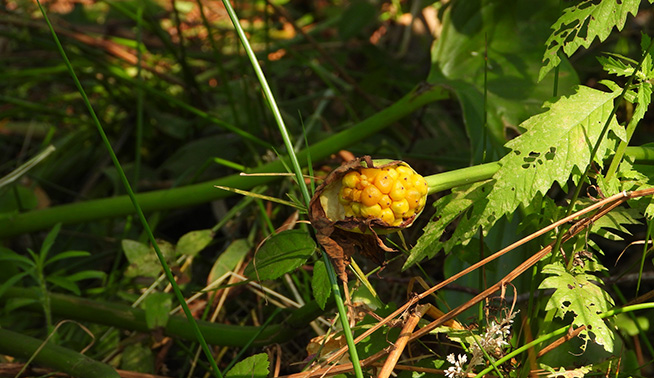
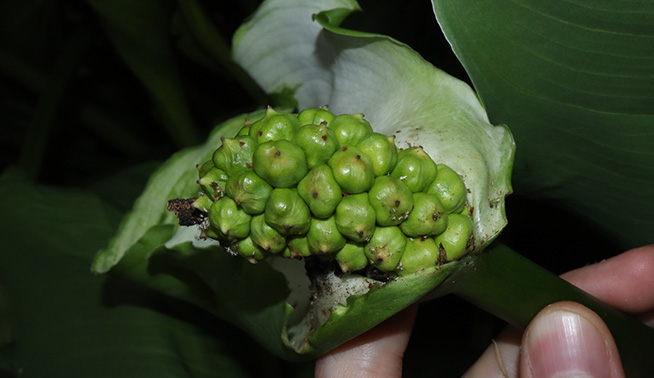
The fruits are irregularly globular berries, 5-10 mm long, clustered in the lower part of the central spike. Immature fruits (pictured) are green or yellowish, turning orange when ripe. They contain several to sometimes many yellowish brown or yellowish orange seeds that are about 3 mm in diameter.

Arum lily unripe fruit © DBCA

Roots

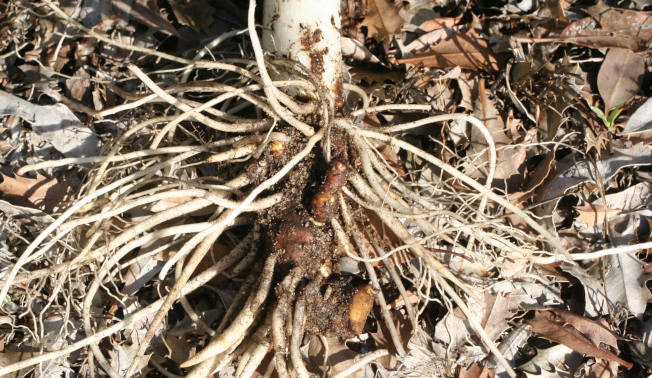
The perennial tubers of arum lily produce offsets throughout the growing season.  

Roots (DBCA)

Why is it a weed?

Arum lily is an ornamental species promoted widely in the nursery industry and escaped cultivation at least 30 years ago. They were recommended as a potential new WoNS under the New Established Weed Priority initiative. An outcome for arum through this process is expected in early 2027.

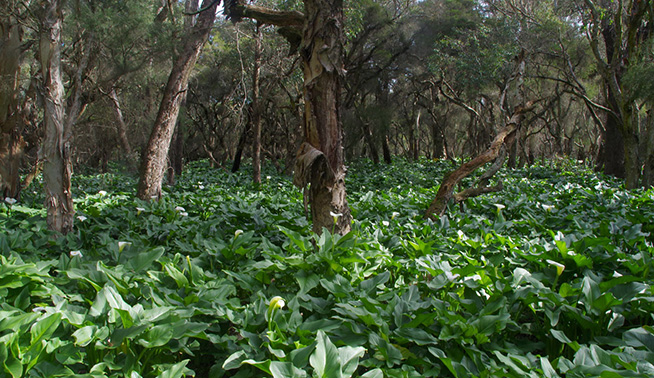
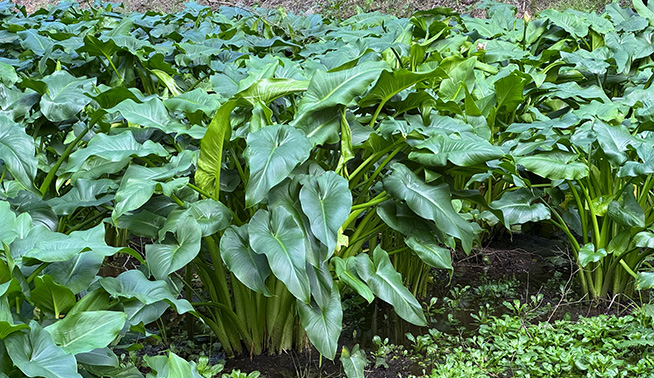
Clump (DBCA)

How does it spread?

Arum Lily spreads by both seed and root fragments. There may be 50-500 seeds per flower head and up to 5,000 seeds per square metre in a dense stand of plants. The seeds germinate readily, though they do not usually remain viable for more than about 4 months.

What is its history in Australia

Arum Lily was introduced to Australia as an ornamental and was distributed widely by nurseries for the garden and floristry trades. It was widely promoted in nursery catalogues in Victoria from the 1850s to 1880s. Arum lily was grown at the Adelaide Botanic Gardens by 1858 and was first recorded as naturalised in South Australia in 1903, at Waterfall Gully (Government of South Australia, 2015). 

Arum lily was first declared a noxious weed in WA (Capel) in 1941, then in 1976 it was listed as a declared pest under the newly enforced ARRP Act 1976. Its declaration status was transferred under the BAM Act 2007 in 2015, and it was assigned a C3 (Management) control category and exempt keeping category. However, its previous declarations were revoked in 2017 and it was listed as a declared pest with no assigned control category under section 22(3), and reassigned its exempt keeping category. 

How to control

Targeted chemical control is recommended to achieve effective management of arum lily in natural environments. Map the weed extent and density, develop an integrated weed management plan, monitor, and follow up. 

Follow up is essential for effective management and control of arum lily. Large infestations can have more than 100 tonnes/ha of rhizomatous biomass, requiring follow up for a minimum of 2-3 years to ensure chemical treatment exhausts the entire rhizome network.

Physical control

Hand removal requires the removal of all parts of the plant and its’ daughter rhizomes to achieve effective control. The resulting soil disturbance may encourage germination and establishment of other weeds. As such, it is not recommended as a suitable option for controlling established infestations in natural environments without additional controls.

Chemical control

The ideal time to spray is from flower stem emergence when all leaves have unfurled (maximum leaf area), until immature seed set (prior to seed expansion and turning yellow). 

Selective herbicides
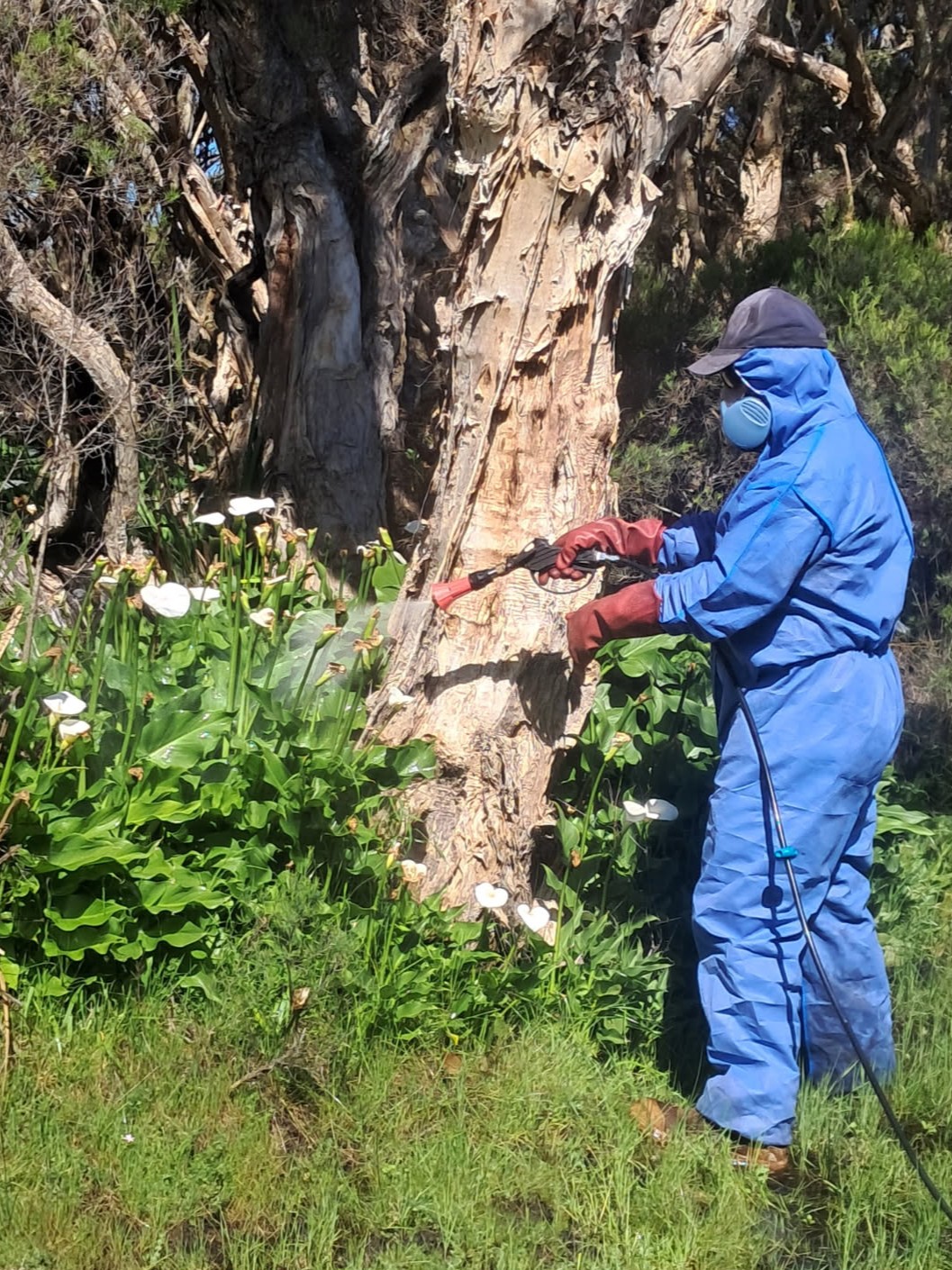
DBCA staff spraying arum lily in full PPE

Chlorsulfuron and metsulfuron-methyl (group 2, sulfuronylureas) are the most effective and selective herbicides for controlling arum lily. Spray actively growing plants, ensuring full leave coverage with either:

  • chlorsulfuron (750 g/kg) at 1.5g/15 L water + adjuvant
  • chlorsulfuron (750 g/kg) at 1.5g + 15ml 2,4D amine (500g/L) / 15 L water + adjuvant
  • metsulfuron 600 g/kg at 1g/10 L water + adjuvant

Both of these herbicides are slow-acting, so evidence of effort such as yellowing of leaves may not be visible until months after treatment. 

Note that chlorsulfuron may persist in the soil for up to a year after application and will have implications for revegetation. Metsulfuron is less persistent in the soil but is also less selective.

Non-selective herbicides

Glyphosate is minimally effective.

Biological control

Biological control was investigated by CSIRO in the 1990s, with several potential biocontrol agents identified. However, concerns about potential conflicts of interest with the nursery industry limited further development at the time. Given the reduced horticultural importance of arum and growing community interest in its management, there may be merit in revisiting the feasibility of a biological control program.

Weed Distribution Map

LSID number: [6917219] | full LSID: [https://id.biodiversity.org.au/node/apni/6917219] | field_lsid: [] | taxon: [Zantedeschia aethiopica]

ALA Reference

References

  • Australian National Parks and Wildlife Service (1991) Plant Invasions The incidence of environmental weeds in Australia. Kowari 2. ANPWS, Canberra.
  • Aplin, T. E. H. (1966) Poison plants in the garden. Journal of Agriculture Western Australia, Volume 7 (1): 23–27.
  • Armstrong, R. (1997) Future directions for control of Arum Lily as an environmental weed, in J. K. Scott & B. J. Wykes (eds), Proceedings of a workshop on Arum Lily (Zantedeschia aethiopica). CRC for Weed Management Systems, Adelaide.
  • Auld, B. A. & Medd, R. W. (1992)  Weeds Inkata Press, Melbourne.
  • Scott, John K., Wykes, Boyd J. (1997) Proceedings of a workshop on Arum lily (Zantedeschia aethiopica): HMAS Stirling, Garden Island. [staff-only record]

Lifecycle

JAN FEB MAR APR MAY JUN JUL AUG SEP OCT NOV DEC Notes
Germination
Active Growth
Flowering
Fruiting
Regularly or most commonly
Occasionally, given suitable conditions
Not likely but conditionally dependant

Management

JAN FEB MAR APR MAY JUN JUL AUG SEP OCT NOV DEC Notes
Hand removal
Cut flower heads
Remove flower heads to stop spread
Foliar spray
Optimal
Potentially, but conditionally dependent
Not likely but conditionally dependant
Last updated: October 2026