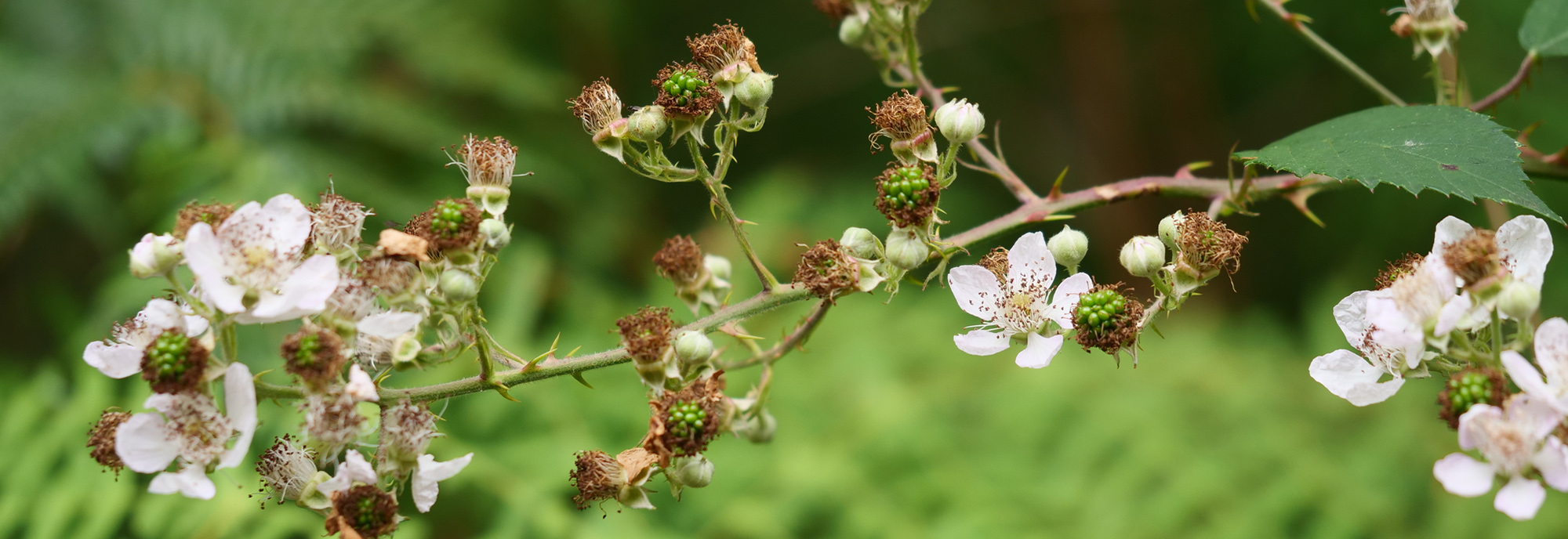

Other Common Names: Blackberry, bramble.
European blackberry
Rubus anglocandicans
Quick facts

Status
Declared Pest / WoNS

Life Cycle
Perennial

Growth Form
Shrub

Origin
Central/eastern Europe

Flowers
White/pale pink

Dispersal
Birds, other animals
Names

Form and function
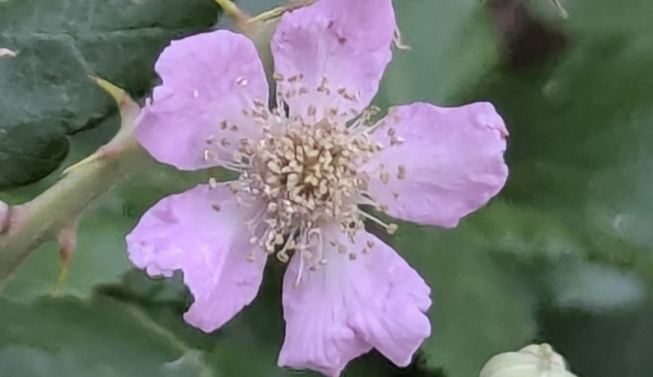
Flowers
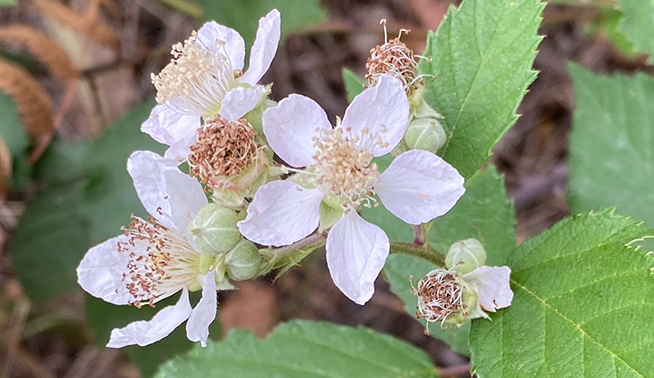
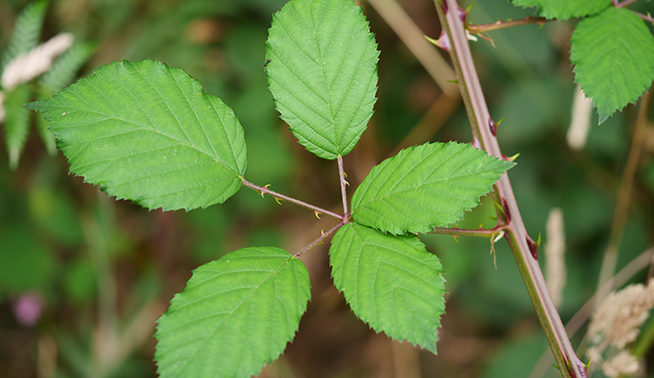
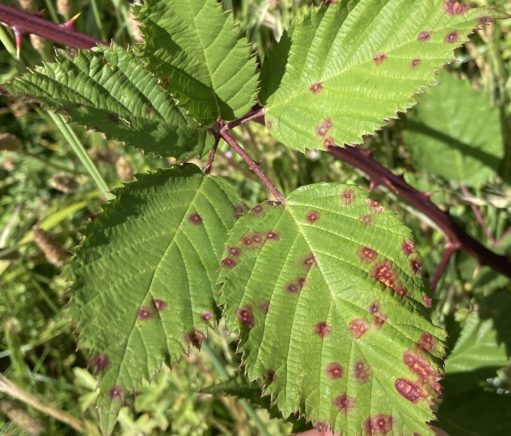
Leaves
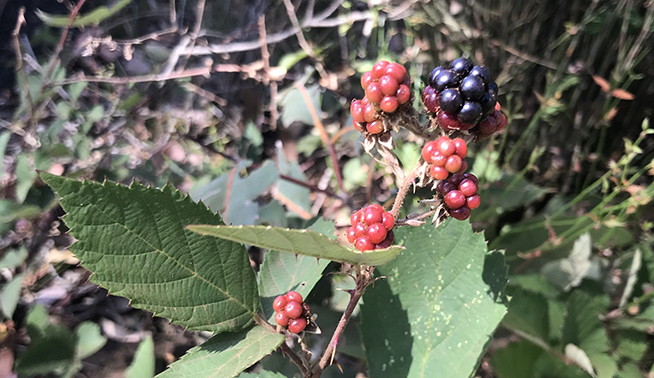
Fruits
Roots
Habitat
May be confused with...
How does it spread?
Why is it a weed?
History
How to control


Physical
Physical and mechanical control is challenging due to its deep root system. Effective removal requires digging out most of the root to prevent regrowth, as slashing or cutting alone will not kill the plant. Hand-pulling or spot digging should be done before flowering and seed set to reduce the seed bank and prevent reinfestation.
Chemical
For plants/infestations at the seedling/rosette stage, apply a 100mL mix of picloram (100g/L), triclopyr (200g/L) and aminopyralid (8g/L) in 100L of water, using a foliar application method, ensuring full leaf (both outer and inner leaves) and cane coverage and spraying until just wet. This should be applied every summer for three years for the best results.
This method will damage most broad-leaved species however it is the only chemical that has provided reliable eradication. It has little effect on grasses so the area is not left bare and this also helps reduce seedling establishment. Note* This same mix without the aminopyralid can also be applied for similar results.
Prior to this method, a cost effective way to initially reduce the size of the infestation is to apply a mix of 1g metsulfuron (600g/kg) with 25mL of a surfactant in 10L of water using a foliar application method, ensuring full leaf (both outer and inner leaves) and cane coverage and spraying until just wet.
For infestations in sensitive areas, apply a mix of 100mL glyphosate in 10L of water using a foliar application method, ensuring full leaf (both outer and inner leaves) and cane coverage and spraying until just wet. This method can provide reasonable control.
Managerial
Burning is generally ineffective for control, as it does not destroy roots or seeds, but it can help clear dense vegetation and reduce biomass to improve access for manual removal. Replant native species after control has been achieved.
Biological
Various strains of the leaf rust fungus (Phragmidium violaceum) have been released across Australia. While large infections have been observed, it has minimal impact on large infestations. The rust fungus can cause leaf necrosis and defoliation, reducing the plant’s aggressiveness and rate of spread, however rust overall ineffective in controlling blackberry. Another leaf rust fungus (Kuehneola uredinis) is found throughout Australia, but also has minimal impact.
 PER96598 - Metsulfuron-Methyl
Weed Distribution Map
LSID number: [2919192] | full LSID: [https://id.biodiversity.org.au/node/apni/2919192] | field_lsid: [] | taxon: [Rubus anglocandicans]
ALA Reference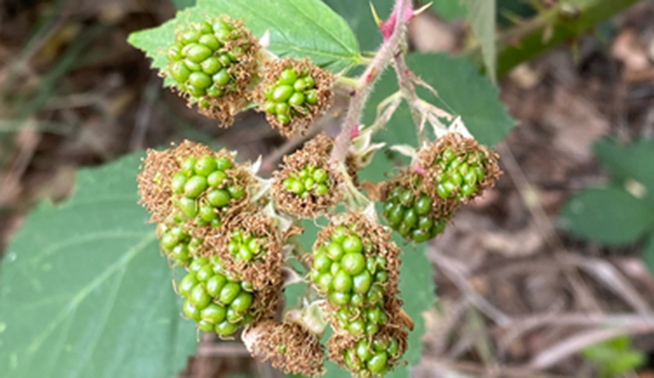
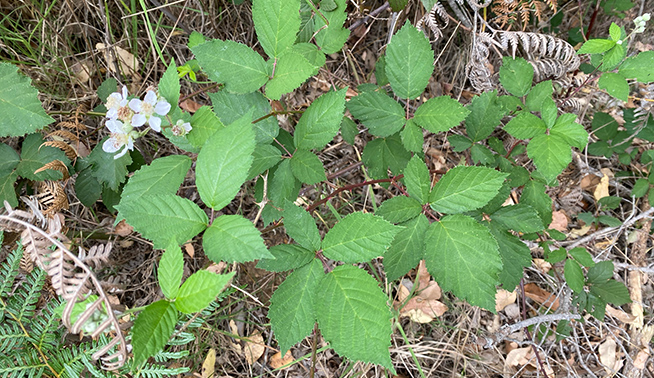
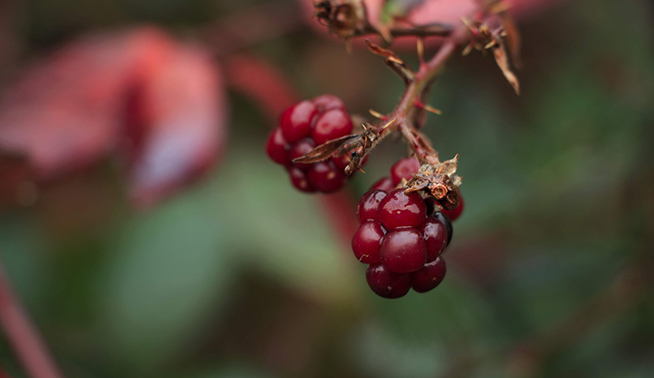
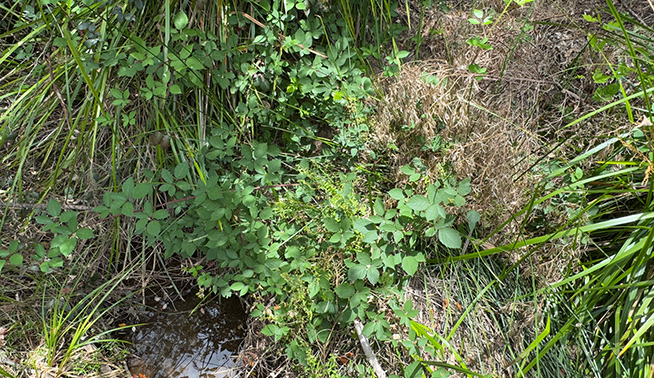
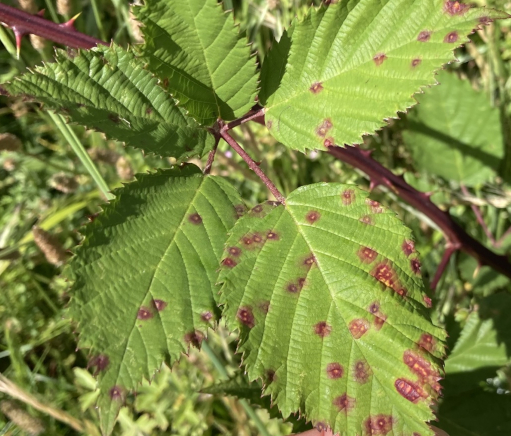
Image credits
References
-
 Atlas of Living Australia. (n.d.)
Rubus anglocandicans A.Newton. Atlas of Living Australia.
Atlas of Living Australia. (n.d.)
Rubus anglocandicans A.Newton. Atlas of Living Australia.
-
Australian BioControl Hub. (n.d.)
Blackberry biocontrol . Australian BioControl Hub.
-
Brisbane City Council . (n.d.)
Blackberry Rubus anglocandicans. Brisbane City Council Weed Identification Tool
-
Moore, J., & Wheeler, J. (2008)
Southern weeds and their control. Department of Agriculture and Food, Western Australia.
-
NSW WeedWise. (n.d.).
Blackberry (Rubus fruticosus species aggregate). NSW WeedWise.
-
PlantNet. (n.d.).
Rubus anglocandicans A.Newton. PlantNET - FloraOnline.
-
Stajsic, V. (2017, December 13)
Rubus anglocandicans A.Newton. VicFlora Flora of Victoria.
-
The State of Queensland. (2026)
Blackberry Rubus anglocandicans, Rubus fruticosus agg. Department of Primary Industries.
-
VicFlora. (n.d.)
Rubus anglocandicans A.Newton. VicFlora Flora of Victoria.
-
Weeds of Australia. (n.d.).
Rubus fruticosus L. sp. agg. Weeds of Australia.
-
Western Australian Herbarium (1998–).
Florabase—the Western Australian flora. Department of Biodiversity, Conservation and Attractions.
-
Wood, B. (n.d.).
Rubus fruticosus aggregate. Plants of South Eastern New South Wales.
Life Cycle
| JAN | FEB | MAR | APR | MAY | JUN | JUL | AUG | SEP | OCT | NOV | DEC | Notes | |
|---|---|---|---|---|---|---|---|---|---|---|---|---|---|
| Dormant | |||||||||||||
| Active growth | |||||||||||||
| Flowering | |||||||||||||
| Fruiting | |||||||||||||
| Germination |
Regularly or most commonly
Occasionally, given suitable conditions
Management
| JAN | FEB | MAR | APR | MAY | JUN | JUL | AUG | SEP | OCT | NOV | DEC | Notes | |
|---|---|---|---|---|---|---|---|---|---|---|---|---|---|
| Physical | |||||||||||||
| Chemical |
Optimal
Potentially, but conditionally dependent