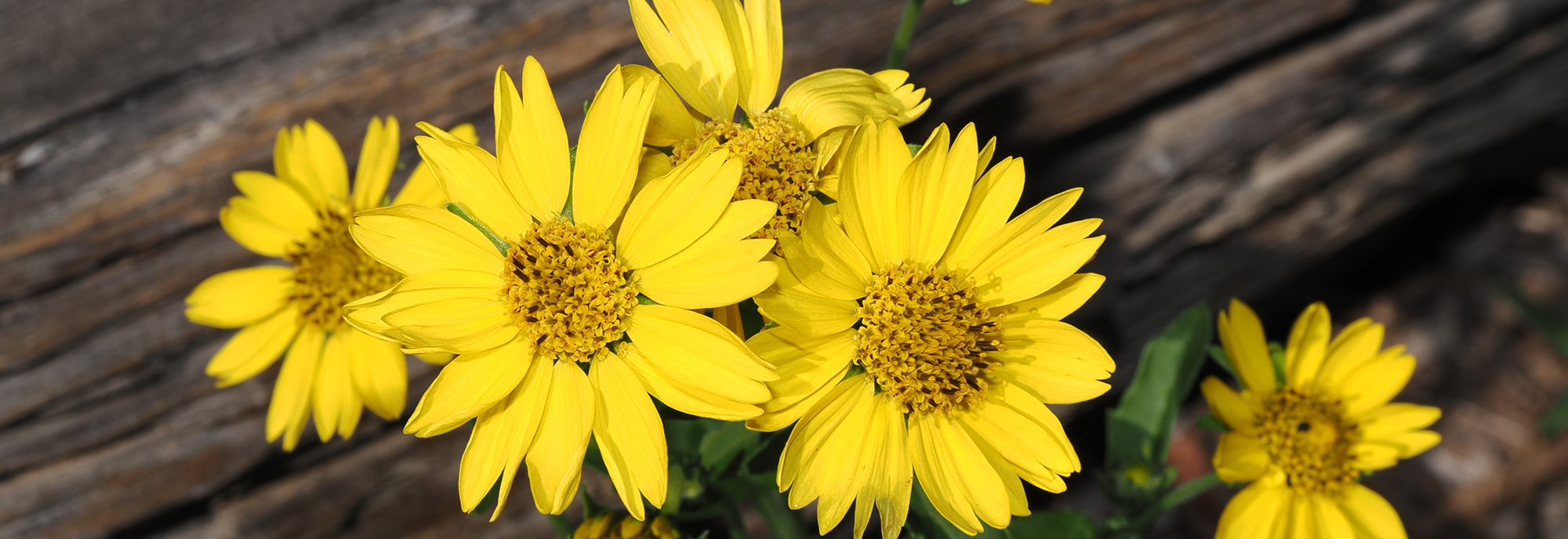

Other Common Names: Dogweed, golden crown daisy, South African daisy, wild sunflower, goldweed.
Golden crownbeard
Verbesina encelioides
Quick facts

Status
Permitted s11

Life Cycle
Annual

Growth Form
Herb

Origin
Southeastern North America and South America

Flowers
Yellow

Dispersal
Machinery, soil movement
Names

Form and function
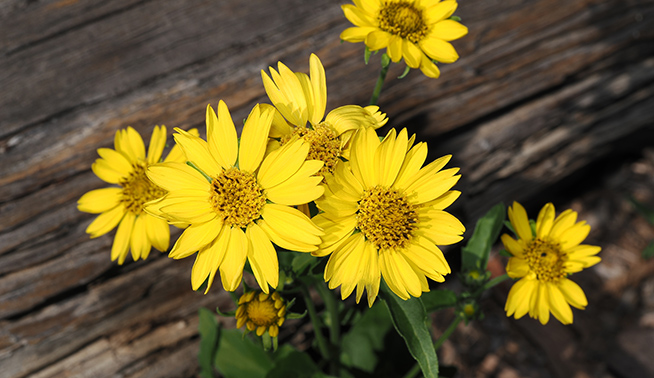
Flowers
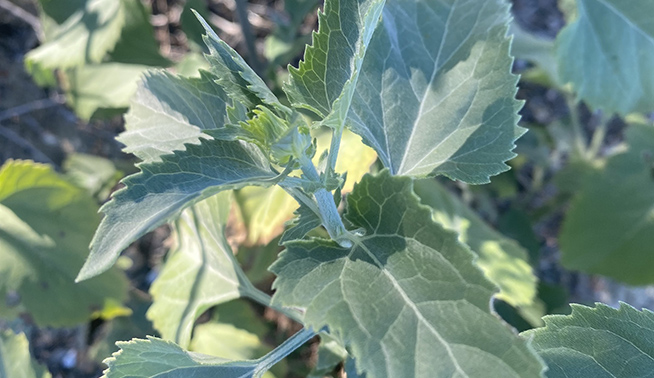
Leaves
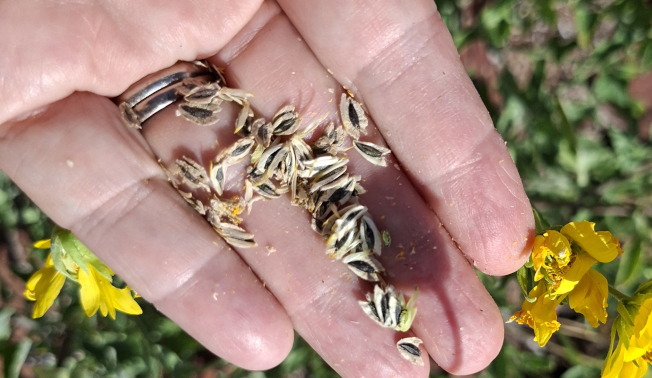
Seeds
Roots
Habitat
May be confused with...
How does it spread?
Why is it a weed?
History
How to control


Physical
Isolated patches or individual plants can be removed by hand pulling or grubbing, ensuring the whole plant including the tap root are removed. Ideally before seed set. Ensure to dispose of the plants off site, as they are known to resprout roots.
Chemical
Large infestations
Use a foliar application method, apply a mix of 1 L of Glyphosate (450g/L), 250 mL of a compatible penetrant in 100L of water, or for more sensitive areas (or areas with more intact bushland), apply a mix of 250 mL Clopyralid (600g/L) and 20mL of a wetting agent with 100L of water and apply at a rate of 2 L/Ha. Ensure full leaf coverage and spray until just wet.
A more selective broad leaf herbicide effective against Asteraceae species is MCPA (500g/L) at a rate of 1.6 in 100L per Ha.
Small infestations
Spot spray with 1.5% Glyphsoate (360g/L). Or for more targeted control, apply a mix of 60mL glyphosate (360g/L) in 100L of water, using a wick wiping method, wiping from base to tip, ensuring that both the front and back of the leaves are fully covered.
Note that follow up control will be required on germinating seedlings for at least three years.
Managerial controls
Golden crownbeard responds strongly to fire, with large numbers of seedlings often germinating from the soil seed bank following a burn. While intense, hot fires can kill most existing plants, they can also stimulate substantial post-fire recruitment. Follow up chemical control is essential to manage post burn seedlings
 PER96570 - Glyphosate
Weed Distribution Map
LSID number: [51269064] | full LSID: [https://id.biodiversity.org.au/taxon/apni/51269064] | field_lsid: [] | taxon: [Verbesina encelioides]
ALA Reference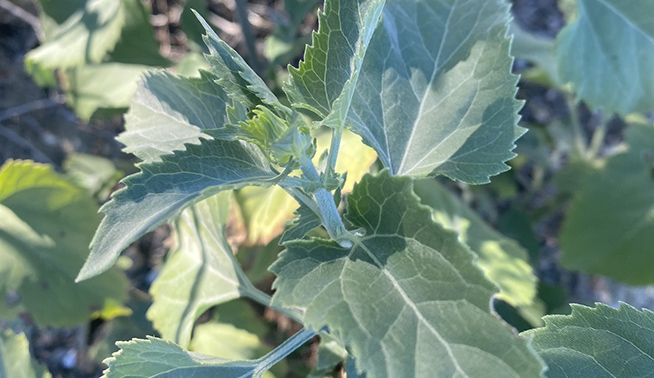
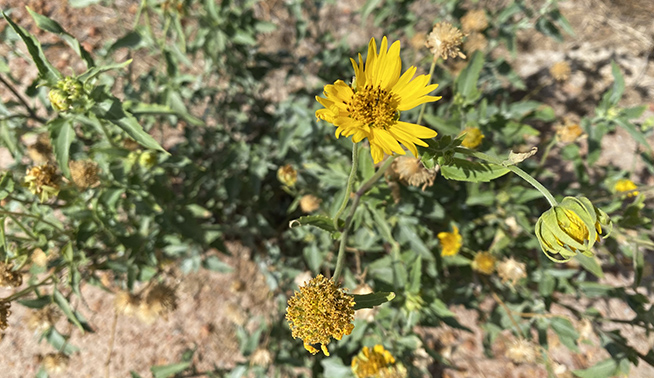
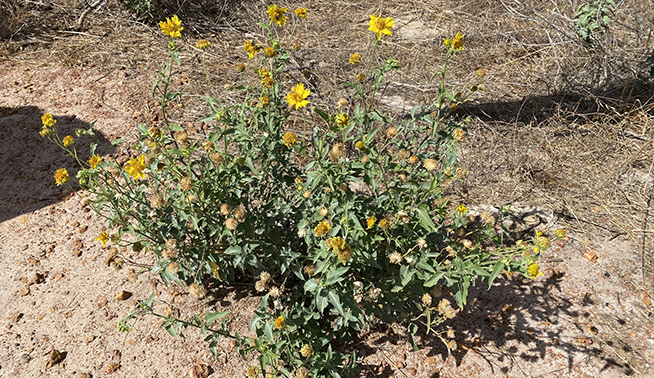
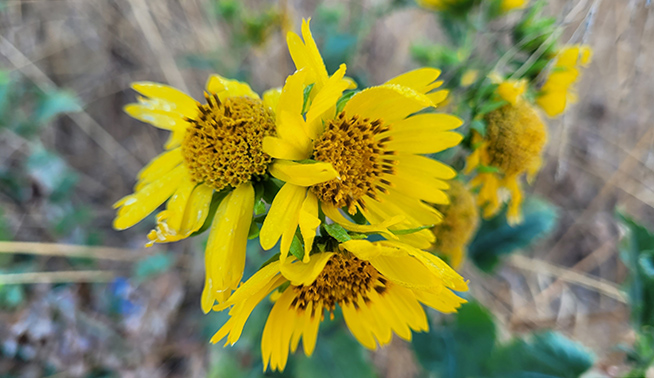
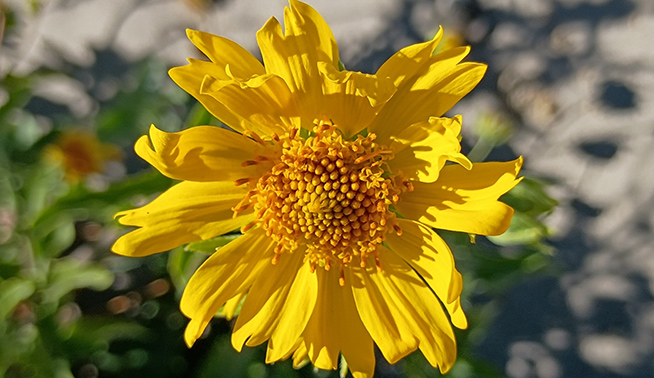
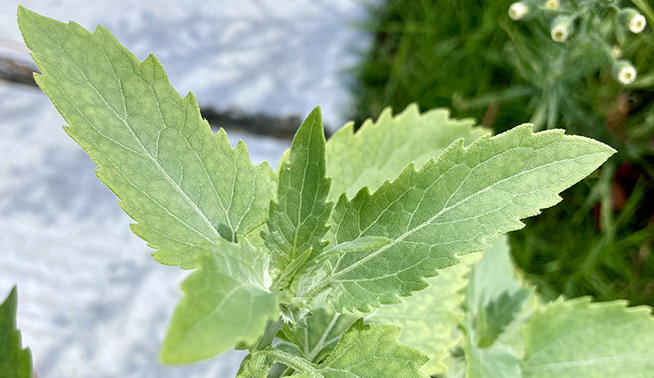
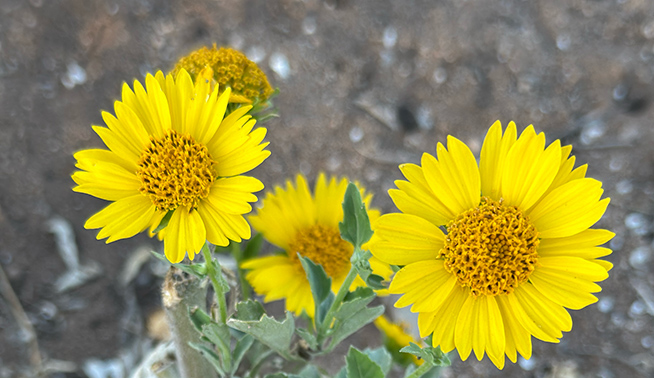
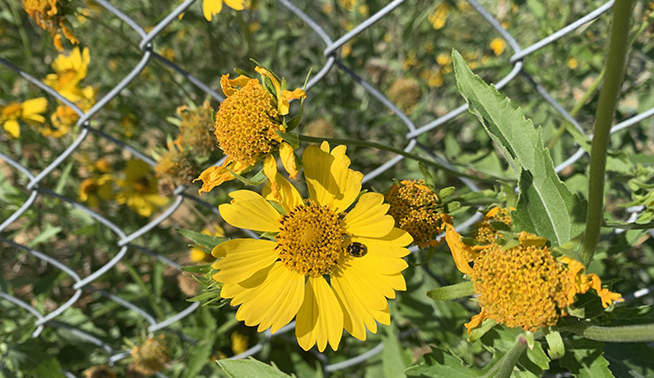
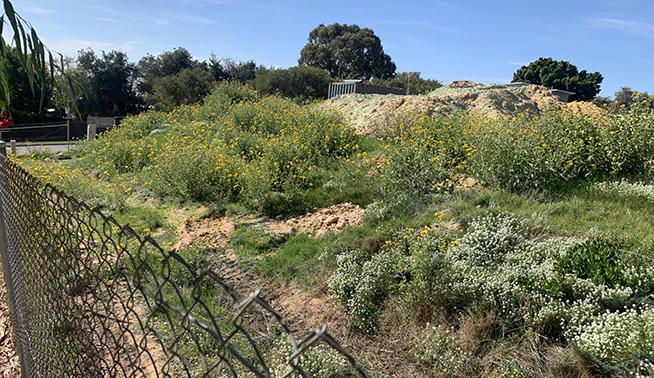
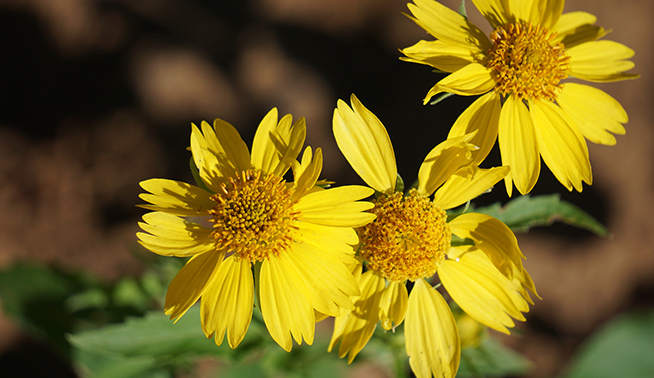
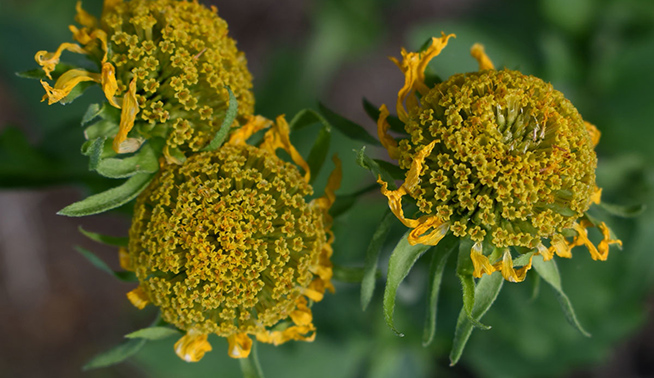
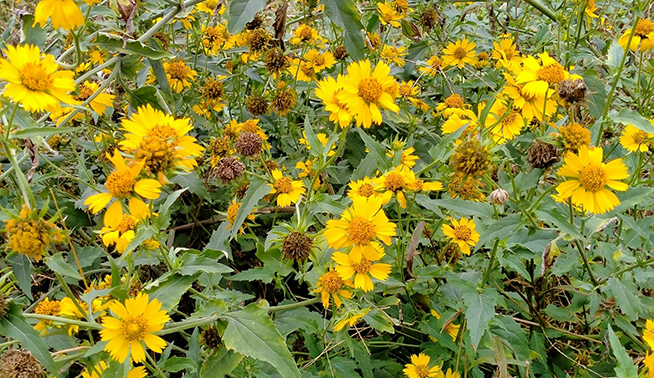
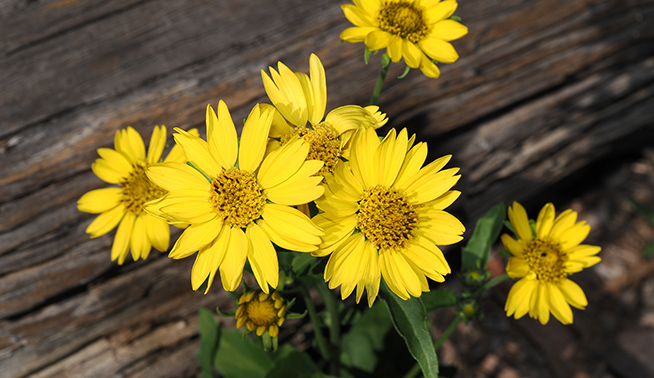
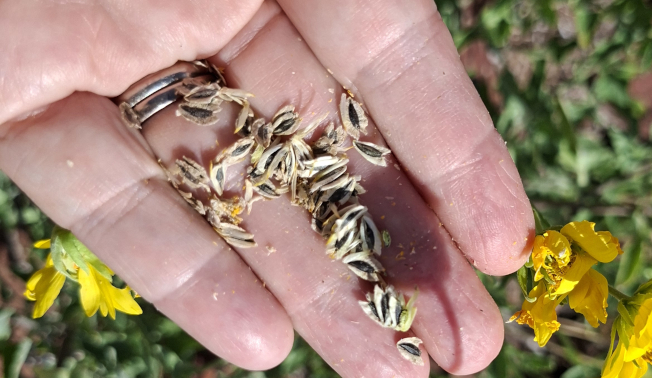
Image credits
References
-
 Atlas of Living Australia. (n.d.)
Verbesina encelioides (Cav.) Benth. & Hook.f. ex A.Gray. Atlas of Living Australia.
Atlas of Living Australia. (n.d.)
Verbesina encelioides (Cav.) Benth. & Hook.f. ex A.Gray. Atlas of Living Australia.
-
Department of Environment and Conservation (2016)
Bushland weeds - Golden Crownbeard (Verbesina enceliodes). Department of Environment and Conservation (WA).
-
Feenstra, K. R., & Clements, D. R. (2008)
Biology and Impacts of Pacific Island Invasive Species. 4. Verbesina encelioides, Golden Crownbeard (Magnoliopsida: Asteraceae). Pacific Science, 62(2).
-
Keighery, G., & Sercombe, N. (n.d.).
Verbesina encelioides. Department of Conservation and Management
-
Mangrove mountain. (n.d.).
Verbesina encelioides (Factsheet). Mangrove.mountain.net.
-
PlantNet. (n.d.)
Verbesina encelioides (Cav.) Benth. & Hook.f. ex A.Gray. PlantNET - FloraOnline.
-
Weeds of Australia. (n.d.)
Verbesina encelioides (Cav.) Benth. & Hook. f. ex A. Gray. Weeds of Australia; Lucidcentral.
-
Western Australian Herbarium (1998–).
Florabase—the Western Australian flora. Department of Biodiversity, Conservation and Attractions
Life Cycle
| JAN | FEB | MAR | APR | MAY | JUN | JUL | AUG | SEP | OCT | NOV | DEC | Notes | |
|---|---|---|---|---|---|---|---|---|---|---|---|---|---|
| Germination | |||||||||||||
| Active growth | |||||||||||||
| Flowering | |||||||||||||
| Fruiting |
Regularly or most commonly
Occasionally, given suitable conditions
Management
| JAN | FEB | MAR | APR | MAY | JUN | JUL | AUG | SEP | OCT | NOV | DEC | Notes | |
|---|---|---|---|---|---|---|---|---|---|---|---|---|---|
| Physical | |||||||||||||
| Chemical |
Optimal
Potentially, but conditionally dependent